
This is a guest post from Vani Hari (a.k.a. The Food Babe) and New York Times Best Selling author. You can read more about her take on the food industry in her second book, Feeding You Lies!
Sugar is one of the most dangerous ingredients on the market. It's addictive, added to almost every processed food, and will make you overweight, depressed and sick if you eat too much. In fact, Americans eat close to 130 pounds of the stuff per person per year (4 times more than the recommended daily allowance), likely because it is so addictive.
That's why it's exciting to know there are alternative sweeteners made in nature, like "stevia," that don't wreak havoc on your health - or do they? That's what I went on a quest to find out. Here's what happened...

Want to Save this Recipe?
Enter your email below & we'll send it straight to your inbox. Plus you'll get great new recipes from us every week!
What Is Stevia?
For those of you that are hearing about stevia for the first time, it is a plant that is typically grown in South America, and while its extract is 200 times sweeter than sugar, it does not raise blood insulin levels. That's what makes it so popular.
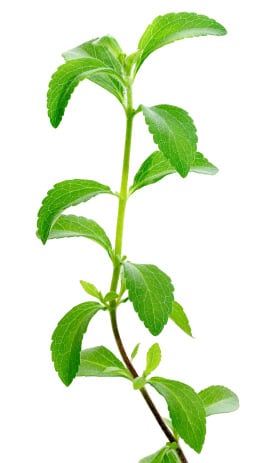
However in 1991 the FDA refused to approve this substance for use due to pressure from makers of artificial sweeteners like Sweet n' Low and Equal (a one billion dollar industry). But in 2008, the FDA approved the use of rebaudioside compounds that were derived from the stevia plant by Coca-Cola (Cargill) and PepsiCo - hmmm doesn't that sound suspicious?
Not until a major food company got involved did stevia become legal, and only after it had been highly processed using a patentable chemical-laden process...so processed that Truvia (Coca-Cola's branded product) goes through about 40 steps to process the extract from the leaf, relying on chemicals like acetone, methanol, ethanol, acetonitrile, and isopropanol. Some of these chemicals are known carcinogens (substances that cause cancer), and none of those ingredients sound like real food, do they?
The whole leaf stevia that you can grow in your backyard (and has been used for centuries in countries like Brazil and Paraguay) remains a non-approved food additive by the FDA.
However, rebaudioside A (the stevia extract) that was approved by the FDA has not been used for centuries and long term human health impacts have not been studied and are still unknown. The sweetener/sugar industry wields powerful influence over what is ultimately approved at the FDA, and this is just another example where they are influencing decisions that don't make sense.
How can a chemically derived extract be deemed safe in processed food and a plant from mother nature not?
What Kind Of Stevia To Avoid

The 40-step patented process used to make Truvia should make you want to steer clear of this stevia product alone, but there are two other concerning ingredients added (not only to Truvia but other stevia products as well).
First, erythritol is a naturally occurring sugar that is sometimes found in fruit, but food manufacturers don't actually use the natural stuff. Instead they start with genetically engineered corn and then go through a complex fermentation process to come up with chemically pure erythritol. Check out the manufacturing process below:


"Natural flavors" is another ingredient added to powdered and liquid stevia products, likely due to the fact that once the stevia leaf is processed it can develop a metallic taste. Manufactured natural flavor is contributing to what David Kessler (former head of the FDA) calls a “food carnival” in your mouth. This makes it difficult to stop eating or drinking because the flavors they have synthesized will trick your mind into wanting more and more.
When companies use manufactured flavor, they are literally “hijacking” your taste buds one-by-one; that's why I recommend putting products that contain "natural flavors" back on the shelf.


"Stevia in the Raw" sounds pure and natural, but when you look at the ingredients the first thing on the label is "dextrose" - so it's certainly not just stevia in the raw. And Pepsi Co's "Pure Via," also pictured above, isn't exactly pure either with this ingredient being first on the label, too. Dextrose is a sweetener that's also derived from genetically engineered corn and has a long complicated manufacturing process, just like erythritol.
Even certified organic stevia can have sneaky ingredients added, like this one above which has more organic agave inulin than the stevia extract itself. Agave inulin is a highly processed fiber derivative from the blue agave plant.
Also on the ingredient list is an item you are probably familiar with from those little packets sometimes found in boxed goods - silica (pictured). It is added to improve the flow of powdery substances and is the same ingredient that helps strengthen concrete and creates glass bottles and windowpanes. It may cause irritation of the digestive tract (if eaten) and irritation of the respiratory tract (if accidentally inhaled).

While it is non-toxic and probably won't kill you in small quantities, it's definitely not a real food ingredient I would cook with or that I want to be putting in my body.
How To Choose The Right Kind Of Stevia
Luckily there are ways to enjoy this sweet leaf closer to it's natural state... because let's be honest, the no-calorie artificial sweeteners out there are really dreadful, and no one should consume them (check this post for the low down on those). So here's what you can do:
- Buy a stevia plant for your garden (luckily it's totally legal!) or purchase the pure dried leaves online - you can grind up them up using a spice grinder (or use a mortar and pestle) for your own powdered stevia.
- When choosing products already sweetened with stevia, look for “whole leaf stevia” on the ingredient label. For example my favorite protein powder is made with “whole stevia leaf” instead of rebaudioside a or stevia extract.
- Add fresh or dried leaves directly to tea or drinks for natural sweetness (note the straight stevia leaves are only 30-40 times sweeter than sugar, vs. 200 times using the extract).
- Make your own liquid stevia extract (see graphic below for recipe).

- If you are not up for getting a stevia plant of your own or making your own extract, remember to look for a stevia extract that is 100% pure without added ingredients (Trader Joe's has a version in a small bottle).
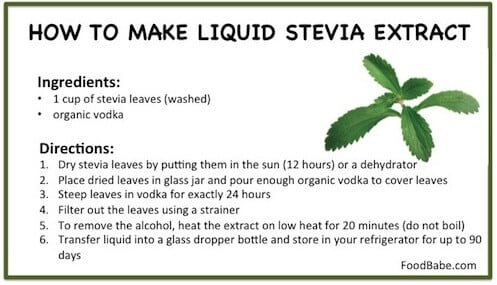
And when all else fails, choose a suitable alternative and forget stevia altogether.
Lisa uses honey and pure maple syrup, and I personally prefer coconut palm sugar, since it is low glycemic (making it more diabetic friendly) and one of the most natural unprocessed forms of sugar available. It is naturally high in amino acids – has 10,000 times more potassium, 20 times more magnesium and 20 times more iron than conventional sugar. I use it all the time in my baking, from pound cake to muffins to a recent delicious cookie that is low in sugar - check out all those recipes here!
Comments have been closed on this article, which was written by Vani Hari. If you have a question or comment you can reach her at http://FoodBabe.com.


