Cheese and Other Dairy Products: Are they Processed?
There’s a question I’ve been getting a lot lately and it goes something like this:
“If you avoid processed foods how is it that you’re still eating cheese (or cream cheese or sour cream or [insert dairy product here])? Isn’t cheese processed?”
Want to Save this Recipe?
Enter your email below & we'll send it straight to your inbox. Plus you'll get great new recipes from us every week!
The thing is even cooking is technically a form of processing or changing your food so unless you are on a raw food diet, which we are not, we are all eating food that’s been somewhat “processed”. So maybe it would be better to say we avoid allhighly processed foods, which, to draw the line somewhere, we define as having more than 5 (or any refined) ingredients.
So to hopefully answer some of those burning cheese questions I’d like to share what we look for when it comes to purchasing dairy products in general. And in case you missed it be sure to check out our post earlier this month all about milk.
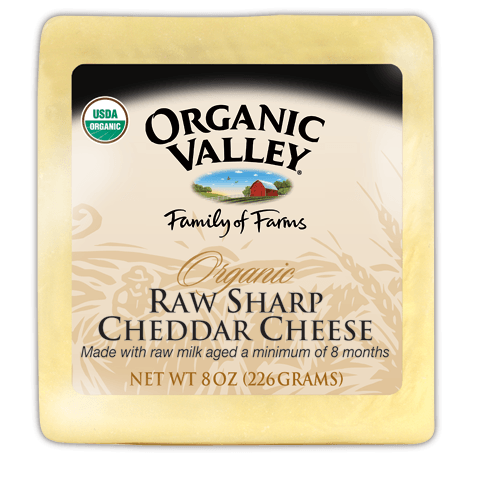
Cheese
There are a few basic things we look for in cheese…
Organic: As I’ve mentioned before you can’t exactly peel or wash off dairy products like you can with conventional produce so we think it’s best to go organic if you can.
Block Form (as opposed to pre-grated): Bagged, pre-shredded cheese contains an anti-caking agent called cellulose that’s sometimes made from wood pulp. Whether this additive concerns you or not the point is it’s an extra additive you will not find in a block of cheese. So when we want grated cheese at our house we just grate it ourselves. Yes, it’s an extra step, but it’s worth it to me especially because I think the texture is much better (i.e. less “powdery”).
White: Cheese, which is obviously made from milk or cream, is meant to be white not orange…think about it. The orange color is typically a harmless, natural color additive, but just to make a point I personally like to buy my cheese white because that’s the way it’s supposed to be. When it comes to “voting with my dollars” I don’t like to mess around!
Full Fat: We no longer buy any reduced-fat or non-fat food products (since to get products that way they are simply more processed), which is actually kind of a relief because I never thought the low-fat versions tasted all that good anyway!
Grass-Fed: Cows are meant to eat grass (not corn), and as I mentioned in the milk post when animals are fed a proper diet their food products are in turn more nutritious for you. Sometimes it’s hard to find, but I ideally look for cheeses that either say “grass-fed” or “pasture raised” on the package.
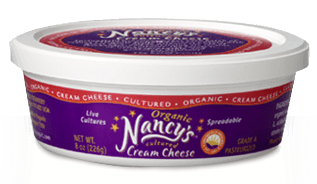
Yogurt*, Cream Cheese, and Other Dairy Products
This is what we look for when it comes to other dairy products like cream cheese, sour cream, yogurt, cottage cheese, and ricotta cheese…
Organic: Just like cheese and milk we always choose organic when it comes to any dairy products.
Plain: When it comes to dairy products like yogurt, it’s always best to buy the plain version and flavor it yourself. The majority of factory-made food contains way too much sugar (and salt and oil) so it’s not only best to be able to control how much is added, but also what type of sweetener is used. We love mixing our plain yogurt with homemade berry sauce, homemade strawberry-honey jam, or a little maple syrup and vanilla extract... you can also add some orange zest for a real treat!
Least Number of Ingredients: No matter what type of food you are buying I highly recommend to ALWAYS read the ingredients before making a purchase. Most of the time least processed = least number of ingredients (as long as those ingredients are “whole” of course).
Grass-Fed: Once again this can be hard to find especially when you are looking beyond cheese and milk, but ideally all dairy products should come from grass-fed (as opposed to corn or grain-fed) cows.
*Note Regarding Greek Yogurt: I can’t really say that Greek yogurt is “better” or “worse” for you than regular yogurt because to be honest it’s just different. As long as the yogurt meets the criteria outlined above just pick whichever one you like best!
New Sponsor: Plan to Eat
I’d like to introduce another one of our newest sponsors today…Plan to Eat! Plan to Eat is a very cool meal planning service that is quite different from all the rest. Before now most of the services I’ve come across give you a dinner plan and shopping list so you basically eat the meals they’ve picked out for you for the week. Plan to Eat, on the other hand, is a program that automatically turns YOUR own recipes into a meal plan and shopping list. You can import recipes from websites and blogs or add your own. So in the most basic terms you decide what you’re going to have for dinner and Plan to Eat organizes the information for you into one neat meal plan and shopping list! They even have a feature where you can access your shopping list from your mobile phone. Pretty cool, huh?
In my country (Greece) unfortunately stores have only either organic homogenized milk or good quality non organic non homogenized milk. What should I buy for my family?
Have you all seen the documentary on Netflix, "What the Health?" It has to do with cutting out dairy as well as meats or any animal product. Basically going vegan. Essentially, it discusses the dairy 'industry' and how unhealthy animal based products can be. It got me back to focusing on whole food eating and trying to cut unprocessed foods (again--was a vegetarian 8 years ago for a few years). Worth a watch.
I turned 40 and developed both gluten and dairy sensitivities. I also have an issue with my thyroid. I do a lot of reading one if my go to good for me, now seems to be harming me because of
Kale and broccoli
OK, so I finally sat down & picked some meals from the first book to try this week. I was so happy that my grocery list was not overly extensive AND contained everyday ingredients! I can do this!
so after shopping at my local Aldi (proud to save some ca$h) I was disappointed when I read these ingredients on their cottage cheese:
(besides the milk, cream & salt of course)
-guar gum
-locust bean gum
-mono & diglycerides
-xanthan gum
-carrageenan
-dextrose
-potassium sorbate
-citric acid
-enzymes
Seems like WAY too many things I cannot pronounce or know what they are! eeek!!
So... do you have some brands I should be buying instead?
Cottage cheese was a fairly new "go-to" protein for me while doing Beach Body's 21 day fix & other programs :( It's also something my 18 month old really enjoys!
Do you happen to have any research about some of the Aldi brands? I know they have come a long way in the past year or so...
Thanks for all you do! Between you & the Food Babe... I pray for a food revolution for America!!!



Amy Taylor (comment moderator) says
Hi there. When we are talking about whole milk, go organic. Most of the toxins that non-organic milks would carry are found in the milk fat.
Angelina says
In my country (Greece) unfortunately stores have only either organic homogenized milk or good quality non organic non homogenized milk. What should I buy for my family?
Vanessa S. Dainton says
Have you all seen the documentary on Netflix, "What the Health?" It has to do with cutting out dairy as well as meats or any animal product. Basically going vegan. Essentially, it discusses the dairy 'industry' and how unhealthy animal based products can be. It got me back to focusing on whole food eating and trying to cut unprocessed foods (again--was a vegetarian 8 years ago for a few years). Worth a watch.
Rachel says
I turned 40 and developed both gluten and dairy sensitivities. I also have an issue with my thyroid. I do a lot of reading one if my go to good for me, now seems to be harming me because of
Kale and broccoli
Both said to be harming my thyroid is this true
Jessica says
OK, so I finally sat down & picked some meals from the first book to try this week. I was so happy that my grocery list was not overly extensive AND contained everyday ingredients! I can do this!
so after shopping at my local Aldi (proud to save some ca$h) I was disappointed when I read these ingredients on their cottage cheese:
(besides the milk, cream & salt of course)
-guar gum
-locust bean gum
-mono & diglycerides
-xanthan gum
-carrageenan
-dextrose
-potassium sorbate
-citric acid
-enzymes
Seems like WAY too many things I cannot pronounce or know what they are! eeek!!
So... do you have some brands I should be buying instead?
Cottage cheese was a fairly new "go-to" protein for me while doing Beach Body's 21 day fix & other programs :( It's also something my 18 month old really enjoys!
Do you happen to have any research about some of the Aldi brands? I know they have come a long way in the past year or so...
Thanks for all you do! Between you & the Food Babe... I pray for a food revolution for America!!!
Amy Taylor (comment moderator) says
Hello. This might help: https://www.cleaneatingmag.com/clean-pantry/the-cleanest-dairy-products. We've not really looked into Aldi but this might help as far as their brand sourcing.