
When shopping for food there are quite a few confusing buzz words out there that can easily be misleading ... The biggest one being Organic! Just because a product says it’s organic does not mean it isn’t highly processed junk food. It is important to first ensure an item is not highly processed and then also try to find the organic version if possible.
In order to do this, you want to always read the ingredient label (as opposed to relying on the health claims on the front of the package) first. That is the only way to know what’s really in your food, and what you find may be surprising.
Making sure you know what the most common misleading health claims are and what they mean will help you sort through the highly processed junk food.

Want to Save this Recipe?
Enter your email below & we'll send it straight to your inbox. Plus you'll get great new recipes from us every week!
Organic
Just because cookies are organic does not mean they aren’t junk food! Even if a food product is labeled as certified organic it could still be made with sugar, white flour, and other refined ingredients.
Product Example: Late July Organic Vanilla Bean Cookies
These organic cookies contain refined white flour (labeled as organic wheat flour), refined sweeteners (labeled as organic evaporated cane juice, organic brown rice syrup, and organic evaporated cane juice syrup), and additives (including soy lecithin and natural flavors).
More Organic Junk Food Examples
- Organic flavored yogurt (also full of organic sugar...look for plain organic yogurt and flavor it yourself with fruit)
- Organic cookies
- Organic crackers made with white flour
- Organic chips and pretzels
- Organic white bread
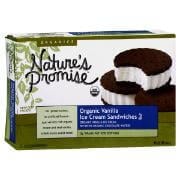
- Organic ice cream sandwiches (the one pictured contains organic corn syrup and organic sugar in addition to white flour)

Multi-Grain / 7-Grain
This claim simply means the product contains more than one type of grain (or in some cases as many as 7 grains). Some examples of different grains are wheat, barley, rye, spelt, rice, oats, and corn.
Just because a food product is made with more than one of these grains does not automatically mean any of them are whole grains, and nutritionally speaking, there is a big difference between refined and whole grains. For more on this topic check out: Understanding Grains and Nutrients in Refined vs. Whole Grains.
Product Example: Snyder’s Multi-Grain Pretzel Sticks
These pretzels contain more refined white flour (labeled as enriched wheat flour) and sweetener (labeled as molasses) than whole-grain flours.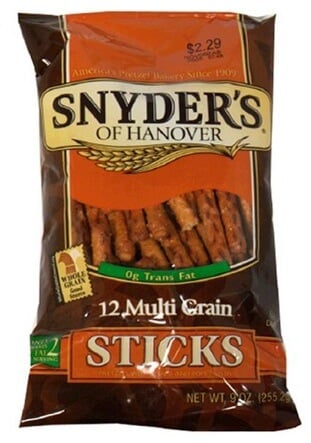
Gluten-Free
Obviously, the gluten-free label is important for those with an allergy, sensitivity, or intolerance to gluten, but just because a food is labeled as gluten-free does not mean it isn't highly processed.
Gluten-free simply means that grains with gluten (like wheat, barley, and rye) were not used when making the product. But just like the multi-grain example above the alternate grains may or may not be whole grain products, you must read the ingredient label to find out!
-
Product Example: DeBoles Gluten-Free Rice Pasta
This pasta is made from refined "rice" and contains no whole grains (like brown rice).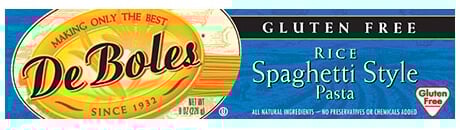
The moral of the story is … always read the ingredient label to know what’s really in your food!


Mahe says
"Your blog on 'How to Avoid Organic Junk Food' is a breath of fresh air in the world of health and wellness. Your insightful tips and guidance empower us to make mindful choices and prioritize our well-being. By shedding light on the potential pitfalls of organic junk food, you're helping us navigate towards a healthier, more vibrant lifestyle. Thank you for sharing your wisdom and inspiring us to nourish our bodies with truly wholesome goodness!"
"We have exciting news for you - we now have a blog!" https://worthtoyouglobal.com/
kavya says
Make soups of various vegetables like tomato, pumpkin, sponge gourd, or any other as per your region's availability. Avoid market-based soups and make these soups freshly by yourself. The warm nature will help to provide relief by reducing the pain.
Health well Rest says
Hello Lisa.
Totally agree that organic snacks can be healthier than non-organic junk food—but they still may be junk. Cookies or boxed mac and cheese may have the same unhealthy characteristics as their non-organic counterparts. Now that you see more and more junk food products with organic labels, it can create a health halo, which may mislead consumers.
Thanks,
Monica says
Thank you Lisa for this informative post. I completely agree with you that checking labels is quite important as we all can fall prey to advertiser's gimmick. I am a mom of four, so healthy eating has always been on top of my list and I always check labels for the ingredients and calories count.
Melissa B. says
Yes! Reading labels is so important. Marketing folks are talented at trying to get you to buy something simply by what it says on the front of the box. Thanks again for the great reminders!
S.P. says
Greetings,
I'm new to the website, but was just wondering if people on a gluten-free diet eat bread of any kind? I have tried Rice bread, but it's texture is not the same as other bread. Do most people on a gluten-free diet just totally avoid bread?
Thanks so much!
Amy Taylor (comment moderator) says
Hi S.P. I completely depends on the person. I am gluten free and only eat gluten free bread on occasion. It is hard to find a GF bread with quality ingredients and good texture but I do toast some from time to time. :)
Sherwood Page says
Thanks.
Crystal says
Canyon bakery bread is hands down the most like real bread.
The other breaks need to be toasted to be palatable or not crumble apart. Canyon bakery bread u can eat either way
Lisa says
Hi Lisa
Many of your recipes use whole wheat flour. what is your best suggestion as a substitute for someone who needs to cook gluten free?
Thanks!
Assistant to 100 Days (Amy) says
Hello Lisa. Look for a gluten free flour option that consists of as many whole grains as possible vs the refined gluten free grains. Here is an example of one you can make yourself: http://glutenfreedoctor.com/gluten-free-flour-mix-whole-grain/. Bob's Red Mill has several options, as well. ~Amy
Janelle @ MommyLivesClean says
This is great information which I will share. We just went officially gluten free after a blood test determined my son's allergy. I am finding most "Gluten Free" products are just expensive junk food! I ordered some coconut flour and will be making him treats at home now. We will save the store bought stuff for special occasions.
Karla says
I have celiac and some advice. I had a very bad GI reaction to coconut and almond flour. Start with small amounts so you can test your tolerance and avoid the same issue. I just got some Otto's cassava flour to try. I guess it makes good tortillas. It's supposed to be one of the easiest to tolerate.
Dawn Font says
weird question maybe but if we are not looking for 'enriched wheat flour' what are we looking for? i get so confused sometimes, aren't we looking for wheat flour? and if it says that why would it automatically make it WHITE flour?
Assistant to 100 Days (Amy) says
Hi Dawn. This will help: https://www.100daysofrealfood.com/2011/10/17/nutrients-in-refined-vs-whole-grains/ and https://www.100daysofrealfood.com/2011/04/22/mini-pledge-week-7-100-whole-grain/. ~Amy