Cheese and Other Dairy Products: Are they Processed?
There’s a question I’ve been getting a lot lately and it goes something like this:
“If you avoid processed foods how is it that you’re still eating cheese (or cream cheese or sour cream or [insert dairy product here])? Isn’t cheese processed?”
Want to Save this Recipe?
Enter your email below & we'll send it straight to your inbox. Plus you'll get great new recipes from us every week!
The thing is even cooking is technically a form of processing or changing your food so unless you are on a raw food diet, which we are not, we are all eating food that’s been somewhat “processed”. So maybe it would be better to say we avoid allhighly processed foods, which, to draw the line somewhere, we define as having more than 5 (or any refined) ingredients.
So to hopefully answer some of those burning cheese questions I’d like to share what we look for when it comes to purchasing dairy products in general. And in case you missed it be sure to check out our post earlier this month all about milk.
Cheese
There are a few basic things we look for in cheese…
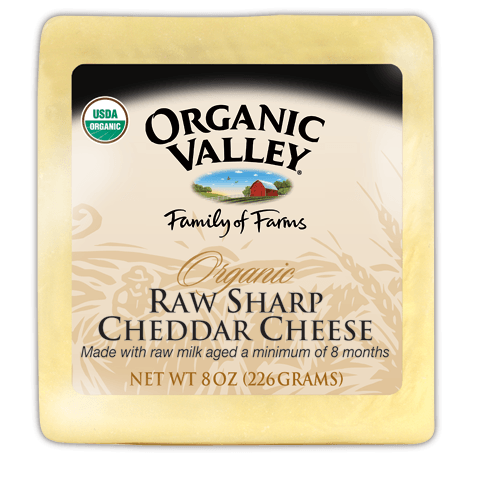
Organic: As I’ve mentioned before you can’t exactly peel or wash off dairy products like you can with conventional produce so we think it’s best to go organic if you can.
Block Form (as opposed to pre-grated): Bagged, pre-shredded cheese contains an anti-caking agent called cellulose that’s sometimes made from wood pulp. Whether this additive concerns you or not the point is it’s an extra additive you will not find in a block of cheese. So when we want grated cheese at our house we just grate it ourselves. Yes, it’s an extra step, but it’s worth it to me especially because I think the texture is much better (i.e. less “powdery”).
White: Cheese, which is obviously made from milk or cream, is meant to be white not orange…think about it. The orange color is typically a harmless, natural color additive, but just to make a point I personally like to buy my cheese white because that’s the way it’s supposed to be. When it comes to “voting with my dollars” I don’t like to mess around!
Full Fat: We no longer buy any reduced-fat or non-fat food products (since to get products that way they are simply more processed), which is actually kind of a relief because I never thought the low-fat versions tasted all that good anyway!
Grass-Fed: Cows are meant to eat grass (not corn), and as I mentioned in the milk post when animals are fed a proper diet their food products are in turn more nutritious for you. Sometimes it’s hard to find, but I ideally look for cheeses that either say “grass-fed” or “pasture raised” on the package.
Yogurt*, Cream Cheese, and Other Dairy Products
This is what we look for when it comes to other dairy products like cream cheese, sour cream, yogurt, cottage cheese, and ricotta cheese…
Organic: Just like cheese and milk we always choose organic when it comes to any dairy products.
Plain: When it comes to dairy products like yogurt, it’s always best to buy the plain version and flavor it yourself. The majority of factory-made food contains way too much sugar (and salt and oil) so it’s not only best to be able to control how much is added, but also what type of sweetener is used. We love mixing our plain yogurt with homemade berry sauce, homemade strawberry-honey jam, or a little maple syrup and vanilla extract... you can also add some orange zest for a real treat!
Least Number of Ingredients: No matter what type of food you are buying I highly recommend to ALWAYS read the ingredients before making a purchase. Most of the time least processed = least number of ingredients (as long as those ingredients are “whole” of course).
Grass-Fed: Once again this can be hard to find especially when you are looking beyond cheese and milk, but ideally all dairy products should come from grass-fed (as opposed to corn or grain-fed) cows.
*Note Regarding Greek Yogurt: I can’t really say that Greek yogurt is “better” or “worse” for you than regular yogurt because to be honest it’s just different. As long as the yogurt meets the criteria outlined above just pick whichever one you like best!
New Sponsor: Plan to Eat
I’d like to introduce another one of our newest sponsors today…Plan to Eat! Plan to Eat is a very cool meal planning service that is quite different from all the rest. Before now most of the services I’ve come across give you a dinner plan and shopping list so you basically eat the meals they’ve picked out for you for the week. Plan to Eat, on the other hand, is a program that automatically turns YOUR own recipes into a meal plan and shopping list. You can import recipes from websites and blogs or add your own. So in the most basic terms you decide what you’re going to have for dinner and Plan to Eat organizes the information for you into one neat meal plan and shopping list! They even have a feature where you can access your shopping list from your mobile phone. Pretty cool, huh?
I was also thrilled to buy 100% grassfed whole milk plain yogurt from Maple Hill Creamery the other day. Good stuff and so much more yellow than the non-grassfed versions! I flavor it with a little honey and vanilla extract - yum!
This may be a silly question, but what about cottage cheese? They all seem to have additives in them, but I'm not sure what is unnecessary and what is needed to make the cheese. My kids love cottage cheese, but I've been wondering about its "realness"!
I absolutely LOVE what you doing! Thank you for bringing beautiful awareness into the world about the power of the foods we eat and the joy of mindfulness around it all! So glad to find your site via Anne Hofweber.
The reason I eat Greek yogurt is for the higher protein content. 18g per 3/4 cup. You can find it in 0%, 2% and 10% fat - plain or flavoured (the flavoured stuff has added sugar so I never buy it). I flavour my plain Greek yogurt with vanilla & maple syrup or fruit. I also use it in place of sour cream, in smoothies, and in dips - hummus, taco dip, veggie dip, homemade ranch dip etc. Mine only has 2 ingredients!
How to make fast Greek yogurt: buy your favorite yogurt, line a large size fine mesh colander with cheesecloth or fabric (I bought a half yard of unbleached organic 100% cotton at walmart just for this purpose). Place the yogurt in the fabric that is lining the mesh colander and fold the additional fabric up over the top of it. Place the entire thing over a pot to collect the whey that will drip out. Then fill up a quart size ziploc baggie with water and lay across the top of the colander. (This will press down on the yogurt and help strain it). Place everything into your fridge for a day. The next day you have greek yogurt/yogurt cheese depending on how firm you want it. Super simple!!!
I literally just came to your site to look up cream cheese- and which one(s) were best, when low and behold there was a picture of cream cheese right on top- with tons of other information I've been wondering about!
Awesome article! I have been making my own ricotta cheese and believe me it's so easy - replaces most soft cheeses you'd buy at the store. It's found on the smitten kitchen food blog. Enjoy!
Your article is very informative regarding dairy products. I myself, didn't know that yogurt and Cheese come in so many forms. Your article has helped me become a better buyer of these product.
I really loved this post. While I don't personally think dairy is good for us, I love how informed you are in the decisions you make for your family and that you can easily explain yourself. It makes a lot of sense and are good rules to follow :)
I am a self diagnosed cheese addict, working at leaning into a more vegan-ish lifestyle {I will never be 100% because I don't want to be}...but I like the idea of having it sometimes and will be looking seriously at these points you've made when deciding what to buy.
The key is also moderation - your real food lifestyle has also allowed you to live a less excessive one,so I think your cheese/dairy intake isn't of much concern. We are all so used to doing this excessively - changing that is one of my favorite things about this lifestyle.
On the yogurt - I have found that Greek yogurt leaves a dry aftertaste in my mouth... BUT... I've only been able to find 0% or 2% Greek yogurt and I was wondering if that makes a difference to the dryness. When I pour out the extra liquid of regular yogurt (which I buy full fat) it doesn't taste that way. Anyone know?
Beth - daiya isn't really a "cheese". It does alright in small doses...maybe in a casserole or a little on a pizza, but it just isn't the same. It taste ok. Worth a try.
I would encourage you to give going non-dairy a try. I did a vegan challenge and came to the conclusion that dairy really isn't all the good for me. Starting to add some meat back in my diet, but trying to keep the dairy in small amounts.
Back to the organic dairy thing...I thought that if something was labeled "organic dairy" that just meant that they were fed organic grain. It doesn't mean grass fed or anything else. I am sure there are exceptions, but it would be labeled as "pastured". I guess my question is, would organic dairy from a grain fed cow be considered within the rules for a "real food"?
Hi Kerri. My understanding from what I've read is that the cows must have year-round access to the outdoors, access to pasture during the grazing season, and a specified minimum intake from pasture grown without synthetic herbicides and pesticides. They also must not have been treated with hormones or antibiotics. Now, I think that's just for milk, I'm not sure if that applies to all organic dairy. I hope that helps. Jill
I'm not sure that is correct. Unless the USDA actually got tougher rules - which is so rare. At one time at least the rule was that the cows needed to be pastured for a percentage of their life. This can, and did, include the period of their life before they could even be milked (and after). So some companies at that time were actually limiting pasture time during the period that we consumers most want them to be pastured. It takes effort to round up a heard and bring them in for milking twice a day. And even "access to pasture" does not mean the cows go much farther than a pen outside the barn.
I'm guessing that even the label "pasture fed" has to have some exception when the dairy is in an area under snow part of the year. This would actually be an interesting topic. Figuring out the USDA might be tougher than the FDA, though.
Bethsays
Daiya is a vegan cheese and I am considering trying it. The whole dairy thing is starting to concern me about how healthy it really is. Has anyone tried it? Currently I try to buy organic dairy.
My son with a dairy allergy uses Daiya cheese for lots of foods - grilled cheese, pizza, homemade mac & cheese, mixed with tuna etc. The taste is OK and it gives him something to have that is the same as everyone else!
My mom makes her own yogurt. She cooks milk until it is hot and bubbles just start to form at the edges. Don't boil it. Then you add one small container of plain yogurt (for the cultures) Remove it from the heat and wrap the whole pot in a towel to keep it warm and let it sit. Voila, yogurt.
Freeze your cheese if it gets mouldy. I cut my block up into about 2 oz. pieces and get at least a week's worth of lunches out of it. I have several kinds in the freezer and just pull it out as needed. If I wanted to have several on hand at any moment, you could pre-cut everything and just take out what you want that day (it would thaw by lunch). I only use raw organic milk cheese and find that my healthfood store has more variety than TJ for that type, but, TJ's organic raw milk chedder is very good, too:)
I live in WI and eat a lot of cheese as well - we get ours mostly at farmers' markets and butcher shops, where we get great local and natural products at great prices! It's something that's super important to us so we make sure we budget for it.
Organic cheese is one of those things I wish I could afford. Here in WI we eat A LOT of cheese. I generally have 7-10 kinds of cheese in the fridge at a time. When I can, I buy cheese from Trader Joe's, since at least it's BGH free. Though I find their blocks of cheese go moldy rather quickly, so I can't stock up on the blocks, like I do their cheese sticks.
I just wanted to say that I frequently freeze blocks of cheese when I can get a good price. The only time I've ever had a problem was with very sharp cheddar - it tends to be a bit crumbly after thawing, but since we normally shred ours for use it doesn't really matter to me if it's not perfect little shredded pieces. I've never tried freezing a soft cheese though.
Katelyn, just try thoroughly thawing it for a couple of days on the counter and it will be perfect :)
Susansays
Straus Family Creamery makes an organic, grass-fed, whole fat yogurt. It is to die for! Seriously, I would bathe in it if I coukd! Their ice cream is supposed to be excellent as well, but my health food store doesn't carry it :(
Eating organic and eating whole is a beautiful thing. Its so nice not to have to watch the calories when I'm eating raw and whole foods. It really does taste so much better then eating low fat. I really love this website because all these things are doable and fun. I'm going to be making the homemade yogurt next thanks for affirming everything my childhood friend has told me about healthy eating. I'm so glad I started, and I've only been doing it for 3 months and have last nearly 30lbs.
I love making our own yogurt from local organic milk. You know exactly what is in it and you can flavor it any way you like. My little boy (14 months)can't get enough of it. Which brings me to my question, is raw cheese safe to give to a young child? There are debates about giving raw milk to children and I wondered if that included cheese as well.
Hi Mike. I don't have an exact answer for you, but, just like the raw milk commenters have noted, I think you would want to be confident of your source in that it is safe and clean and that the animals are treated properly. I have read that making cheese out of raw milk is different than consuming raw milk, but, I don't know the specifics behind that statement. Good luck with your decision. Jill
I just love how you and I are in sync with all things real food related. I get alot of the same questions you do, often times I feel like an encyclopedia. I constantly send my family and friends over to your site to educated themselves on their own time. I've even converted a few! :) Thank you for taking the time to lay out the in and outs of real food eating!!!
Can I comment on the new sponsor? I've been using Plan to Eat for over a year and absolutely love it. I hardly throw away food any more (something I used to do weekly when I shopped based on what looked good when I was in the store) and it is so easy to use. I've bought gift memberships for friends as well - it's really a great tool.
My other comment - did you know that your recipes won't import using their "bookmarklet" tool? You have to copy/paste them. I don't understand how it works well enough to say why, but they won't import and I'd love it if they would!
You're welcome!! I am a reformed velveeta lover myself :)
Clairesays
This is very helpful - thanks!
One small point: Cellulose is actually not at all harmful by itself. It is found in all plants (it provides structure - you can think of it as a sort of skeleton for the plant cells) and is a major component of the "dietary fiber" that you see listed in nutrition facts. Not trying to nit-pick; I just think that as much as possible we should know exactly what these additives are and what they do. That said, I understand why you prefer to grate your own cheese - I don't like the powdery-ness of the pre-grated stuff either.
Just went to check the fridge and both the the Organic Valley whole milk and whipping cream say "blissfully pastured", though frankly most dairy cows here in WI are pastured when it is available. They also have a salted PASTURED butter (green package) that tastes AMAZING on good bread. I think their regular organic butter is pastured too, though they truck fresh grass up in winter for the cows making milk for pastured butter, when regular cows would be eating silage. Also, I think to be considered organic cows are required to have a certain amount of time on the pasture.
I've been told that Organic Valley products are not always pastured - for example at the store today I saw salted butter and cultured butter but neither of them said "pastured". I did look because I was talking about it with my friend at the time :) She told me the pastured products are seasonal.
Assistant to 100 Days (Jill)says
Hi Emily. Earlier this year Organic Valley announced the launch of Organic Valley Grassmilk, an organic specialty milk produced from cows that are 100% grass-fed. The milk is said to be sourced from pasture-raised cows that eat only fresh grasses and dried forages, like hay. They do not eat supplemental grains or soybeans. The information for Stoneyfield stated that all of their cows that make milk are pasture-raised on organic dairy farms. Hope that's helpful. Jill
I have made mayo in my food processor. It wasn't hard because the feed tube on my food processor lets the oil drizzle in thin stream. It's basically eggs, vinegar or lemon, and oil. A lot of oil. It would give you the flexibility of using cage free eggs and whatever kind of oil you want.
@Shannon, Velveeta is not real cheese. If you are looking for a real cheese with similar consistency try gouda (this will traditionally have an orange coloring that comes from Annatto, an natural coloring from the Annatto tree). You could also try fontina, which tastes a lot like cheddar. Both gouda and fontina are very soft cheeses and melt beautifully. I make my own cheese. It is very inexpensive, but time consuming. It is a good winter hobby.
PS, I love the blog! Your recipes are all really great and I am happy to be learning information about food that I did not know.
I really enjoyed your post and all the information...it is all definitely something to think about! I completely agree with the list of ingredients tip! Another reason I make so much of my food myself-that way I know exactly what is going into it! Check out some of my healthy recipes that are easy to make yourself @ bakingblissful.blogspot.com
I have been buying organic, or in some cases a more local dairy product that says it does not use milk from treated cows. I had not been happy with the taste of our butter, even organic, so I just made my own the other day and everyone is so happy with it. I used organic heavy cream and in about 10 minutes I had butter and buttermilk!
Greek yogurt is just regular yogurt that has been strained. In other words.... Some of the whey has been removed so it's condensed. That's why it has twice as much calcium, as the package says. It's really easy to make your own... Even from store bought yogurt.
Check out my expiriance with it here: http://soggy-toad.blogspot.com/2011/12/yogurt-making.html?m=1
I have some friends who eat a "raw" diet. But recently my husband listened to some experts on television who talked about how studies show that cooking food actually makes it easier for the nutrients in it to be utilized. I think if anyone is considering following a "raw" diet, they should really check in carefully to the research.
@Wendy - there are versions of Greek yogurt out there that are fat free, but not all of it is. Greek yogurt is just regular yogurt that's been strained to remove the liquid (whey), leaving it thicker.
I enjoyed this post and definitely agree with it! We also grate our own cheese because it does taste a lot better and is also healthier. I do have a question about velveta cheese though. I know velveta cheese is highly processed and probably isn't really cheese. So I was wondering if you might know an alternative to velveta to use in recipes? Thanks!
I have a recipe for making your own "velveta" like cheese if you are interested. I would be glad to share it, although it is a little labor intense but tastes very good. Email me if you are interested @ [email protected]
I have no fear of annatto (I actually have purchased annatto seeds myself to use in traditional South American cooking).
Pre-shredded cheese sometimes has potato starch in it an ant-caking agent as well. My younger son was allergic to both potato and tomato as an infant/toddler/preschooler (no, we tried no other nightshades at that point!) He could not eat anything with cheese at a restaurant, a friend's, or grandma's, because of the potato starch issue.
I also prefer to make my own yogurt. It is sooooo yummy. I heat it on the stove and keep it in a cooler I have pre-warmed.
Lisa,
Have you tried making your yogurt in the slow cooker??? It's super easy (though you have to make sure you're going to be home at two differnt 3 hr time intervals.) And it's really good too! I've been making it myself (and once you've made it the first time, you no longer have to buy yogurt for your starter.) I use it for eating with honey and granola, or making homemade "go-gurts" and for making smoothies! You should try it! Then you REALLY know what's in your ygurt. :D
You can save a lot of money on organic yogurt by making your own, using organic milk. :) Also, Trader Joe's brand products are all pledged to be GMO/ pesticide/ hormone free, so I often buy their undyed cheeses as an alternative to expensive organic or raw milk cheeses. Here's my yogurt recipe. :) http://www.thepoorganiclife.com/poorganic-greek-yogurt
One other reason to avoid "yellow" cheeses - yellow (annatto) food coloring, while a natural dye, can trigger migraines. This type of migraine is a bit delayed so it is hard to trace it back to the annatto. For example, if you have this cheese on Friday evening, the migraine would show up on Sunday morning. This was new info to me so I thought I'd share.
I'm curious too, how many nutrients are lost (or compromised) from making smoothies and preparing fruits and veggies using a food processor. This may be a better question for a food scientist, but wondering if you knew.
This is not something I can answer with specific numbers, but I do know digestion starts in your mouth...and with anything we go for variety. So rather than a complete liquid diet we sometimes have smoothies, but also chew our food plenty as well! I hope that helps.
No nutrients are lost by chopping up food in a blender or food processor. It is the same as chopping up a fruit or vegetable with a knife, except into smaller pieces.



Kristen says
Here is a link to a youtube video giving a good demonstration of how to make your own yogurt. Love this lady:http://youtu.be/TvpmtjTyCKY
Also Greek yogurt is just regular yogurt that has been strained. You can use store bought yogurt. Strain it and you will have thicker Greek style yogurt. Here is a link: http://greekfood.about.com/od/greekcookingtips/ht/strainyogurt.htm
I was also thrilled to buy 100% grassfed whole milk plain yogurt from Maple Hill Creamery the other day. Good stuff and so much more yellow than the non-grassfed versions! I flavor it with a little honey and vanilla extract - yum!
Trish says
This may be a silly question, but what about cottage cheese? They all seem to have additives in them, but I'm not sure what is unnecessary and what is needed to make the cheese. My kids love cottage cheese, but I've been wondering about its "realness"!
Kristen says
Cottage cheese is a cinch to make! Just four ingredients - milk, vinegar, salt and cream. Here is a link:http://organic.lovetoknow.com/Organic_Whole_Milk_Cottage_Cheese :)
100 Days of Real Food says
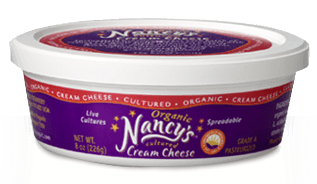
Nancy's Organic Cottage Cheese is pretty decent...it has cream, milk and a couple of bacteria cultures (which are necessary).
Lacy says
I absolutely LOVE what you doing! Thank you for bringing beautiful awareness into the world about the power of the foods we eat and the joy of mindfulness around it all! So glad to find your site via Anne Hofweber.
Kim says
The reason I eat Greek yogurt is for the higher protein content. 18g per 3/4 cup. You can find it in 0%, 2% and 10% fat - plain or flavoured (the flavoured stuff has added sugar so I never buy it). I flavour my plain Greek yogurt with vanilla & maple syrup or fruit. I also use it in place of sour cream, in smoothies, and in dips - hummus, taco dip, veggie dip, homemade ranch dip etc. Mine only has 2 ingredients!
Jenny says
How to make fast Greek yogurt: buy your favorite yogurt, line a large size fine mesh colander with cheesecloth or fabric (I bought a half yard of unbleached organic 100% cotton at walmart just for this purpose). Place the yogurt in the fabric that is lining the mesh colander and fold the additional fabric up over the top of it. Place the entire thing over a pot to collect the whey that will drip out. Then fill up a quart size ziploc baggie with water and lay across the top of the colander. (This will press down on the yogurt and help strain it). Place everything into your fridge for a day. The next day you have greek yogurt/yogurt cheese depending on how firm you want it. Super simple!!!
Kim says
I have to avoid dairy due to an allergy. It is very hard, but using vegan has been the best option.
Renee says
I literally just came to your site to look up cream cheese- and which one(s) were best, when low and behold there was a picture of cream cheese right on top- with tons of other information I've been wondering about!
Great minds!!!
Rebekah says
Awesome article! I have been making my own ricotta cheese and believe me it's so easy - replaces most soft cheeses you'd buy at the store. It's found on the smitten kitchen food blog. Enjoy!
David says
Your article is very informative regarding dairy products. I myself, didn't know that yogurt and Cheese come in so many forms. Your article has helped me become a better buyer of these product.
Hailey says
I really loved this post. While I don't personally think dairy is good for us, I love how informed you are in the decisions you make for your family and that you can easily explain yourself. It makes a lot of sense and are good rules to follow :)
I am a self diagnosed cheese addict, working at leaning into a more vegan-ish lifestyle {I will never be 100% because I don't want to be}...but I like the idea of having it sometimes and will be looking seriously at these points you've made when deciding what to buy.
The key is also moderation - your real food lifestyle has also allowed you to live a less excessive one,so I think your cheese/dairy intake isn't of much concern. We are all so used to doing this excessively - changing that is one of my favorite things about this lifestyle.
Anyways, great post - and way to be informed!
Megan says
On the yogurt - I have found that Greek yogurt leaves a dry aftertaste in my mouth... BUT... I've only been able to find 0% or 2% Greek yogurt and I was wondering if that makes a difference to the dryness. When I pour out the extra liquid of regular yogurt (which I buy full fat) it doesn't taste that way. Anyone know?
Kerri says
Beth - daiya isn't really a "cheese". It does alright in small doses...maybe in a casserole or a little on a pizza, but it just isn't the same. It taste ok. Worth a try.
I would encourage you to give going non-dairy a try. I did a vegan challenge and came to the conclusion that dairy really isn't all the good for me. Starting to add some meat back in my diet, but trying to keep the dairy in small amounts.
Back to the organic dairy thing...I thought that if something was labeled "organic dairy" that just meant that they were fed organic grain. It doesn't mean grass fed or anything else. I am sure there are exceptions, but it would be labeled as "pastured". I guess my question is, would organic dairy from a grain fed cow be considered within the rules for a "real food"?
Assistant to 100 Days (Jill) says
Hi Kerri. My understanding from what I've read is that the cows must have year-round access to the outdoors, access to pasture during the grazing season, and a specified minimum intake from pasture grown without synthetic herbicides and pesticides. They also must not have been treated with hormones or antibiotics. Now, I think that's just for milk, I'm not sure if that applies to all organic dairy. I hope that helps. Jill
LAW says
I'm not sure that is correct. Unless the USDA actually got tougher rules - which is so rare. At one time at least the rule was that the cows needed to be pastured for a percentage of their life. This can, and did, include the period of their life before they could even be milked (and after). So some companies at that time were actually limiting pasture time during the period that we consumers most want them to be pastured. It takes effort to round up a heard and bring them in for milking twice a day. And even "access to pasture" does not mean the cows go much farther than a pen outside the barn.
I'm guessing that even the label "pasture fed" has to have some exception when the dairy is in an area under snow part of the year. This would actually be an interesting topic. Figuring out the USDA might be tougher than the FDA, though.
Beth says
Daiya is a vegan cheese and I am considering trying it. The whole dairy thing is starting to concern me about how healthy it really is. Has anyone tried it? Currently I try to buy organic dairy.
Kim says
My son with a dairy allergy uses Daiya cheese for lots of foods - grilled cheese, pizza, homemade mac & cheese, mixed with tuna etc. The taste is OK and it gives him something to have that is the same as everyone else!
Melinda Caskey says
My mom makes her own yogurt. She cooks milk until it is hot and bubbles just start to form at the edges. Don't boil it. Then you add one small container of plain yogurt (for the cultures) Remove it from the heat and wrap the whole pot in a towel to keep it warm and let it sit. Voila, yogurt.
Katrina says
Freeze your cheese if it gets mouldy. I cut my block up into about 2 oz. pieces and get at least a week's worth of lunches out of it. I have several kinds in the freezer and just pull it out as needed. If I wanted to have several on hand at any moment, you could pre-cut everything and just take out what you want that day (it would thaw by lunch). I only use raw organic milk cheese and find that my healthfood store has more variety than TJ for that type, but, TJ's organic raw milk chedder is very good, too:)
Tia says
I live in WI and eat a lot of cheese as well - we get ours mostly at farmers' markets and butcher shops, where we get great local and natural products at great prices! It's something that's super important to us so we make sure we budget for it.
Kristin says
Organic cheese is one of those things I wish I could afford. Here in WI we eat A LOT of cheese. I generally have 7-10 kinds of cheese in the fridge at a time. When I can, I buy cheese from Trader Joe's, since at least it's BGH free. Though I find their blocks of cheese go moldy rather quickly, so I can't stock up on the blocks, like I do their cheese sticks.
Katelyn says
I just wanted to say that I frequently freeze blocks of cheese when I can get a good price. The only time I've ever had a problem was with very sharp cheddar - it tends to be a bit crumbly after thawing, but since we normally shred ours for use it doesn't really matter to me if it's not perfect little shredded pieces. I've never tried freezing a soft cheese though.
Hailey says
Katelyn, just try thoroughly thawing it for a couple of days on the counter and it will be perfect :)
Susan says
Straus Family Creamery makes an organic, grass-fed, whole fat yogurt. It is to die for! Seriously, I would bathe in it if I coukd! Their ice cream is supposed to be excellent as well, but my health food store doesn't carry it :(
Shazza says
Eating organic and eating whole is a beautiful thing. Its so nice not to have to watch the calories when I'm eating raw and whole foods. It really does taste so much better then eating low fat. I really love this website because all these things are doable and fun. I'm going to be making the homemade yogurt next thanks for affirming everything my childhood friend has told me about healthy eating. I'm so glad I started, and I've only been doing it for 3 months and have last nearly 30lbs.
Mike says
I love making our own yogurt from local organic milk. You know exactly what is in it and you can flavor it any way you like. My little boy (14 months)can't get enough of it. Which brings me to my question, is raw cheese safe to give to a young child? There are debates about giving raw milk to children and I wondered if that included cheese as well.
Assistant to 100 Days (Jill) says
Hi Mike. I don't have an exact answer for you, but, just like the raw milk commenters have noted, I think you would want to be confident of your source in that it is safe and clean and that the animals are treated properly. I have read that making cheese out of raw milk is different than consuming raw milk, but, I don't know the specifics behind that statement. Good luck with your decision. Jill
Meghan says
I just love how you and I are in sync with all things real food related. I get alot of the same questions you do, often times I feel like an encyclopedia. I constantly send my family and friends over to your site to educated themselves on their own time. I've even converted a few! :) Thank you for taking the time to lay out the in and outs of real food eating!!!
Courtney says
Can I comment on the new sponsor? I've been using Plan to Eat for over a year and absolutely love it. I hardly throw away food any more (something I used to do weekly when I shopped based on what looked good when I was in the store) and it is so easy to use. I've bought gift memberships for friends as well - it's really a great tool.
My other comment - did you know that your recipes won't import using their "bookmarklet" tool? You have to copy/paste them. I don't understand how it works well enough to say why, but they won't import and I'd love it if they would!
Courtney says
@Shannon, to get the creamy texture of velveeta add some cream cheese, plus chedfar, gouda, of fontina (or all 3!) In your recipes.
Pattie Walker says
Thank you Courtney. I'm excited to try this, as my husband LOVES velveeta cheese. THANK YOU, THANK YOU, THANK YOU!
Courtney says
You're welcome!! I am a reformed velveeta lover myself :)
Claire says
This is very helpful - thanks!
One small point: Cellulose is actually not at all harmful by itself. It is found in all plants (it provides structure - you can think of it as a sort of skeleton for the plant cells) and is a major component of the "dietary fiber" that you see listed in nutrition facts. Not trying to nit-pick; I just think that as much as possible we should know exactly what these additives are and what they do. That said, I understand why you prefer to grate your own cheese - I don't like the powdery-ness of the pre-grated stuff either.
Emily says
Are Organic Valley and Stonyfield products grass-fed or pasture raised?
Kristin says
Just went to check the fridge and both the the Organic Valley whole milk and whipping cream say "blissfully pastured", though frankly most dairy cows here in WI are pastured when it is available. They also have a salted PASTURED butter (green package) that tastes AMAZING on good bread. I think their regular organic butter is pastured too, though they truck fresh grass up in winter for the cows making milk for pastured butter, when regular cows would be eating silage. Also, I think to be considered organic cows are required to have a certain amount of time on the pasture.
Megan says
I've been told that Organic Valley products are not always pastured - for example at the store today I saw salted butter and cultured butter but neither of them said "pastured". I did look because I was talking about it with my friend at the time :) She told me the pastured products are seasonal.
Assistant to 100 Days (Jill) says
Hi Emily. Earlier this year Organic Valley announced the launch of Organic Valley Grassmilk, an organic specialty milk produced from cows that are 100% grass-fed. The milk is said to be sourced from pasture-raised cows that eat only fresh grasses and dried forages, like hay. They do not eat supplemental grains or soybeans. The information for Stoneyfield stated that all of their cows that make milk are pasture-raised on organic dairy farms. Hope that's helpful. Jill
Raquel says
I have made mayo in my food processor. It wasn't hard because the feed tube on my food processor lets the oil drizzle in thin stream. It's basically eggs, vinegar or lemon, and oil. A lot of oil. It would give you the flexibility of using cage free eggs and whatever kind of oil you want.
Heather says
@Shannon, Velveeta is not real cheese. If you are looking for a real cheese with similar consistency try gouda (this will traditionally have an orange coloring that comes from Annatto, an natural coloring from the Annatto tree). You could also try fontina, which tastes a lot like cheddar. Both gouda and fontina are very soft cheeses and melt beautifully. I make my own cheese. It is very inexpensive, but time consuming. It is a good winter hobby.
PS, I love the blog! Your recipes are all really great and I am happy to be learning information about food that I did not know.
The Blissful Baker says
I really enjoyed your post and all the information...it is all definitely something to think about! I completely agree with the list of ingredients tip! Another reason I make so much of my food myself-that way I know exactly what is going into it! Check out some of my healthy recipes that are easy to make yourself @ bakingblissful.blogspot.com
Wendy says
I have been buying organic, or in some cases a more local dairy product that says it does not use milk from treated cows. I had not been happy with the taste of our butter, even organic, so I just made my own the other day and everyone is so happy with it. I used organic heavy cream and in about 10 minutes I had butter and buttermilk!
Lisa says
I've been wondering about mayonnaise lately. Any thoughts?
Kyra says
She addressed mayonnaise in an earlier blog post about condiments:
https://www.100daysofrealfood.com/2012/04/17/real-food-condiments-do-they-exist/
Assistant to 100 Days (Jill) says
Hi Lisa. Check out this post on condiments: https://www.100daysofrealfood.com/2012/04/17/real-food-condiments-do-they-exist/. Jill
Clarissa says
Greek yogurt is just regular yogurt that has been strained. In other words.... Some of the whey has been removed so it's condensed. That's why it has twice as much calcium, as the package says. It's really easy to make your own... Even from store bought yogurt.
Check out my expiriance with it here:
http://soggy-toad.blogspot.com/2011/12/yogurt-making.html?m=1
Delirious says
I have some friends who eat a "raw" diet. But recently my husband listened to some experts on television who talked about how studies show that cooking food actually makes it easier for the nutrients in it to be utilized. I think if anyone is considering following a "raw" diet, they should really check in carefully to the research.
Tia says
@Wendy - there are versions of Greek yogurt out there that are fat free, but not all of it is. Greek yogurt is just regular yogurt that's been strained to remove the liquid (whey), leaving it thicker.
Shannon says
I enjoyed this post and definitely agree with it! We also grate our own cheese because it does taste a lot better and is also healthier. I do have a question about velveta cheese though. I know velveta cheese is highly processed and probably isn't really cheese. So I was wondering if you might know an alternative to velveta to use in recipes? Thanks!
Michelle says
I have a recipe for making your own "velveta" like cheese if you are interested. I would be glad to share it, although it is a little labor intense but tastes very good. Email me if you are interested @ [email protected]
Wendy Hoff says
isn't greek yogurt fat free? I'd say that rules it out.
Jessica says
Not all greek yogurt is
Pattie Walker says
No, not all Greek yogurt is fat free. i buy Zoi brand.
Dree says
I have no fear of annatto (I actually have purchased annatto seeds myself to use in traditional South American cooking).
Pre-shredded cheese sometimes has potato starch in it an ant-caking agent as well. My younger son was allergic to both potato and tomato as an infant/toddler/preschooler (no, we tried no other nightshades at that point!) He could not eat anything with cheese at a restaurant, a friend's, or grandma's, because of the potato starch issue.
I also prefer to make my own yogurt. It is sooooo yummy. I heat it on the stove and keep it in a cooler I have pre-warmed.
Shalene says
Lisa,
Have you tried making your yogurt in the slow cooker??? It's super easy (though you have to make sure you're going to be home at two differnt 3 hr time intervals.) And it's really good too! I've been making it myself (and once you've made it the first time, you no longer have to buy yogurt for your starter.) I use it for eating with honey and granola, or making homemade "go-gurts" and for making smoothies! You should try it! Then you REALLY know what's in your ygurt. :D
Heather Nowak says
Hey Shalene!! Can you tell me how you make your yogurt in the crockpot? THanks!
The Poorganic Life says
You can save a lot of money on organic yogurt by making your own, using organic milk. :) Also, Trader Joe's brand products are all pledged to be GMO/ pesticide/ hormone free, so I often buy their undyed cheeses as an alternative to expensive organic or raw milk cheeses. Here's my yogurt recipe. :) http://www.thepoorganiclife.com/poorganic-greek-yogurt
Shelly says
One other reason to avoid "yellow" cheeses - yellow (annatto) food coloring, while a natural dye, can trigger migraines. This type of migraine is a bit delayed so it is hard to trace it back to the annatto. For example, if you have this cheese on Friday evening, the migraine would show up on Sunday morning. This was new info to me so I thought I'd share.
jennifer says
I'm curious too, how many nutrients are lost (or compromised) from making smoothies and preparing fruits and veggies using a food processor. This may be a better question for a food scientist, but wondering if you knew.
100 Days of Real Food says
This is not something I can answer with specific numbers, but I do know digestion starts in your mouth...and with anything we go for variety. So rather than a complete liquid diet we sometimes have smoothies, but also chew our food plenty as well! I hope that helps.
Sarah says
No nutrients are lost by chopping up food in a blender or food processor. It is the same as chopping up a fruit or vegetable with a knife, except into smaller pieces.