Cheese and Other Dairy Products: Are they Processed?
There’s a question I’ve been getting a lot lately and it goes something like this:
“If you avoid processed foods how is it that you’re still eating cheese (or cream cheese or sour cream or [insert dairy product here])? Isn’t cheese processed?”
Want to Save this Recipe?
Enter your email below & we'll send it straight to your inbox. Plus you'll get great new recipes from us every week!
The thing is even cooking is technically a form of processing or changing your food so unless you are on a raw food diet, which we are not, we are all eating food that’s been somewhat “processed”. So maybe it would be better to say we avoid allhighly processed foods, which, to draw the line somewhere, we define as having more than 5 (or any refined) ingredients.
So to hopefully answer some of those burning cheese questions I’d like to share what we look for when it comes to purchasing dairy products in general. And in case you missed it be sure to check out our post earlier this month all about milk.
Cheese
There are a few basic things we look for in cheese…
Organic: As I’ve mentioned before you can’t exactly peel or wash off dairy products like you can with conventional produce so we think it’s best to go organic if you can.
Block Form (as opposed to pre-grated): Bagged, pre-shredded cheese contains an anti-caking agent called cellulose that’s sometimes made from wood pulp. Whether this additive concerns you or not the point is it’s an extra additive you will not find in a block of cheese. So when we want grated cheese at our house we just grate it ourselves. Yes, it’s an extra step, but it’s worth it to me especially because I think the texture is much better (i.e. less “powdery”).
White: Cheese, which is obviously made from milk or cream, is meant to be white not orange…think about it. The orange color is typically a harmless, natural color additive, but just to make a point I personally like to buy my cheese white because that’s the way it’s supposed to be. When it comes to “voting with my dollars” I don’t like to mess around!
Full Fat: We no longer buy any reduced-fat or non-fat food products (since to get products that way they are simply more processed), which is actually kind of a relief because I never thought the low-fat versions tasted all that good anyway!
Grass-Fed: Cows are meant to eat grass (not corn), and as I mentioned in the milk post when animals are fed a proper diet their food products are in turn more nutritious for you. Sometimes it’s hard to find, but I ideally look for cheeses that either say “grass-fed” or “pasture raised” on the package.
Yogurt*, Cream Cheese, and Other Dairy Products
This is what we look for when it comes to other dairy products like cream cheese, sour cream, yogurt, cottage cheese, and ricotta cheese…
Organic: Just like cheese and milk we always choose organic when it comes to any dairy products.
Plain: When it comes to dairy products like yogurt, it’s always best to buy the plain version and flavor it yourself. The majority of factory-made food contains way too much sugar (and salt and oil) so it’s not only best to be able to control how much is added, but also what type of sweetener is used. We love mixing our plain yogurt with homemade berry sauce, homemade strawberry-honey jam, or a little maple syrup and vanilla extract... you can also add some orange zest for a real treat!
Least Number of Ingredients: No matter what type of food you are buying I highly recommend to ALWAYS read the ingredients before making a purchase. Most of the time least processed = least number of ingredients (as long as those ingredients are “whole” of course).
Grass-Fed: Once again this can be hard to find especially when you are looking beyond cheese and milk, but ideally all dairy products should come from grass-fed (as opposed to corn or grain-fed) cows.
*Note Regarding Greek Yogurt: I can’t really say that Greek yogurt is “better” or “worse” for you than regular yogurt because to be honest it’s just different. As long as the yogurt meets the criteria outlined above just pick whichever one you like best!
New Sponsor: Plan to Eat
I’d like to introduce another one of our newest sponsors today…Plan to Eat! Plan to Eat is a very cool meal planning service that is quite different from all the rest. Before now most of the services I’ve come across give you a dinner plan and shopping list so you basically eat the meals they’ve picked out for you for the week. Plan to Eat, on the other hand, is a program that automatically turns YOUR own recipes into a meal plan and shopping list. You can import recipes from websites and blogs or add your own. So in the most basic terms you decide what you’re going to have for dinner and Plan to Eat organizes the information for you into one neat meal plan and shopping list! They even have a feature where you can access your shopping list from your mobile phone. Pretty cool, huh?
Lisa is a wife, mother, foodie, blogger, and #1 New York Times Best-selling author who is on a mission to cut out processed food.
Comments
Kellysays
What organic mozzarella cheese do you buy? Same brand organic valley in a block? We have been changing over to organic and I never thought about the coloring in my cheeses and I buy shredded! I want to buy what's best for my family.
I'm having a really hard time myself with finding organic mozzarella at Publix or the fresh market down here in FL. So I'm stuck buying conventional brands. I noticed on Amazon they sell Organic Valley mozzarella in bulk but it's part skim which I'm not sure is any better. Plus it's in bulk- only way I can buy it is if I shred it first and freeze but I'm not quite convinced yet on the switch. Any help would be appreciated too.
Hi there. In a perfect world grass fed organic is the way to go but it can be difficult to find. Organic in a block is a good option as it does not have the additives which shredded cheeses generally do. You can often find a better variety online than is available in stores but this can be an expensive option unless you buy in bulk. You will have to decide what option works best for you. ~Amy
Hi Melissa. Different states have different rules. Here is NC, it is not legal to sell raw milk for human consumption. The Leakes don't drink raw milk. ~Amy
Isn't raw milk illegal? Me and my husband watched a show recently on it. I think it would be great for myself and even one of my kids. Where can I buy it?
hi there! love the blog and the tips on eating better. i am about 14 weeks pregnant, so i'm trying to eat even cleaner for the little one on the way. but...the dairy seems to be an issue. since i'm only supposed to eat "pasteurized" dairy products, is there a way to eat a little less processed or should i nix most dairy all together?
@molly-The only heavy cream I know that does not contain carrageenan is Strauss Family Creamery. They are an organic, 100% grass fed dairy in northern California, but I can get their products here in Arizona at my natural foods co-op. There are probably other brands in other parts of the US, but I don't know any off the top of my head. Try googling heavy whipping cream without carrageenan. You could also ask at your local natural foods co-op or Whole Foods to see if they know of a brand they could get.
I started buying Grassi Parmigiano Reggiano, which is an imported Parmesan from Italy. Italy has very strict standards for what cheese can be labeled Parmigiano Reggiano. You can read about some of the standards on the website for the Parmigiano Reggiano Consortium in Italy (website in English). http://www.parmigianoreggiano.com/consortium/disciplinare_produzione_vigente_sino_agosto_2011/production_standard.aspx
You're probably pretty safe with any Parmesan labelled Parmigiano Reggiano imported from Italy since any cheese labelled that way must have been produced by those standards.
Sorry, I forgot to mention that the regulations don't require them to be organic, but the cows must have a diet foraged from where they live. These cows are out there grazing, not eating cattle feed made from processed grain.
Aliciasays
Thanks for the post on cheese! I've been looking and having a hard time finding these. I shop in the Matthews NC area. At what stores do you buy them?
I know that you have children, so I understand the need for tasty cheese and milk, but humans really should not eat cows milk. Even if you don't have visible reactions, it still likely increases inflammation in the body which can lead to other health problems. I know people claim raw milk is better, but it is also dangerous, and illegal for human consumption in most states. So if you choose to live outside the law PLEASE make sure you know your farmer and his/her practices to make sure you are getting safe milk! (By the way aging cheese apparently renders these potential dangers inert) But the moral of the story is don't eat cows milk.
I just found my new favorite cream cheese!!!!! It was so easy. I needed some whey for starting my vegetable ferments....so I read up about hanging yogurt up in a cheesecloth and leave it on the counter for 24 hours as the whey drips out. So I bought my organic plain yogurt (I ingredient plus the active cultures), hung it up, took the whey, and the "leftover" product of the dried yogurt was the most fantastic, delicious cream cheese I have ever had. It was gone in two days!!!!! I made everyone try it and everyone loved it! And it was so easy. So that helps with avoiding the guar gum and other cream cheese additives too...
Correct me if I am wrong, but I believe you should look elsewhere than Organic Valley if you want the benefits of truly raw cheese. I was made aware of something from their company a few years ago. The cheese is heat treated to a few degrees below pasteurization but can still be legally labeled as raw.
Hi, Lisa - I so appreciate your postings! I have learned so much from your blog, and I'm happy to have another source for eating whole (less processed) foods. I don't have kids, but I love your "here's what my kids are having for lunch today" posts! It inspires me! Thank you, and keep it up! And, don't let the naysayers deter you from doing what you're passionate about (and right about!) Cheers!
Hi. I'm just needing a little assistance please! We LOVE really sharp cheddar cheese...and I've been looking for organic, non-GMO versions...although the only ones I've found (very literally) taste like bile (they do NOT contain rennet - at least it is not labeled on the package, and I'm buying it at the local food co-op). Help! Thank you!
Hi, I have a question regarding organic vs non-organic cottage cheese. My hubs loves cottage cheese as a snack; however, all the organic options I have seen have a lot of ingredients, many of which r unrecognizable. For this reason I generally buy him Daisy which has 1 ingredient, cultured milk. Should I switch to an organic but more ingredient laden item or stick w Daisy? Thanks!
Hi Bonnie. The reason we recommend organic dairy is because you then avoid hormones, antibiotics, and GMO's but you are correct in pointing out that many of the organic brands have several additives. Kalona Supernaturals and Nancy's brand also offer additive free cottage cheese. I love that Daisy is 1 ingredient, too. This might help: http://www.toxinless.com/cottage-cheese. ~Amy
When I was 12 years old, I contracted encephalitis from drinking milk directly from the cow, according to my family doctor at the time. I hallucinated to the point of hospitalization and a weeks worth of antibiotics. I recovered with minimal lasting effects.
Just a clarification. Tillamook is sold at all my local grocery stores as well as Costco and Sam's here in Dallas, TX. So it's definitely more than the west coast. To my knowledge they are not grass fed and they do have annato added but they make an excellent cheddar. We've tried the Kerrygold cheddars and they are just too strong for our palates. Though they do meet the grass fed and white requirements. Neither, of course, are organic.
We visit Tillamook on the Oregon coast every couple of years. They don't have a policy of grass-fed only herds, but as you drive through the region, you cannot help but notice the many pastures with Tillamook cows grazing out in the fresh air. We buy their uncoloured cheese when we are down there (Oregon doesn't allow raw dairy, apparently), but there ice cream is full of stuff that is not really food in my opinion.
Thank You for your thoughtful comments. I am an Organic Valley Farmer - also producing grass-fed milk. It has been a challenge on our side but reading this helps us to persevere knowing that we are producing the best, highest quality, nutritious food for you!
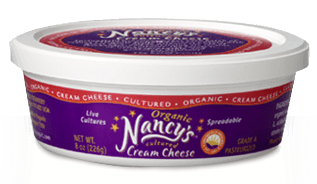
Hi Jessica. It is hard to find a cream cheese without added binders and we do work to avoid them. The Nancy's brand pictured here if free of chemical binders. ~Amy
For those recommending raw milk, I love that idea, but here in NC it is not legal to buy it for human consumption, which makes it a little challenging to purchase.
In regards to milk being hard to digest, that's why we all should go raw. Unpasteurized milk still contains the natural enzymes in this mother's milk that promotes digestion of the milk proteins. My daughter went from normal milk and severe constipation and stomach aches to no adverse issues and a flatter gut. Personally I stick with raw cheeses and raw yogurt. There are recipes for cottage cheese and sour cream using raw milk that I have yet to try.
Thanks for the info and for sharing!! My daughter loves yogurt and we used to buy her "go-gurt" because she liked them so much. Now seeing your post about buying plain organic yogurt and flavoring yourself, I realize my DD would LOVE that!! Thanks for all your tips!!
Hey,thank you for the info. Great post. Dairy products, in general, are very acid forming in the body, mucus-forming, and difficult to digest. They are Fat triggers and a major cause of weight gain.
Tillamook is on the coast in Oregon and do not distribute outside of the West Coast... their factory is a great destination for a vacation... but many of their products now include some color or flavor addatives.
They are like the Cabot of the west... but they also make ice cream.
I really like this post... great way to explain different pitfalls but Stoneyfield isn't on our list anymore... look at the amount of sugar... even for the vanilla the ones that are here in Ohio are more than 20g per serving? We finally gave up store bought yogurt after the Chobani recall earlier this year.
Hey, just wondering thoughts on Tillamook cheeses... supposedly they are really great though they have the annetto coloring (not that it's bad for you). Would love to hear your thoughts! Thanks!
I've stopped eating all flour products so I can lose the belly fat, but the problem is I'm allergic to wheat so I can't substitute my carb intake with brown carbs so now I'm always hungry. What should I do?
Thank you. You are a voice of reason in a sea of increasingly radical food ideas. We are all at different points in our journeys to live healthier, less processed lives. In the end, we all decide what we put into our mouths, what food strategy or lifestyle we will follow. Thank you for sharing yours.
-The argument, "humans are the only animals to consume another animal's milk" has been used ad nauseum. Let's face it, humans do a lot of things other animals don't do (like cooking our food, for example), so unless we're going to strip down, head back to the woods and live "as nature intended", this is one of the least valid arguments against milk. The majority of modern people have compromised leaky guts to begin with, throw some ultra-pasteurized skim milk on top of that and then your digestive problems start. Most people who are lactose intolerant actually have no issues digesting raw milk. That's because milk in it's raw form contains the necessary enzymes to help animals digest it properly...this is true of all milk, regardless of the animal of origin. In addition to destroying heat sensitive enzymes, heating milk denatures the proteins and makes them hard to digest. The problems with milk are problems we have created in order to maintain a healthy profit margin, rather than healthy people. Milk in its pure form, from healthy grass fed animals, is one of the most whole and nutritious foods you can consume. Make it in to yogurt, kefir, or sour cream and you've got a powerhouse food. Maybe the fact that humans are the only animals to do so, means we were smart enough to figure this out and put our opposable thumbs to good use.
-The cholesterol and fat connection is based more on political agenda than the sketchy science that started it all. Every cell in our body uses cholesterol to repair and help maintain function, without we would die. There is no direct correlation between high cholesterol numbers and CAD...and let's remember, until the plethora of now available cholesterol mediating drugs hit the market, the upper reference range for overall cholesterol was 250 (as I believe it still is in Europe). The number was arbitrarily lowered to 200 and all of sudden scores of people were diagnosed with hyperlipemia and needed cholesterol mediating medication to save their lives.
More current studies are finally focused on inflammation as the primary cause for CAD, specifically, the type of inflammation caused by oxidized cholesterol found in low fat products such as skim milk and grains...one of the big reasons why most people feel worse on the currently prescribed cardiac diet. As inflammation increases, your body sends out more cholesterol to repair the damage (hence the apparent correlation between higher cholesterol and heart disease; a case of assigning a symptom as the cause, rather than the result). You can google the history of the lipid hypothesis to get all the cited studies and diagrams to explain it all in more detail.
-With regards to the white vs yellow vs orange cheese questions. It is normal for white cheese to vary in appearance from white to yellow in color, especially because the cream from healthy grass fed animals is actually yellow to begin with. But cheese is never orange. That effect is achieved by adding annatto color, a "natural" coloring meant to replace the yellow food colorings, specifically yellow #6. Annatto has since been found to be more allergenic to more people than yellow 6, and is a trigger for most people with an MSG sensitivity. Companies continue to use it because it allows them to slap "all natural" on their product and sell more of it. Natural though it may be, healthy and harmless it is not.
Shauna
Thanks very much for your info - certainly "food for thought" and pun intended. I've always been skeptical about the whole statin push and will do some more research on preventing inflammation rather than worrying about a cholesterol number. You mention grains in the same sentence as oxidized cholesterol - are you lumping all grains together or do you mean more highly processed grains?
Thanks again for your post.
All grains in general are inflammatory, some more than others, with processed obviously being the worse. Choosing the right ones and preparing them properly, goes a long way in helping. I'll use wheat as an example; modern wheat has been hybridized several times over in order to achieve a plant that is compact, grows quickly, and produces a lot. The result is modern wheat contains a super gluten, not found in heirloom wheat, and more of it in general. Hybridization, combined with soil depletion, results in a wheat with less protein and lacking vital minerals. As an overall result we are finding gluten intolerance on the rise, and I would argue pretty much any animal alive today eating this stuff is sensitive to it to some degree. No one in my family has been diagnosed as gluten intolerant, but I did observe some ill effects on wheat (including whole wheat) including, constipation, bloating, and skin changes. We switched to gluten free for a while and that cleared up most of the issues. But, from a nutritional standpoint, I was not happy with the resulting breads and pastas. More research later, I came across heirloom wheat (the brand I use is Jovial, organic and sustainably grown, but not local). This is the wheat the Bible peeps were talking about when they said, "give us this day our daily bread" :) As the name entails, it is non-hybridized, contains much less gluten, and a higher protein content. Does not spike blood sugar (another inflammatory pathway of grains) when eaten...I tested this on my diabetic grandmother :) And people who have gluten intolerance issues are usually able to eat this without issue, including everyone in my family. We also noticed the wheat pasta has a nice nutty flavor rather than the bitter flavor of regular whole wheat pasta. I make all of my kids bread and snacks from their wheat berries after sprouting.
Sprouting is a second big piece to the grain issue. Seeds and grains have self defense mechanisms to deter animals (including us) from eating them, these include anti-nutrients, ensuring continuation of their species. The key to making any grain more digestible, including any of the wheats (or hybrids), is soaking. By soaking the wheat berries, you trick them in to thinking they are being planted, instead of eaten. Once they sprout, you rinse them and dry them, either in a dehydrator or low temp setting on your oven, and then grind as needed. The end result is a grain that digests more like a vegetable than a grain. And a really fresh super yummy flour. Again, you can google for all the gritty details, this is really a broad overview.
The moral of the grain story is, it should be a tiny piece of our food pyramid rather than the base. Overall, everyone would do better eating less grains, but when we do choose to, the type and how we prepare them, is important. Whole is only part of the puzzle.
Another word on statins; statins work in our bodies directly on our liver, suppressing cholesterol production/release. This same mechanism also suppresses coQ10 in our livers, ultimately resulting in damage to our heart muscles. They are a lose lose. You may have also noticed, in all of the commercials for statins they always say, "may help reduce your risk of a heart attack"...this again, is because there is no direct correlation. And, current studies are finding that woman in particular, have better health outcomes with higher cholesterol...I believe this most likely has to do with the changing hormonal plane of our bodies as we age. Again, you can google for all the fancy cited studies...I have them on my computer, but not my phone. They are all mostly available in the public forum though.
Shaunasays
Another good resource, if your particularly interested in the wheat issue, is the Broadbent Wheat Study. It's a long running research project studying the steady decline in the quality and nutritional value of our wheat.
Carolynsays
Check yogurt carefully, I recently bought Organic Plain Greek Yogurt (Greek gods) however it contained pectin?? Didn't notice until I got home. Have since found another brand without added pectin.
What is it about pectin that doesn't qualify as real food? Pectin is a natural component of apples and oranges as well as other fruits. (I don't mean for that to sound snarky.)
As a fellow cheese lover, the part of this post that particularly stood out to me was "cheese is supposed to be white." I am lucky enough where I live to have a 'cheesemongers' who sell magnificent cheeses, and a good friend who happened to work there. I asked her one day about cheese being yellow, and we found out this occurs as part of the natural cheese making process. This article explains better than I can...
Good news from Just Eat Real Food: "Vermont-based ice cream maker, Ben & Jerry's, announced last week that it will remove genetically-modified organisms, more commonly known as GMOs, from its products. In a statement released on Friday, the company said that it will be completely GMO-free by 2015."
Human beings is the only species on earth that consumes another mammal's for sustenance.
Consider the facts:
Milk's primary function is to provide high levels of nutrition, including fat, protein, carbohydrates and calcium, to a newborn baby through breastfeeding before the baby is capable of consuming other foods.
In nature, milk is meant to be consumed only by the offspring of the mother who is producing it. Milk contains high levels of casein, which a protein known to have opiate-like effects. The purpose of this is to cause an addictive response in the infant so it will crave the mother's milk and continue to feed and nourish.
Lactose is the sugar found in milk. In infants, the intestinal villi produce lactase, an enzyme secreted specifically to break down lactose. As the infant grows, the amount of naturally produced lactase decreases, making it more and more uncomfortable to digest.
Is it any wonder that so many people are lactose intolerant? It simply isn't natural or healthy to consume another mammal's milk, let alone eat products made from milk or milk by-products. Cheese and milk is casein-filled, artery-clogging.
Your reference to "voting with your dollars" made me think of this. There's a new app called "buycott" which lets you trace the corporate origins of products that you buy. I just got it but it looks interesting. For instance, you may find that a company is financially backed by Monsanto or spend $$ to block GMO labeling. Thanks for helping people take ownership of what they use!
We have had a hard time with the switch from flavored yogurt to plain yogurt. I was so happy to find this article. I mixed maple syrup and vanilla extract into the yogurt and my whole family loved it!
I'm searching for a great cheese for quesadillas! My kids love them & they're our go to quick meal when we are busy with sports. The chihuahua cheese we've been using has cellulose. :( any ideas??
If you can find it, try Farmer's Cheese. We get it at the store near us. it's relatively soft (think like feta), but we can shred it and it makes fabulous quesadillas.



Kelly says
What organic mozzarella cheese do you buy? Same brand organic valley in a block? We have been changing over to organic and I never thought about the coloring in my cheeses and I buy shredded! I want to buy what's best for my family.
Jamie Dunson says
I'm having a really hard time myself with finding organic mozzarella at Publix or the fresh market down here in FL. So I'm stuck buying conventional brands. I noticed on Amazon they sell Organic Valley mozzarella in bulk but it's part skim which I'm not sure is any better. Plus it's in bulk- only way I can buy it is if I shred it first and freeze but I'm not quite convinced yet on the switch. Any help would be appreciated too.
Assistant to 100 Days (Amy) says
Hi there. In a perfect world grass fed organic is the way to go but it can be difficult to find. Organic in a block is a good option as it does not have the additives which shredded cheeses generally do. You can often find a better variety online than is available in stores but this can be an expensive option unless you buy in bulk. You will have to decide what option works best for you. ~Amy
Assistant to 100 Days (Amy) says
Hi Melissa. Different states have different rules. Here is NC, it is not legal to sell raw milk for human consumption. The Leakes don't drink raw milk. ~Amy
Melissa says
Isn't raw milk illegal? Me and my husband watched a show recently on it. I think it would be great for myself and even one of my kids. Where can I buy it?
sarah says
hi there! love the blog and the tips on eating better. i am about 14 weeks pregnant, so i'm trying to eat even cleaner for the little one on the way. but...the dairy seems to be an issue. since i'm only supposed to eat "pasteurized" dairy products, is there a way to eat a little less processed or should i nix most dairy all together?
thank so much!
Assistant to 100 Days (Amy) says
Hi Sarah. I don't think you need to get rid of your dairy. Go with organic and full fat. :) ~Amy
molly says
Do you have any suggestions for heavy cream? Most of the brands (even organic) contain carrageenan.
Alex says
@molly-The only heavy cream I know that does not contain carrageenan is Strauss Family Creamery. They are an organic, 100% grass fed dairy in northern California, but I can get their products here in Arizona at my natural foods co-op. There are probably other brands in other parts of the US, but I don't know any off the top of my head. Try googling heavy whipping cream without carrageenan. You could also ask at your local natural foods co-op or Whole Foods to see if they know of a brand they could get.
Assistant to 100 Days (Amy) says
Hello. This paleo thread might be helpful: http://paleohacks.com/questions/32059/heavy-cream-brands-without-additives.html#axzz2hvRRjA9l. ~Amy
Natalie says
Does anyone know of an organic brand that has hard/firm cheese, such as parmesan or asiago that I can buy in MA?
It is easier to find soft cheeses that are organic at Whole Foods, but my kids always want "grating cheese" on their pasta.
Alex says
I started buying Grassi Parmigiano Reggiano, which is an imported Parmesan from Italy. Italy has very strict standards for what cheese can be labeled Parmigiano Reggiano. You can read about some of the standards on the website for the Parmigiano Reggiano Consortium in Italy (website in English). http://www.parmigianoreggiano.com/consortium/disciplinare_produzione_vigente_sino_agosto_2011/production_standard.aspx
You're probably pretty safe with any Parmesan labelled Parmigiano Reggiano imported from Italy since any cheese labelled that way must have been produced by those standards.
Alex says
Sorry, I forgot to mention that the regulations don't require them to be organic, but the cows must have a diet foraged from where they live. These cows are out there grazing, not eating cattle feed made from processed grain.
Alicia says
Thanks for the post on cheese! I've been looking and having a hard time finding these. I shop in the Matthews NC area. At what stores do you buy them?
Assistant to 100 Days (Amy) says
Hi Alicia. Lisa shops mostly at Earth Fare and the Matthew's Farmers' Market. ~Amy
Tiffany says
I know that you have children, so I understand the need for tasty cheese and milk, but humans really should not eat cows milk. Even if you don't have visible reactions, it still likely increases inflammation in the body which can lead to other health problems. I know people claim raw milk is better, but it is also dangerous, and illegal for human consumption in most states. So if you choose to live outside the law PLEASE make sure you know your farmer and his/her practices to make sure you are getting safe milk! (By the way aging cheese apparently renders these potential dangers inert) But the moral of the story is don't eat cows milk.
Leslie Kwait says
I just found my new favorite cream cheese!!!!! It was so easy. I needed some whey for starting my vegetable ferments....so I read up about hanging yogurt up in a cheesecloth and leave it on the counter for 24 hours as the whey drips out. So I bought my organic plain yogurt (I ingredient plus the active cultures), hung it up, took the whey, and the "leftover" product of the dried yogurt was the most fantastic, delicious cream cheese I have ever had. It was gone in two days!!!!! I made everyone try it and everyone loved it! And it was so easy. So that helps with avoiding the guar gum and other cream cheese additives too...
Mark says
Correct me if I am wrong, but I believe you should look elsewhere than Organic Valley if you want the benefits of truly raw cheese. I was made aware of something from their company a few years ago. The cheese is heat treated to a few degrees below pasteurization but can still be legally labeled as raw.
Terri Sundseth says
Hi, Lisa - I so appreciate your postings! I have learned so much from your blog, and I'm happy to have another source for eating whole (less processed) foods. I don't have kids, but I love your "here's what my kids are having for lunch today" posts! It inspires me! Thank you, and keep it up! And, don't let the naysayers deter you from doing what you're passionate about (and right about!) Cheers!
Jessica says
Hi. I'm just needing a little assistance please! We LOVE really sharp cheddar cheese...and I've been looking for organic, non-GMO versions...although the only ones I've found (very literally) taste like bile (they do NOT contain rennet - at least it is not labeled on the package, and I'm buying it at the local food co-op). Help! Thank you!
Assistant to 100 Days (Amy) says
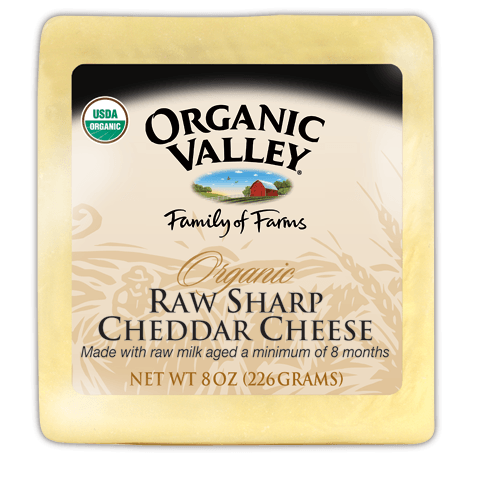
Hi Jessica. These are the two types I buy: http://www.organicvalley.coop/products/cheese/cheddar/sharp-8-oz/ and http://www.organicvalley.coop/products/cheese/cheddar/raw-sharp-8-oz/. I also have found a grass fed option at Trader Joe's. ~Amy
Bonnie says
Hi, I have a question regarding organic vs non-organic cottage cheese. My hubs loves cottage cheese as a snack; however, all the organic options I have seen have a lot of ingredients, many of which r unrecognizable. For this reason I generally buy him Daisy which has 1 ingredient, cultured milk. Should I switch to an organic but more ingredient laden item or stick w Daisy? Thanks!
Assistant to 100 Days (Amy) says
Hi Bonnie. The reason we recommend organic dairy is because you then avoid hormones, antibiotics, and GMO's but you are correct in pointing out that many of the organic brands have several additives. Kalona Supernaturals and Nancy's brand also offer additive free cottage cheese. I love that Daisy is 1 ingredient, too. This might help: http://www.toxinless.com/cottage-cheese. ~Amy
Matt says
When I was 12 years old, I contracted encephalitis from drinking milk directly from the cow, according to my family doctor at the time. I hallucinated to the point of hospitalization and a weeks worth of antibiotics. I recovered with minimal lasting effects.
Joanna says
Just a clarification. Tillamook is sold at all my local grocery stores as well as Costco and Sam's here in Dallas, TX. So it's definitely more than the west coast. To my knowledge they are not grass fed and they do have annato added but they make an excellent cheddar. We've tried the Kerrygold cheddars and they are just too strong for our palates. Though they do meet the grass fed and white requirements. Neither, of course, are organic.
Laura says
We visit Tillamook on the Oregon coast every couple of years. They don't have a policy of grass-fed only herds, but as you drive through the region, you cannot help but notice the many pastures with Tillamook cows grazing out in the fresh air. We buy their uncoloured cheese when we are down there (Oregon doesn't allow raw dairy, apparently), but there ice cream is full of stuff that is not really food in my opinion.
Terri says
Thank You for your thoughtful comments. I am an Organic Valley Farmer - also producing grass-fed milk. It has been a challenge on our side but reading this helps us to persevere knowing that we are producing the best, highest quality, nutritious food for you!
Jessica says
My main question about cream cheese is the gums that are added. Guar gum usually I think, even in the organic.
Assistant to 100 Days (Amy) says
Hi Jessica. It is hard to find a cream cheese without added binders and we do work to avoid them. The Nancy's brand pictured here if free of chemical binders. ~Amy
Tracy T. says
We flavor plain organic yogurt with pure raw local honey and pure vanilla. Then we top it with Lisa's granola cereal https://www.100daysofrealfood.com/2010/04/04/recipe-granola-bars-cereal/. It makes a good crunchy snack.
For those recommending raw milk, I love that idea, but here in NC it is not legal to buy it for human consumption, which makes it a little challenging to purchase.
Melinda Kordik says
In regards to milk being hard to digest, that's why we all should go raw. Unpasteurized milk still contains the natural enzymes in this mother's milk that promotes digestion of the milk proteins. My daughter went from normal milk and severe constipation and stomach aches to no adverse issues and a flatter gut. Personally I stick with raw cheeses and raw yogurt. There are recipes for cottage cheese and sour cream using raw milk that I have yet to try.
Bianca says
Thanks for the info and for sharing!! My daughter loves yogurt and we used to buy her "go-gurt" because she liked them so much. Now seeing your post about buying plain organic yogurt and flavoring yourself, I realize my DD would LOVE that!! Thanks for all your tips!!
Cheryle says
Buy raw milk... make your own butter, cheeses, yogurt! :)
Gascone says
Hey,thank you for the info. Great post. Dairy products, in general, are very acid forming in the body, mucus-forming, and difficult to digest. They are Fat triggers and a major cause of weight gain.
Nancy B says
Tillamook is on the coast in Oregon and do not distribute outside of the West Coast... their factory is a great destination for a vacation... but many of their products now include some color or flavor addatives.
They are like the Cabot of the west... but they also make ice cream.
I really like this post... great way to explain different pitfalls but Stoneyfield isn't on our list anymore... look at the amount of sugar... even for the vanilla the ones that are here in Ohio are more than 20g per serving? We finally gave up store bought yogurt after the Chobani recall earlier this year.
Meredith says
We get the Tillamook cheese way over here on the East Coast :)
Carrie says
We get Tillamook in Small Town Upper Midwest (closer to Canada than to Iowa) too!
Cathy says
We have Tillamook cheese available to us in South Mississippi, but I have never bought it. Is it a better cheese than the others?
Suz says
Hey, just wondering thoughts on Tillamook cheeses... supposedly they are really great though they have the annetto coloring (not that it's bad for you). Would love to hear your thoughts! Thanks!
Assistant to 100 Days (Amy) says
Hello Suz. I'm sorry. I am not at all familiar with those cheeses. :( ~Amy
alma says
Hi,
I've stopped eating all flour products so I can lose the belly fat, but the problem is I'm allergic to wheat so I can't substitute my carb intake with brown carbs so now I'm always hungry. What should I do?
Thanks
Lisa says
You should check out a grain-free blog like Deliciously Organic...lots of ideas for someone avoiding flour!
Debora Bean says
Step 1: Mash a banana.
Step 2: Add to plain yogurt.
Step 3: Mix and eat.
Yum!
Kelly says
Thank you. You are a voice of reason in a sea of increasingly radical food ideas. We are all at different points in our journeys to live healthier, less processed lives. In the end, we all decide what we put into our mouths, what food strategy or lifestyle we will follow. Thank you for sharing yours.
Shauna says
Couple of quickies...
-The argument, "humans are the only animals to consume another animal's milk" has been used ad nauseum. Let's face it, humans do a lot of things other animals don't do (like cooking our food, for example), so unless we're going to strip down, head back to the woods and live "as nature intended", this is one of the least valid arguments against milk. The majority of modern people have compromised leaky guts to begin with, throw some ultra-pasteurized skim milk on top of that and then your digestive problems start. Most people who are lactose intolerant actually have no issues digesting raw milk. That's because milk in it's raw form contains the necessary enzymes to help animals digest it properly...this is true of all milk, regardless of the animal of origin. In addition to destroying heat sensitive enzymes, heating milk denatures the proteins and makes them hard to digest. The problems with milk are problems we have created in order to maintain a healthy profit margin, rather than healthy people. Milk in its pure form, from healthy grass fed animals, is one of the most whole and nutritious foods you can consume. Make it in to yogurt, kefir, or sour cream and you've got a powerhouse food. Maybe the fact that humans are the only animals to do so, means we were smart enough to figure this out and put our opposable thumbs to good use.
-The cholesterol and fat connection is based more on political agenda than the sketchy science that started it all. Every cell in our body uses cholesterol to repair and help maintain function, without we would die. There is no direct correlation between high cholesterol numbers and CAD...and let's remember, until the plethora of now available cholesterol mediating drugs hit the market, the upper reference range for overall cholesterol was 250 (as I believe it still is in Europe). The number was arbitrarily lowered to 200 and all of sudden scores of people were diagnosed with hyperlipemia and needed cholesterol mediating medication to save their lives.
More current studies are finally focused on inflammation as the primary cause for CAD, specifically, the type of inflammation caused by oxidized cholesterol found in low fat products such as skim milk and grains...one of the big reasons why most people feel worse on the currently prescribed cardiac diet. As inflammation increases, your body sends out more cholesterol to repair the damage (hence the apparent correlation between higher cholesterol and heart disease; a case of assigning a symptom as the cause, rather than the result). You can google the history of the lipid hypothesis to get all the cited studies and diagrams to explain it all in more detail.
-With regards to the white vs yellow vs orange cheese questions. It is normal for white cheese to vary in appearance from white to yellow in color, especially because the cream from healthy grass fed animals is actually yellow to begin with. But cheese is never orange. That effect is achieved by adding annatto color, a "natural" coloring meant to replace the yellow food colorings, specifically yellow #6. Annatto has since been found to be more allergenic to more people than yellow 6, and is a trigger for most people with an MSG sensitivity. Companies continue to use it because it allows them to slap "all natural" on their product and sell more of it. Natural though it may be, healthy and harmless it is not.
Susan B. says
Shauna
Thanks very much for your info - certainly "food for thought" and pun intended. I've always been skeptical about the whole statin push and will do some more research on preventing inflammation rather than worrying about a cholesterol number. You mention grains in the same sentence as oxidized cholesterol - are you lumping all grains together or do you mean more highly processed grains?
Thanks again for your post.
Shauna says
No problem! :)
All grains in general are inflammatory, some more than others, with processed obviously being the worse. Choosing the right ones and preparing them properly, goes a long way in helping. I'll use wheat as an example; modern wheat has been hybridized several times over in order to achieve a plant that is compact, grows quickly, and produces a lot. The result is modern wheat contains a super gluten, not found in heirloom wheat, and more of it in general. Hybridization, combined with soil depletion, results in a wheat with less protein and lacking vital minerals. As an overall result we are finding gluten intolerance on the rise, and I would argue pretty much any animal alive today eating this stuff is sensitive to it to some degree. No one in my family has been diagnosed as gluten intolerant, but I did observe some ill effects on wheat (including whole wheat) including, constipation, bloating, and skin changes. We switched to gluten free for a while and that cleared up most of the issues. But, from a nutritional standpoint, I was not happy with the resulting breads and pastas. More research later, I came across heirloom wheat (the brand I use is Jovial, organic and sustainably grown, but not local). This is the wheat the Bible peeps were talking about when they said, "give us this day our daily bread" :) As the name entails, it is non-hybridized, contains much less gluten, and a higher protein content. Does not spike blood sugar (another inflammatory pathway of grains) when eaten...I tested this on my diabetic grandmother :) And people who have gluten intolerance issues are usually able to eat this without issue, including everyone in my family. We also noticed the wheat pasta has a nice nutty flavor rather than the bitter flavor of regular whole wheat pasta. I make all of my kids bread and snacks from their wheat berries after sprouting.
Sprouting is a second big piece to the grain issue. Seeds and grains have self defense mechanisms to deter animals (including us) from eating them, these include anti-nutrients, ensuring continuation of their species. The key to making any grain more digestible, including any of the wheats (or hybrids), is soaking. By soaking the wheat berries, you trick them in to thinking they are being planted, instead of eaten. Once they sprout, you rinse them and dry them, either in a dehydrator or low temp setting on your oven, and then grind as needed. The end result is a grain that digests more like a vegetable than a grain. And a really fresh super yummy flour. Again, you can google for all the gritty details, this is really a broad overview.
The moral of the grain story is, it should be a tiny piece of our food pyramid rather than the base. Overall, everyone would do better eating less grains, but when we do choose to, the type and how we prepare them, is important. Whole is only part of the puzzle.
Another word on statins; statins work in our bodies directly on our liver, suppressing cholesterol production/release. This same mechanism also suppresses coQ10 in our livers, ultimately resulting in damage to our heart muscles. They are a lose lose. You may have also noticed, in all of the commercials for statins they always say, "may help reduce your risk of a heart attack"...this again, is because there is no direct correlation. And, current studies are finding that woman in particular, have better health outcomes with higher cholesterol...I believe this most likely has to do with the changing hormonal plane of our bodies as we age. Again, you can google for all the fancy cited studies...I have them on my computer, but not my phone. They are all mostly available in the public forum though.
Shauna says
Another good resource, if your particularly interested in the wheat issue, is the Broadbent Wheat Study. It's a long running research project studying the steady decline in the quality and nutritional value of our wheat.
Carolyn says
Check yogurt carefully, I recently bought Organic Plain Greek Yogurt (Greek gods) however it contained pectin?? Didn't notice until I got home. Have since found another brand without added pectin.
Laura says
What is it about pectin that doesn't qualify as real food? Pectin is a natural component of apples and oranges as well as other fruits. (I don't mean for that to sound snarky.)
Susan says
As a fellow cheese lover, the part of this post that particularly stood out to me was "cheese is supposed to be white." I am lucky enough where I live to have a 'cheesemongers' who sell magnificent cheeses, and a good friend who happened to work there. I asked her one day about cheese being yellow, and we found out this occurs as part of the natural cheese making process. This article explains better than I can...
http://www.slate.com/blogs/browbeat/2012/07/26/why_is_cheese_yellow_or_orange_when_milk_is_white_.html
Heather says
Good news from Just Eat Real Food: "Vermont-based ice cream maker, Ben & Jerry's, announced last week that it will remove genetically-modified organisms, more commonly known as GMOs, from its products. In a statement released on Friday, the company said that it will be completely GMO-free by 2015."
read more: http://eatlocalgrown.com/article/11572-ben-and-jerry-s-ice-cream-going-gmo-free.html
Viv says
Human beings is the only species on earth that consumes another mammal's for sustenance.
Consider the facts:
Milk's primary function is to provide high levels of nutrition, including fat, protein, carbohydrates and calcium, to a newborn baby through breastfeeding before the baby is capable of consuming other foods.
In nature, milk is meant to be consumed only by the offspring of the mother who is producing it. Milk contains high levels of casein, which a protein known to have opiate-like effects. The purpose of this is to cause an addictive response in the infant so it will crave the mother's milk and continue to feed and nourish.
Lactose is the sugar found in milk. In infants, the intestinal villi produce lactase, an enzyme secreted specifically to break down lactose. As the infant grows, the amount of naturally produced lactase decreases, making it more and more uncomfortable to digest.
Is it any wonder that so many people are lactose intolerant? It simply isn't natural or healthy to consume another mammal's milk, let alone eat products made from milk or milk by-products. Cheese and milk is casein-filled, artery-clogging.
Also read http://www.notmilk.com/kradjian.html
gabe says
We use almond milk!
Sara says
Your reference to "voting with your dollars" made me think of this. There's a new app called "buycott" which lets you trace the corporate origins of products that you buy. I just got it but it looks interesting. For instance, you may find that a company is financially backed by Monsanto or spend $$ to block GMO labeling. Thanks for helping people take ownership of what they use!
Assistant to 100 Days (Amy) says
Hi Stacey. I don't believe that Lisa has made her own yogurt just yet but she often makes her own bread. We did feature a proofer not long ago: https://www.100daysofrealfood.com/2013/02/26/branch-basics-non-toxic-all-purpose-cleaner-special-deal/. And, here is one of our favorite everyday bread recipes: https://www.100daysofrealfood.com/2011/08/17/recipe-honey-whole-wheat-sandwich-bread-for-bread-machine/. Enjoy. ~Amy
Stacey says
I was just wondering if you usually buy or make your yogurt as well as bread.
Renee says
We have had a hard time with the switch from flavored yogurt to plain yogurt. I was so happy to find this article. I mixed maple syrup and vanilla extract into the yogurt and my whole family loved it!
Assistant to 100 Days (Amy) says
Hi Tina. Look for an organic cheddar or organic cheddar jack that you shred yourself. The raw cheddar in this post is yummy. ~Amy
Tina says
I'm searching for a great cheese for quesadillas! My kids love them & they're our go to quick meal when we are busy with sports. The chihuahua cheese we've been using has cellulose. :( any ideas??
Christa says
If you can find it, try Farmer's Cheese. We get it at the store near us. it's relatively soft (think like feta), but we can shred it and it makes fabulous quesadillas.
Assistant to 100 Days (Amy) says
Hi Emily. It is hard to find. This is one brand that I've found at either Whole Foods or Earth Fare: http://www.nancysyogurt.com/index.php/probiotic-greek/whole-milk-organic-probiotic-greek. Good luck. ~Amy
Christa says
Why not make your own? I used a skim plain for the cultures and mixed it with my own (raw) milk.