
Want to Save this Recipe?
Enter your email below & we'll send it straight to your inbox. Plus you'll get great new recipes from us every week!
In the midst of my third summer vegetable garden I'm realizing it's going to be a long road ahead before I’ll truly “get” the hang of things. So far I’ve learned a lot each season, but when you only get one shot at trying out your summer garden each year the learning curve feels pretty steep. Maybe it would help if I had somewhat of a “green thumb,” but other than cutting our grass I have almost no skills when it comes to caring for plants. That hasn’t stopped me from trying though, and since I’ve had some success - and even more failures - I thought I would share my lessons learned (so far!). And by all means if you actually know what you are doing when it comes to growing vegetables I would love to hear your advice in the comments below.
Lessons learned from my garden…
- Take notes: Last year, I remember thinking “Oh I’ll remember to do this differently next year,” but let’s face it – we forget things over a long and cold winter. Thankfully, I at least drew myself a diagram of where I should plant things this year, but I realize I could have done so much more. I’ve heard of others keeping full written journals about their gardening experience, and I think they might just be onto something.
- Things change: Right when you finally feel like you know what to expect with the plants you are growing, things change. Whether it is the unseasonably warm heat, or the rain (or the lack thereof), or where you got your seeds/plants this time, or even what weekend you planted them…there are so many variables that change the way things grow from year to year. So be flexible and consider each season to be a new learning experience.
- Use (organic) fertilizer: My first summer garden was basically a flop. Come to find out most other gardeners were using fertilizers to give their plants a boost and other concoctions for bug control…oh that’s what I forgot to do! So I learned the hard way by not having very much yield the first year. Then I finally got on board with using an organic fertilizer last year called Plant Tone. And hello plants! They went crazy. Almost too crazy. I could not believe the difference a little TLC made!
- Careful planning: Once my plants started actually growing last year (with the help of the organic fertilizer) I realized the layout of my garden was all wrong. Pictured is my new and improved layout.

My Summer Vegetable Garden 2011 - Vines: I learned that some plants like pumpkins, fall squash and watermelon are actually vines that need lots of room to stretch out. So this year I put them in a garden box with an open space on one side and have been “encouraging” them to grow in that direction where there is plenty of room.
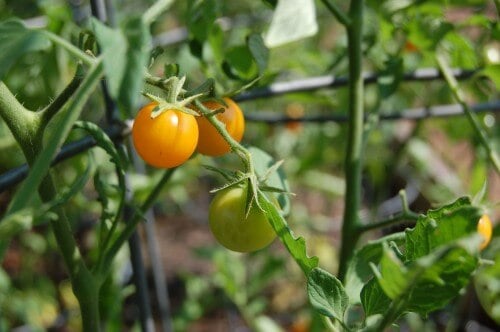
- Tomatoes: I’ve learned that cages for tomatoes are a great investment and the bigger the better…apparently some say the bigger the cage the bigger the tomato plant! Also, put the cages in the soil right when you start the plants because they can grow fast and you’ll end up breaking stalks trying to put a too-big plant in a cage after the fact (not that I know that from experience or anything).
- Bell peppers: Bell peppers work well with a smaller cage for support and my favorite thing I learned about peppers last year is that they continue growing much longer than most other summer garden plants. Late last summer the tomatoes looked like they would keep producing, but all the green tomatoes just stopped turning red and the plants were “done.” Peppers on the other hand just kept on going and going almost through October (here in the South)!
- Strawberries:Last year we planted two small strawberry plants in a rectangular box with raspberries, blueberries and blackberries. Over time (and to our surprise!) the strawberry plants multiplied and basically took over the whole vegetable box. So we had to move the other berry plants into a new spot. The other berries needed a little more room as well so we bought a few more of the round barrels pictured below so they could really spread out.

Cucumbers - Cucumbers (pictured): I realized that having cucumbers in the same garden box as tomatoes last year was a bad idea. The cucumbers have little “curly cues” that like to grab onto (and take over) everything. Think Kudzu for those from the South! And the cucumbers were so intertwined with the tomato plants that by the end of the summer last year I couldn’t even find the cucumbers anymore so I just gave up on them. Plus I decided I didn’t really like cucumbers all that much so there was no reason to have more than one of those plants anyway. So this year we planted one cucumber plant (from seed!) in a barrel all by itself far away from everything else. PS – Next year we will give it a trellis to crawl up instead of a cage
- Okra: I decided I also don’t like okra that much either so why was I growing that in the first place? No okra this year. :)
- Corn: Who doesn’t like corn, but it takes up way to much room since you have to grow either two rows or a circle so it can be pollinated or something like that (don’t ask me I was horrible at biology). So I decided to just leave the corn growing to the farmers and buy it from them at the market.
- Green beans: I learned that having two or three green bean plants was practically worthless. If you can only harvest a few beans off each plant at a time that doesn’t exactly constitute a proper meal! So this year we planted almost two-dozen plants of both a green and purple variety because we all actually like beans.
- Zucchini and yellow squash: These plants need quite a bit of room. They are vine-like and get longer and longer as time goes on, and their leaves are huge! So this year I’ve finally given my squash plants plenty of space.
- One step forward, two steps back: Just because you have a great garden one year unfortunately doesn’t mean things will only get better from there. At least that’s what I’ve learned from my experience. As I mentioned “things change” so be prepared to experience some setbacks as new and different variables have an affect on your plants.
- Don’t be afraid to grow from seed: As I mentioned you only get one shot a year to grow your summer garden so who wants to “roll the dice” by trying to start too many plants from seed? What if they don’t grow and then it is too late to buy starter plants instead? I admittedly haven’t grown a lot from seed, but what I’ve found is that the plants I have started from seed have worked great. This includes two different types of green beans, cucumbers, and corn. My daughters also planted some tomato seeds on their own, which are growing beautifully! So next year I am (going to write myself a note) to save some money on plants and buy more seeds!
- Unanswered questions: I’ve experience some unusual things this year that I am still trying to work though because again…this whole gardening thing is turning out to be an ongoing learning experience!

The Non-Growing Squash - The non-growing squash (pictured): We were out of town for the first week and a half of July, and I thought for sure I would have a ton of zucchini and squash waiting for me when I got home. I was utterly disappointed to find nothing…absolutely nothing! But the weird part is the plants look exactly like the plants did last year when there were ton of vegetables growing. And there are flowers too, but they only appear to be the “male flowers” attached to a stem. There are no “female flowers” which are the ones attached to the vegetable. I know…here we go again with the biology stuff! So according to my local nursery I can pollinate the flowers with a q-tip myself or I can put out a can of coke out (which I of course don’t have LOL) to help attract bees. The weird thing is my other plants seem to be pollinating just fine so I am not sure what the bees have against my squash plants!
- The late tomatoes: We went on the same trip at the beginning of July last year and before we left I had a ton of tomatoes that were already ready to eat. In fact, I remember bringing a bunch of tomatoes along with me in my suitcase last year. Now here we are in the middle of July and I’ve barely had any tomatoes ripen yet. Since I didn’t take very good notes last year I don’t know if I planted them a great deal later this year or if it has something to do with the crazy heat this summer or the fact that we are growing different varieties this time. Either way, it remains a mystery
- The bug infested strawberries: Since this is the first year we’ve had any strawberries to harvest (which were also ready later than everyone else’s) I didn’t know how much the slugs and earwigs would like our berries too! Almost every time we went to pick a nice ripe berry there would be holes in the bottom or if we were really lucky half a slug was hanging out of the hole too. Strawberries are pretty much done this season, so for next year…I need to make myself some notes to figure out a solution for the slug problem!

Children's "Surprise" Flowers


Despite all the ups and downs that have come with gardening it has been a fun experience that I’ve especially enjoyed sharing with my daughters. I know I genuinely shared their excitement the first time I saw what broccoli looked like growing on a plant! Not to mention how fresh and nutritionally dense our homegrown veggies are. If you are interested in trying to grow your own veggies consider starting small with one or two pots in a sunny spot on your deck and go from there.
Related Posts



Kim says
My chickens eat my slugs!
Before I plant for the season, I let the chickens in the bed to eat any pests in the soil.
Danielle =) says
for slugs, you can put out a low dish filled with beer! they slugs will go to that instead! =)
Sharon says
I'm excited about gardening this year to supplement our real food intake and spend less at the expensive organic food store! I'm planning to use raised beds according to the square foot gardening method taught by Mel Bartholomew. I'll be coming back here looking for more great tips too.
Critical Reader says
Thanks for sharing your experiences. Your comment about the fertilizer bothered me a little bit. Did you know, that commercial growers have to follow rules and guidelines concerning the use of fertilizers, whereas obviously those rules do not apply to hobby gardeners? The result is, that hobby gardeners frequently over-fertilize their soil.
The purpose of using fertilizer is to add missing nutrients to the soil and to replenish nutrients the plants have consumed. Instead of just eye-balling some random fertilizer, I would recommend you get a soil analysis first to see where you are standing at and which nutrients might actually be missing. Soil analysis is fairly cheap and should give you back P (phosphor), K (potassium), pH, humus content and maybe also Mg (magnesia). In addition, there are quick tests for nitrate available. Then you compare what's in your soil with what is needed and see if some nutrients are missing. There are plenty of webpages and books out that give you more information.
One word to the term "organic" fertilizer: there are organic and inorganic fertilizers available and the term organic has nothing to do with organic as used in the context of organic food. It just means, that the nutrients are present in an organic form (manure, bone meal, etc.). The overuse of both organic and inorganic fertilizers has negative impacts on the environment. For instance, soil can barely store nitrate and any excess gets washed away with the rain and ends up in the rivers and lakes.
I personally do not use any fertilizers, but I work compost and sometimes manure into the soil. Composting is key to organic farming and saves you $$ otherwise wasted in fertilizers.
Planting corn: they do not have to be in a circle or in two rows. If wind-pollination alone is not enough you can help a little bit. The male flower is the thing on the top (tassel) that produces the pollen (a yellow powder) and the female flower is the cob (ear). The cob has some hair (silks), which accepts the pollen. Collect the pollen with a dry bag and apply it onto the silks. If pollination was successful, silks will stop growing and turn brown. Best pollination time: about 10 am - 2 pm (pollen in the evening might be dead already).
Slugs: yes, they love beer and will drown. BUT, setting out beer will attract even more slugs from outside into your garden. Useful remedies I found are running ducks, collecting the slugs off and burry them (slugs are cannibals and cadavers attract them), or slug fences.
Good luck.
Jill b says
And do you purchase all organic seeds and plants.? Is that necessary.?
Thanks.!
Jill b says
Love these tips.! Question... What are the advantages of having a garden with the raised beds?
Assistant to 100 Days (Jill) says
Hi Jill b. A few benefits of the raised beds include the ability to grow food in any location; soil conditions are no longer an issue, soil tends to drain better, raised beds warm up a bit faster than the ground in spring allowing you to get a slight jump on the season, weeds are less of an issue and easier to remove and usually more produce productivity per square foot. Good luck with your garden! Jill
Stacy says
Hey Lisa - what are the dimensions of your raised beds? We are thinking of making ours 12 inches tall, but yours seem to look a little taller. Also, are there any books or websites that have been a good reference to you throughout your few years of gardening experiences?
Jason Leake with 100 Days of Real Food says
Hi Stacy - Sorry for the delay in getting back to you...this cookbook writing business is a lot of work! Here are the approximate dimensions of our raised beds:
14.5" x 50" x96" (qty 2)
16" x 33" x 96" boxes(qty 2)
16" x 33" x 55 boxes (qty 3)
17" x 26" diameter whiskey barrel halves (qty 5)
I recommend cedar wood if you can afford it (it will last much longer), and of course avoid treated wood. I installed an automatic irrigation system before filling the beds (the pipes are underground but they feed soaker hoses on top of the soil), which is a huge time saver if you can swing it. We just started composting this year so have no real experience with that yet.
In terms of gardening resources, that's more of Lisa's department (and she's not here at the moment), but I think she relies mostly on talking to our local hardware store http://www.renfrowhardware.com/ and farmers at our local market http://www.matthewsfarmersmarket.com/. We take cues from what they harvest and when. I know Lisa worked backwards from that and made a chart showing what to plant and when to plant it and when to harvest for both summer and winter gardens here in NC. You could do the same from resources in your area. Hope that helps, and good luck!
Cheryl says
Saw this news story today and thought of your blog! Nothing like a fresh tomato from a real garden!
http://www.latimes.com/news/science/la-sci-tomato-taste-20120630,0,4449608.story?track=rss&utm_source=feedburner&utm_medium=feed&utm_campaign=Feed%3A+latimes%2Fmostviewed+%28L.A.+Times+-+Most+Viewed+Stories%29
:) says
I'm only a year late with this...but you can kill slugs and snails by filling a shallow dish with BEER! They love it. You trick them into comeing and drinking it and then they drown. This method has never failed me!! Also my second best piece of gardenig advice is to plant marigolds around your gardens...keeps the rabbits out completely.
Kim Smith says
Crushed rock or crushed seashells around the border of your strawberries will keep out slugs...too sharp to cross!
Joy says
Have you tried a Spring Garden? It is almost my favorite. The weeds haven't really started going crazy yet and bugs are at a minimum. I love sending my 3 year old out to cut lettuce and spinach for dinner. He particularly likes eating snap peas off the vine and pulling carrots.
I'm thinking of taking a year off on vining plants this summer. I have a case of squash vine borers and can't stomach the surgery. I have to stay organic because my guys like to eat straight out of the garden.
100 Days of Real Food says
Yes, we are actually growing some things this spring!
Tammy Kristoffersen says
What's the "surgery" for squash vine borer? I have them too & would love to learn how to get rid of them...
Jenna says
Sorry for being way late on finding this post, but two pieces of advice:
1. The readers who suggested beer for slugs are completely right-my dad has been doing this since I was a kid and I still do now, and no slug issues.
2. For rabbits-tie a string around the garden about 12in. off the ground, then tie strips of fabric to the string about 12 in. apart all the way around the garden-the movement of the fabric scares the rabbits.
And a bonus tip-I live in Ohio where deer are plentiful, my grandmother taught me that you can keep deer away by putting hair around your garden. Just go to the local salon and ask, they are usually plenty happy to give you some and the smell of humans keeps most deer away.
Krista says
Good ol' fashioned Sluggo is organic and works like a charm.
Jaime says
This is a great post, and helpful. We're also in our third year growing food in our garden, and also still learning. For us, having inherited part of the garden when we bought the house, we're still figuring out what to do with the gooseberries and currents that grow in our yard.
My big surprise this year was that a flock of small birds are eating all of our pea plants, so very few flowers and almost no peas for us. Next year we're investing in plastic snakes and nets!
gayle says
Here's a wonderful blog site for practical organic home gardening:
tendingmygarden.com
Just found it this year and I've learned so much from her blogs and archives! (And I've been organic gardening for 20 years!) Everything from recipes to pest management to best varieties to try. This site is very different from any other garden site I've visited because the author has so much common sense and is so responsive and helpful. (I have no commercial interest in the site--just wanted to share.)
Nicole says
One more strawberry tip- mulch your plants with straw & at the end of the season when the plants are done producing cut them all down to the ground. The straw has helped a bunch with the pests but I'll have to try the beer can tip too.
My favorite gardening book is Mini-Farming: Self Sufficiency on 1/4 Acre by Brett L. Markham. I've learned so much from it & greatly expanded my garden this year as a reult.
100 Days of Real Food says
So you cut the strawberry plants to the ground even if you aren't planning to replant them the next year (I know some farms replant each year even though they are a perennial).
Cécy says
It's our second year gardening and we're still not very good at starting early enough. I think we started even later than last year so nothing so far... well a little arugula, everything else is not doing enough to be eaten yet.
I did find one useful website: http://www.motherearthnews.com/
They have a garden planner, you can test it for free or get a subscription, it will int his case send you reminders, allow you to rotate crops (it keeps track of the last year and uses color codes to know what shouldn't be grown in the same soil).
There is a lot to know in gardening, we're kind of lazy gardeners and don't do much to the plants... Rain has been a good ally this year as we've barely had to water anything.
Last year we had great zucchini, cucumber and tomatoes. We planted more things this year but we'll see.
sherry says
Try NEEM oil for pests, its approved for organic use. It wont kill bugs, but they dont like it and will start staying away. We use it particularly on our squash, we have had terrible trouble with Squash Beetles this year. Our first crop had such a terrible infestation that we had to tear it out, treat the soil and replant squash, an approach that has been very successful. As for tomatoes, we(40 min south of you) have had tremendous luck with ours, and have been picking ripe ones since Mid-June! My husband, the tomato whisperer, is vigilant about pulling off the suckers, he only wants the main trunk to be left bearing. We fertilize every three weeks or so, also.
One suggestion: think about training your bean vines up a trellis as well as cucumbers next year. We've done this for years and it is a LOT easier to pick beans from a trellis than to climb along the ground bent double. They are just like cucumbers, the "curlicues" are easy to train on a trellis.
Nicole says
Great post with lots of wonderful tips! Thanks a bunch : ) I'll make sure to get cages for my peppers tomorrow!
Nicole
Michelle @ Turning Over a New Leaf says
What I've found over the last several years is that my peppers and tomatoes never did well in the middle of summer because fruiting just will not occur if the temperature is above 90 degrees. Sometimes even 85 is too hot. Stinks for us because that's pretty much our entire spring and summer this year! The only tomato I've had fruit this year did so because I was holding it in the house at the time...
I'm hoping when the weather cools down (in like... late September) that my vegetables will start producing.
Kathy says
I was going to say the same thing as Jeanie, above, that it looks like you have a female flower in the middle on your photo. Is it any bigger than it was when you took the photo?
I love your raised beds; you've done a nice job with your garden!
I will also second (third, fourth?) the suggestion of putting out pie plates of cheap beer to control slugs. They don't bother my strawberries (thank goodness!) but they completely destroyed my marigolds last year. We had marigolds planted in two different spots (side & back) and I replaced the plants *three times* before I figured out it wasn't rabbits or birds that were making them disappear overnight, but slugs. (I finally got the bright idea to go out after dark with a flashlight and they were everywhere. No wonder bird netting didn't help.) Several nights in a row of beer took care of the problem (I stopped counting at 100 dead ... yuck) and this year, they aren't bothering anything.
Oh, and if you do decide to grow asparagus (yum!) be sure to locate it where it can stay forever. You don't get to pick any until year 3, but after that, it will produce for years, if not decades. And keep in mind that the plants get really tall (think 4-5' ferns) so put them where they won't shade out other plants (or, alternatively, will shade your cool season beds during the hottest part of the day).
Good luck with your garden! I hope you'll keep posting about it. :)
100 Days of Real Food says
I would love to grow asparagus someday...I just hate the part about having to wait 3 years!
Melissa says
Hi! I'm no garden genius either but I do keep a small garden blog to keep up with everything I do in the garden. Putting it all online was the only way I could remember to journal about my garden. I'm close to you I think- little farther south near Columbia, SC but pretty close as far as climate goes. I think your garden is looking great so far! I've had some trouble with my squash and zucchini too- yellow squash got Squash Vine Borers. Zucchini are still hanging in there but no fruit yet. I planted them around the end of May so we'll see, may be a bit early yet. I've been picking squash bugs off them like crazy!
I agree with the cucumbers- I like them, but only one plant this year as well! And it's been plenty!
Jeanie says
Hi--I'm not a brilliant gardener, but I do have some ideas that might help you. I use crushed eggshells around my strawberry plants. (I start saving them in March or so.) The slugs will not cross them and then they compost into the soil as the season goes on. Also, last year I accidentally planted a ton of dill in my strawberry beds (meaning that the dill from the previous year went to seed and planted itself). It also seemed to deter the slugs and pests by the smell (but that's a guess--the eggshells will totally do you right).
Also, if you don't have female flowers, it doesn't matter how many bees you have or how much you pollinate yourself. Of course, you probably have a few--they're just outnumbered by the males. If you can tell the difference between your males and females, don't be afraid to pluck off a lot of the male flowers. This will encourage more flowering and you'll have a better chance at getting some females to come. (The females tend to have a bulge at the base of the flower while the males do not. In your picture it looks to me like you've got a female right in the middle of the shot.)
100 Days of Real Food says
Good to know about picking off the male flowers because I keep looking (on a zucchini plant that was not pictured) and it appears to be all males...which also means I cannot pollinate it myself. Thanks for the advice!
Jennifer says
My neighbor sprays anything that moves, so I have to hand pollinate just about everything I grow. The cucurbit family (cucumbers, squash, zucchini) is really easy. Take a male flower and carefully peel back the petals to expose the pollen and then carefully dab the pollen into the female flower. Of course, if you're not getting female flowers, this isn't going to help you much.
My tomatoes won't ripen, either, just lots of nice green balls. I'm blaming the heat. They do not like it when it gets above the mid-90's.
My biggest problem this year has been caterpillars. Especially fruitworms since they're so small and hard to find. I'm trying to find somewhere that sells Bt before all my plants are destroyed. Anyone know of a place selling it in the Columbia, SC area?
susannah says
i found some at southern states here in VA. do y'all have those in SC?
Katie says
This is my first year with a garden, and overall, it's been great. The fresh jalapenos and herbs alone make it worthwhile!
Our strawberry bushes look wonderful, but I am not even sure about slugs because the rabbits eat them all before we have a chance to check them out!
Any ideas about keeping rabbbits out?
100 Days of Real Food says
Maybe a small fence? We've never had that problem personally so just a guess.
Sarah says
I know this is an old post but a farmer told me that English Lavender keeps deer, rabbits and other animals away from your garden. Just plant it around the perimeter - the strong smell confuses them, but smells great to humans!
Megan says
Had the same problem with slugs in my garden this year and found a great solution! I sprinkled "Worry Free Slug and Snail Bait for Organic Gardening" (Lilly Miller Brand) in my strawberry beds and it completely took care of our slug problem almost immediately. I bought it at Fred Meyer and have been so happy with the results! I try to never use pesticides in our yard unless they are all natural so this was a great solution! You could even sprinkle it right now and still enjoy lots of great strawberries the rest of the summer. Let me know how it works!
100 Days of Real Food says
Good to know...thanks!
marie says
hi! i've never posted yet, but read your blog often. i am relatively new tot he "eating off the land and no processed food" idea but its been going good. this year, i did lots from seed (peppers, herbs, green beans, and SUNFLOWERS!). we had a good spring (i'm in st.louis area) so i think thats why everything did soo nicely thus far. but try sunflowers next year, its so fun to see them grow a few inches a day!
100 Days of Real Food says
I actually wanted to plant sunflowers last year, but it was too late and you just made me realize that I FORGOT to do it again this year...aggghhh! Sounds so fun and hopefully I will remember next year because I now have this great blog post full of comments and recommendations to look back on!
Stephanie W says
I totally recommend Gardening Year by Dick Raymond. It is a book from 1985 but you will just love it. When and how to fertilize and what to fertilize, wide row planting to get a bigger bang for your space, block planting peas (also a space saver) and how to plant your garden to minimize weeds and maximize shade. Great book. Must read! Great technique for planting tomatoes for earlier and better tomatoes.
Debbie says
Thanks for posting the pictures of your garden! It is a very pretty and neat garden. I have a garden too, with similar ups and downs that you describe, and I really enjoy seeing the way other people plant their gardens. I read your blog all the time; the information here is helping me so much with improving my eating habits! Thank you for all of your information, recipes, etc.
Kim says
Great post, Lisa! Thanks for opening this conversation. I've picked up lots of great advice and inspiration for my first vegetable garden next year. I can't wait!
Katie says
I am having a hard time too! So glad to see someone else blog about it so I know it's not just me. http://my-own-test-kitchen.blogspot.com/2011/07/gardening-not-for-faint-of-heart.html
I am seeing the same thing with my tomatoes. Only two red ones that I've picked. The rest are still green. I am not growing squash, but I am growing cucumbers and they are in the same family. I had the same problem where I had all these male flowers and not a single female flower. I think the key is patience because if there are no female flowers there's nothing for you to pollinate. You can't pollinate a male flower with a male flower you know? I finally have two cucs growing but my grandfather has tons so I know I'm behind.
I am also having troubles with my pepper plants. They had a bunch of flowers and about 5 peppers and then... nothing. I learned the same lesson about organic fertilizer but I applied it just a week ago, so not sure if it's too late! Do you think they will rebound?
100 Days of Real Food says
I don't think it is too late to start using fertilizer. I looked at your pics and it looks like things might be on the up and up with your garden!
Loy Gross says
I'm no master gardener, but every year we have planted a circular garden with a ring of marigolds around the outside and have had very minimal problems with bugs, if any at all. And we have a very buggy back yard.
This year, our new trick was to start our seeds in a wheelbarrow. We rolled it outside to get sun & air, then inside at night for the frost, so we got a nice early start on our garden. The small area of the wheelbarrow also forced us to plant in stages, so not everything is coming up at the same time. This is a plus for our busy family.
Hope that helps :)
Kim says
Ypur wheelbarrow idea is pure genius! I can't wait to try it next spring.
100 Days of Real Food says
Love the wheelbarrow idea too!
Dana says
I put a lot of marigolds in my little garden this year and I have had very few bugs. In fact I only had one horned worm on my tomatoes in the beginning and none after. The only bugs I have had have been these weird looking red and black spidery/ant looking things on my tomatoes and then some stink bugs. I know the marigolds help but I wonder if my rosemary helps in the bug control as well? I just found this blog today by the way and I am very excited to be here!
Katherine says
The tomatoes are probably struggling due to NC's heat and drought this year. Mine are just getting going. But it also depends on what varieties you planted. Heirlooms typically take longer to really produce than hybrids. I have been gardening for about 6 years or so. You definitely start to stockpile info and make adjustments as you go. Journals are great, but as you pointed out, the weather is never the same from year to year so you have to be flexible. Good call on the corn by the way. It is fun to grow, but it does take up space and with the drought this year you would have been disappointed.
Shana says
This is the fourth year we've had a summer garden. You're right about one step forward, two steps back! The first year, we had only two tomatoes. The second year we had tons of tomatoes. Last year, we had maybe four tomatoes at the most. This year, the tomatoes are looking great and I've been enjoying eating them, yet I'm always constantly worried that something will go wrong quickly. Our romaine lettuce went wrong--last year it grew so well, but this year none of our seeds came up, except one which the bugs promptly ate and destroyed. We still haven't figured out how to grow corn that we can actually make a meal from. The stalks come up, they grow ears, but the ears never produce anything more than a couple of kernels no matter how long we let them grow.
I agree with Carrie's tip about getting manure from people with farm animals. We know a couple nearby that run a mobile petting zoo and they compost the llama manure. They let us get as much as we want for free, we just have to do some digging to load it into the old feed bags and carry it home.
Erik says
One more item I forgot: friends of mine grow from seed in a miniature greenhouse (the footprint is maybe 10 square feet, if that). Then you can plant the ones that take and discard the rest. The benefit of growing from sees and knowing what you are planting, without the risk!
Erik says
Try composting and using it to enrich your soil... test it against the fertilizer. It's nature's way of doing things, and it's free. If you are using fertilizer, it's good that it is organic.
Also, for pests there are many natural solutions to help you avoid spraying (similar to the beer can advice above). In some cases it involved planting things together, where one plant repels the pests that attack the other plant. Others involve introducing "good bugs" to your garden. You can search the Internet for tips by vegetable, but the best route is to find a "Certified Naturally Grown" farmer as in your area (or one who grows according to similar practices - http://www.naturallygrown.org/). Most are more than willing to give detailed advice. Catch them next winter when you are planning and they have some downtime :)
kerry says
lisa, my squash plants did exactly like yours. huge beautiful leaves...no squash.the bees must not like my plants either!
100 Days of Real Food says
Well, I feel better that I am not alone! :)
Amanda says
HI,
I've never posted here but love all the guidance you and others can give us to our new life of REAL food!
We live not far south of y'all in S.C. I have a good size garden this year for the first time. We are having the same problems our squash looks good but is not producing much, the tomatos are just starting to turn. I've had quite the infestation of vine borers and totmato horn worms. I've been picking bugs by hand but doing this on 70+ tomatos can get very time consuming!We also did surgery to our infested squash plants to remove the borers. I also am learning SO much! We look forward to next year and another go around!
M. Simmons says
An open bowl or can with beer in it buried level with the ground will attract slugs and snails by the smell, they will fall in and drown. Hope this helps!
lilmrsmchenry says
That is what we do for slugs and it works like a charm. We replace it about every other week.
Jaime says
We tried this too, and it did work like a charm on the slugs until the dog found the beer in the garden!
It took us a while to figure out why our dog had beer on her breath!
Now we put the beer out at bedtime and collect it in the morning.
Carrie says
My parents do a lot of home gardening and I can't wait to have my own when we can actually buy a house of our own, but a few things I have to add are these.
You can get cheap or sometimes free manure from people with farms. My parents are always looking for people to take away the old horse manure. It works great as a fertilizer. You will want to use the older manurer though (over a year) as the young can burn your plants. It has to do with the braking down of the waste, similar to composting. If you can find a local horse farm, talk to them about it. We gave it away to people who would haul it themselves and charged if we had to haul it to them (but I don't think they ever charged much.)
Another fun (at least I think so) plant is asparagus. You do have to leave some so it will come back the next year, but they are such interesting looking plants when they have gone to seed. Good luck with your garden! There are lots of great books out there about veggie gardening to look at too.
Liz says
Carrie, you don't have to wait until you have a place of your own to start gardening. If you have a forgiving landlord (like I do) they might be willing to give you a bit of space in a yard (if you have one) or on the property to plant some stuff. It helps to bribe them with fresh produce. :)
If you don't have any ground space, you can always grow up. Check out the site "Life on the Balcony", which is all about growing in tiny spaces and it's geared towards city apartment dwellers.
At the very least, some herbs (google them) will do quite well in pots on a sunny windowsill.
Also, utilize your friends! We don't have much space, so my friend and I bought different plants and we're sharing our produce. I've got more zucchini than I could eat in two years, but she's much better with herbs than I am. :)