
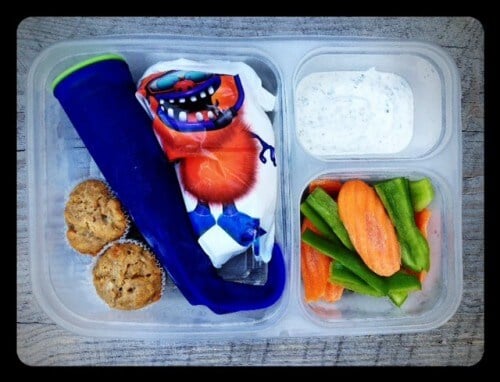
Want to Save this Recipe?
Enter your email below & we'll send it straight to your inbox. Plus you'll get great new recipes from us every week!
You may have noticed that almost every time I post one of my child’s lunches on Facebook quite a few readers leave comments such as…”Where’s the protein?” or “I personally need a lot more protein to feel full” or even “My kid wouldn’t have enough energy to get through the day if I don’t give them more protein.” All of this feedback has gotten me wondering…why is our society so concerned about protein? When and how did the notion begin that we need protein, protein, and more protein!? So here’s what I’d really like to say about protein…
Why we don’t count protein (or grams of anything for that matter)
I’ve said this before and I’ll say it again…part of eating a real food diet means not counting fat grams, calories, carbs, protein, etc. You simply eat a variety of whole foods (without overeating) and the rest falls into place. Other countries outside of the U.S. routinely follow this practice and don’t obsessively add up numbers like we do. According to Karen Le Billon in her book French Kids Eat Everything, in France “Enjoyment is the goal of eating. You can’t enjoy yourself if you are … counting calories [or] keeping score of micronutrient consumption.” She also says “Variety is a happy side effect of this approach (because new foods are interesting thus making the French happy)."
This is exactly how our ancestors used to approach food…for centuries before us. According to Michael Pollan, in his book In Defense of Food, it wasn’t until the 1980s or so that the shift began “From Foods to Nutrients.” And has this shift really gotten us anywhere?
The many sources of protein
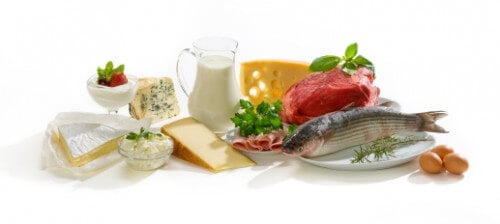
While we don’t keep track, I still think it’s important to point out that there are many sources of protein beyond meat. Just because you don’t see a big hunk of meat on someone’s plate does not mean they aren’t getting any (or “enough”) protein. According to the CDC, protein is found in the following foods:
- Meats, poultry, and fish
- Legumes (dry beans and peas)
- Tofu
- Eggs
- Nuts and seeds (including sunflower and pumpkin seeds)
- Milk and milk products (like yogurt, cheese, and cream cheese)
- Grains, some vegetables, and some fruits (provide only small amounts of protein relative to other sources)
- Check out these High Protein Meal Prep Ideas
- Peanut Butter Protein Bars
You’re probably eating more than enough protein
Straight from the US government’s website… “It's rare for someone who is healthy and eating a varied diet to not get enough protein.” So let’s go back to the example of my children’s lunches. Both of my daughters are between the ages of 4 and 8 years old, and according to the CDC website the recommended protein intake for their age group is 19 grams. Did you know that 1 cup of milk alone contains 8 grams of protein? Both of my daughters have milk in their cereal almost every morning (a little less than half a ½ cup), they both have oatmeal made with milk for their morning snack at school (another ½ cup), and they each usually have milk with dinner (usually close to 1 cup). So right there with their milk consumption alone they get almost the full recommended dietary allowance for protein…and that’s with them both drinking water with their breakfast and lunch.
Plus these estimates don’t even take into account the nuts and seeds that are in their homemade granola cereal, the yogurt, cheese, hard boiled egg, hummus, beans, and other protein sources that I often send in their lunches, nor does it take into account anything that we’re eating for dinner, which does oftentimes include at least a little meat or seafood and/or other sources of protein (like cheese, which we happen to love around here).
Now if you look at the recommended protein allowance for adults that number is quite a bit higher. For females 19 years of age and older the CDC recommends 46 grams of protein per day, but this still doesn’t have me concerned. We just did some quick estimates based on what I might eat in a typical day…
- My Breakfast: Granola cereal (about 10 grams of protein) with milk (another 4 grams) and fruit that’s usually followed by a maple mocha that’s made with around ¾ cup milk (another 6 grams).
- My Lunch: Bowl of refried beans (about 13 grams) with cheese and sour cream on top (another 2 grams or so) with fruit or veggies on the side.
- My Dinner: This varies quite a bit, but just for fun let’s say it is a vegetarian dish of homemade whole-wheat pizza topped with sauce, cheese, and mushrooms (about 12 grams) and a spinach salad on the side mixed with goat cheese, glazed pecans and balsamic vinegar (another 5 grams or so)
- After Dinner Treat: Handful of peanuts with a square of dark chocolate (about another 2 grams)
- DAILY TOTAL: 54 grams of protein! That is well over the recommended allowance and that’s without “trying” to eat any particular foods that are high in protein.
Wow, that was a lot of work dissecting the food I eat. I can’t imagine doing this on a regular basis!
So…you’re off the hook
Hopefully now you feel convinced that you’re off the hook from having to worry about eating a certain amount of protein, the right number of calories, or even the optimal amount of carbs. If you simply eat a variety of whole foods (without overeating and incorporating lots of produce - this part is important!), all of these things will just naturally happen as an automatic and lovely side effect. It certainly sounds like a much more enjoyable way to eat food…and guess what, it is! :)
Note: It is important to mention that everyone's needs are different, so defer to your health care professional's advice, especially if you have specific ailments or special nutritional needs.


Mollie says
I have been following your blog for a while and it drives me crazy that people question what you feed your kids!!! Unreal. I love what you are doing thank you for all your meal ideas!
Lesley says
love this post! my husband thinks you must have meat at lunch and dinner and I say blah to that! you can get tons of nutrition and taste from non meats. I am not a vegetarian but have no problem eating a vegetarian meal so when we got married it was an adjustment. But I started sneaking in meals without meat. he would complain at first but now he doesn't. It is cost saving to skip the meats once in a while and with the right recipes yo can have just as satisfying meal. I always think your kids lunches look wonderful :)
Karey says
Thanks for posting! I have recently gone meatless several days a week and feel better about what I'm doing now that I realize I'm getting more protein than I thought! Now, to convince my husband ;).
Bridget says
Love, love, love this! I often need to remind my clients of how easy it is to get their protein allotment in!
MichaelaW says
I do eat lots of meat - preferably once a day, but generally at least 5 times a week. If I don't I get terrible headaches, fatigue, and my depression gets worse. I have no explanation as to WHY this happens, but my body basically shuts down without meat. I totally agree that meat is not the only source of protein, and is over-done in our culture. When I pack my daughter's school lunch, I tend to lump dairy and protein in the same category - I try to pack a fruit, veggie, a carb, and a protein/dairy item. Some days homemade mac n cheese, is the carb and protein/dairy, some days it is meat ... it totally depends on the day (and the leftovers).
maggie sanders says
I have really altered my concept of protein in the past year. If I am having chicken I have a half of chicken breast...that is all I really need or I am too full...this way I have lots of room for the other yummy whole foods I eat. I have started using beans much more too. I am really limiting my intake of dairy so seek elsewhere for the protein. I do use rice protein in my morning smoothie, which is full of greens too...all in all i feel much better.
Jocelyn says
I am a vegetarian and have been for over six years. I follow a mostly whole food diet. I also get migraines and have several food triggers, so I am very conscious about what I put into my body. But I can't tell you how many times people assume I get migraines because I'm vegetarian and don't get enough protein. Honestly, I find it kind of annoying because it assumes I'm choosing to suffer from terrible migraines or that I'm too dumb/stubborn to do anything about it, which is the opposite of true. It also reveals a very present mindset in America that protein=meat and that protein is the most important aspect of a diet. I don't count calories, but eat a wide variety of protein- and iron-rich foods, including beans, almonds, seeds, leafy greens, dairy, eggs, quinoa, whole grains, etc.
Jessica says
I have been on a mostly Whole Foods lifestyle for about 3 months now and my migraines are worse than ever. I cannot figure this out! It's beyond frustrating and I swear I do everything possible before succumbing to taking an Advil. I also try to drink at least 100oz of water a day. What do you do to get rid of your migraines? I think the only thing I haven't tried yet is essential oils..
RevAllyson says
Jessica, it is possible that your body is detoxing. I know when I went vegetarian for a year (for health reasons, and it turned out to be wrong for me, but was still a great experience), the first two months were hell while my body sweated and otherwise eleminated the toxins. After that, it got better. Have you discussed it with your doctor or a naturopath?
I don't get migraines, but when my head is hurting, I usually have hot tea. For me, "just" water never seems to do the trick unless I force myself. So I mix things in or drink it hot. Mint tea, pomegranite tea, chamomile, etc... sometimes black tea, as it does nice things to my digestion. If it's water, I'll put in a wee bit of honey or stevia and a splash of lemon juice, for a "lemonade" kind of drink which is good for me and hydrating. If you're going to be working out and are worried about getting cramps from drinking cold water, add a sprinkle of ginger to it - it warms up your insides and allows you to drink the water cold. :)
Good luck!
Jocelyn says
Jessica,
I'm so sorry your migraines are bad! I sympathize with you as I have gone through periods where my headaches have been unbearable! The biggest adjustment I've made to control my migraines are to go on a migraine preventative diet. There are lots of known migraine trigger foods and the idea is to eliminate all of them from your diet for a couple of months to get them out of your system and the slowly reintroduce them, one at a time, to see what triggers migraines for you. It turns out some of my biggest triggers are foods that are in almost everything: white, yellow, and red onions, soy, peanuts, chocolate, caffeine, alcohol, msg, fake sweeteners. It was this discovery that pushed my husband and I more fully into a real foods diet. I can control what goes into my body and I feel SO MUCH BETTER. I substitute green onions, leeks, or shallots for onions, I use almonds instead of peanuts, and otherwise avoid the other triggers as much as possible. Eating real food has also confirmed that I feel better when I don't eat much sugar (maybe an occasional treat made at home) or foods with dye in them. I didn't realize how poorly I felt until I started feeling better. Under my neurologist's supervision, I used the book "Heal Your Headache" by Dr. David Buchholz. I would definitely consult your doctor before doing this, though, as the regimen in the book calls for you to cut out preventative meds and might not be the right answer for you.
I do a bunch of other things to avoid migraines as well. Try to get a consistent night's sleep (I get a migraine from too much or too little sleep), eat on time and eat a balanced meal plus snacks, avoid strong smells, avoid bright lights (I wear a hat in fluorescent lights because those give me nasty headaches), etc. As prescribed by my neurologist, I take a high dose of B-2 daily to lessen the frequency and intensity of migraines. I also have to take a prescription pain pill a couple times a month for debilitating migraines that won't go away. I don't love this, but I have tried not taking it, and it just makes the migraines more painful and last longer, so I still take the drugs when necessary.
Other good options for a headache: ice your head/neck to reduce inflammation, massage the muscle between your thumb and pointer finger, stretch your neck and shoulders, massage your neck (I have a tennis ball that I use to give good, deep muscle massages), drink a lot of water. One osteopath I went to suggested chugging some Gatorade when a headache starts. I don't prefer this since Gatorade is definitely not a "real food" and I don't really like the way it tastes, but it has worked for me before. The osteopath says it has something to do with the electrolytes. I hope your headaches feel better soon! (Sorry this comment ended up being so long! It's not a quick answer and, unfortunately, the answers are different for everyone.)
Jocelyn says
Sorry, I just wanted to be clear that the foods that are triggers for me may not be triggers for other people. There's a whole long list of potential triggers, and things that might be triggers for one person are not necessarily the triggers for someone else. If you read the book, you will begin to understand the idea behind the method. Anyway, I didn't want you to think that you could just avoid the things I avoid and it would be all fixed for you. Sadly, it's not that easy with migraine. It's a very individual disease that effects people differently. I hope you figure yours out!
Jessica says
Jocelyn and Allison,
Thanks for the advice! I have had headaches for a few years now and its really disappointing that they would be so bad when i try to fix them naturally and they have only gotten worse. I did visit a doctor back in August and the first thing he suggested, before I even got done telling him my symptoms, was medication. I was a little irritated by the fact that he was so quick to prescribe me something without even hearing my full story. I denied the medication and told him I would like to change my diet first before jumping to extremes and he was okay with that. Jocelyn, you suggested that some of those foods are problems for you, honestly I rarely eat any of those! I'm not a coffee drinker by any means and I stopped drinking pop back in middle school (so its been many a years!! Lol) I'm also not fond of onions..I am thinking its probably like Allison suggested and my body is detoxifying, I just don't understand why it's taking so long! Do either of you know if there are any foods I could eat that help with migraines? It could just be that I am missing something in my diet. I am hoping it will be an easy fix because so far, glasses drinking a lot of water and a diet change hasn't helped. Thanks again for the advice!!
Jocelyn says
I would encourage you to read Heal Your Headache to see the full list of foods that can be migraine triggers for different people. It includes yogurt, cheese, fresh bread, avocados, nuts and nut butters, etc. A lot of the foods are things that are part of a healthy diet for other people. I eliminated all of the foods on the list from my diet for 3 months to try to get them out of my system and then added one item in at a time over the course of the next year to try to get some of those foods back in my diet. It was especially challenging for me being a vegetarian and cutting out cheese, nuts and nut butters, and yogurt. If I was as aware back then of all the great vegan recipes out there, I would have probably had an easier time. :o) I also eliminated all prescription meds, including hormonal birth control, under my doctor's advice. It was definitely challenging, but ultimately worth it because I know for sure what my triggers are. Some people have food allergies/intolerances that can lead to migraines as well, such as wheat or gluten or dairy. You might start keeping a food journal or calendar that lists what you eat on a daily basis and if you get a headache. You might start seeing patterns emerge that you didn't expect. I certainly did.
I'm sorry I can't be more helpful. I wish there was some magical food or exercise that would solve every person's migraines! I would try to find another doctor or naturopath who is willing to help guide you through this process. Over the years, I have gotten help from neurologists, osteopaths, physical therapists, accupuncturists, and general MDs for my migraines and it's still an ongoing journey. For some people, meds are the only way to control their headaches, but for me, I've found a combination of lifestyle/diet changes and some medication keep me feeling healthy and functional.
Laura says
My daughter has a metabolic disorder where she needs to limit her protein to just 6 grams per day (and then she is on a fake protein supplement since that is too little protein to be healthy).
Trust me, it is very hard to find healthy foods to feed my daughter to get her only six grams of protein. All foods have protein except oil, vinegar and sugar.
My challenge to anyone who thinks we are not getting enough, try to limit yourself to only 40 grams (or whatever number is right for your body) for a couple of days. It would be a challenge.
Sydney says
It's not just protein, though. The glorification and vilification of micronutrients has become so prevalent in modern nutrition that how the food is actually sourced is overlooked.
debi says
LOVE this post. Crazy thing is I am vegan and can get 70-110g protein in a day with NO meat or dairy! 15g of that is my fave Choc. protein smoothie, but even without that, like you TONS of protein, AND calcium. Quinoa has 10g protein and it is a grain. :)
Jenny says
Yes...and Thank You! It is a lot of work to figure out all of those numbers. It takes the joy right out of the meal. I answer this question fairly often, even with my hubby. We have been making baby steps to changing over our diet for awhile now. I am pleased with our progress, but he still thinks that a chunk if meat is required for a meal to be wholesome and filling. More baby steps....
Mallory says
Mine too! I wish I could make him happy with just veggies!
Cassandra says
Thanks for posting this! I try to get a breakfast in my son that contains protein (such as dairy, peanut butter, eggs etc.) Because I really feel like he is more balanced and happier throughout the day that way. But I agree that most Americans eat a lot more protein than they need to! (my husband for example, eats a very high protein diet, but his activity level does not warrant it, it's just the food he likes.)
I appreciate your balanced, logical approach, and your resistance to peer pressure on this issue!
Amanda says
Thanks for this post. I am not fixated on counting anything in our diet and nor do I have any strong feelings about protein (other than I do agree that most people over-emphasize protein). But, I do have a question....isn't there something about complete vs. incomplete protein? Aren't complete proteins only found in animal products (or even just meat)? Does it matter if most of your protein is "incomplete" or do you need to be sure you pair it with another "incomplete"? My MIL is always telling us "rice and beans make a complete protein!"
Also, we are largely vegetarian and, with a baby, we are often reminded (by medical folks) that we need to be sure we (and especially baby) are getting enough iron. Any thoughts on this?
Alison says
Amanda,
I wish I had the source, but they have shown that the "incomplete proteins" don't have to be in the same meal, so if over the course of the day you are eating for example beans and also eating WHOLE grains (brown rice, whole wheat, etc.) your body takes care of it. I used to think I needed to eat a certain amount of meat to feel full, and have actually found that not to be the case when I am eating plenty of good fruits, vegetables, and whole grains. (Iron is also found in dark leafy greens, beans, lentils, and other plant-based foods.
Katie says
Allison is totally right, we no longer need to eat this with this to make a complete protein. As a 100% plant based family we never ever count anything. Protein deficiency is so rare in America. You would basically have to be starving yourself to be protein deficient. If you are eating a whole foods diet I would not worry. Those kids eating captain crunch for breakfast, school lunch for lunch and fast food for dinner would be more of a concern then someone who has taken special interest in their diet.
Assistant to 100 Days (Jill) says
HI Amanda. I think another reader has weighed in on this but just in case you missed it...Complete proteins must contain all of the amino acids needed to build new proteins. They do not need to be combined with any other food to make a complete protein. Examples would be meat, fish, poultry, cheese, eggs, yogurt and milk. Incomplete proteins on the other hand lack one or more essential amino acids in correct proportions. Examples are grains, nuts, seeds, beans, peas and corn. As for iron there are many vegetarian options high in iron such as raw pumpkin seeds (provide 30% of daily value), dark green leafy vegetables, beans, eggs, potatoes, grains and blackstrap molasses. Hope that helps. Jill
Critical Reader says
Amanda, protein is composed of 20 different types of amino acids. 8 of them are essential, meaning the human body can not synthesize them, and they hence have to be provided with the diet. The terms "complete protein", "incomplete protein" and hence "protein combining" are nowadays considered somewhat outdated. True, proteins from dairy products, eggs, meat, and fish have an amino acid composition closer to the human body than proteins from plant sources. Most plant proteins are low in the one or other essential amino acid. Typical trouble-makers are lysine (low in corn, rice, etc.), methionine (low in legumes) and to a lesser extent threonine and tryptophan. It was therefore recommended for a long time to combine different food groups, e.g. rice & beans, potatoes & eggs in order to have a complete protein with one meal. That concept is considered now old-fashioned and the general believe is, that as long as you consume enough calories you are fine concerning protein/amino acid intake. Protein and/or amino acid deficiencies are very rare in developed countries. However, I have seen them in crazy/extreme vegetarians/vegans with extreme nutritional believes and hence one-sided diets. Amino acid deficiencies are also present amongst poor people in developing countries with one-sided diets (e.g. rice in Asia, corn in South America).
LoW says
http://www.livestrong.com/article/399555-why-is-protein-good-for-a-diet/
A good website and this is a link why protein is important, especially for an athlete burning lots of calories per day like myself. I agree people get stuck in fad diets, but without protein and a complex carbohydrate for meal time my body will not run properly. I am sluggish and have a head ache. Balance is the key!
Assistant to 100 Days (Jill) says
Hi LoW. Thanks for the website. Just to clarify, protein is of course good and necessary,it's just that we don't need to focus and worry so much about any one specific nutrient like protein to ensure we are getting "enough". Jill
Beth says
I would be careful touting Livestrong as a reliable source. Most of their articles I have read tend to lean towards conventional diet advice as well as common misconceptions our society has about food. In my opinion, it's information like this that leads to confusion amongst real food newcomers and those wanting to make the healthiest choices for their families. Use caution :)
Amy says
You may have posted this before, but what is your recipe for homemade ranch dip? All that I have tried taste bad! Looking for that "Hidden Valley" buttermilk ranch taste, without all the garbage:)
Thank you!
Assistant to 100 Days (Jill) says
Hi Amy. Here is the post...https://www.100daysofrealfood.com/2011/12/01/recipe-ranch-flavored-dip/. Jill
Kellie says
I wholeheartedly agree!! In fact, I just wrote about plant based sources of protein in my recent newsletter. As a whole, we consume way too much. I think we just got so used to growing up with meat at every meal, and now portions at restaurants are double what we need. Great post!
Kellie McGarry
Certified Health Coach
Pam says
I would be thrilled beyond words if my grandchildren ate a diet half as good as your children do! Just keep doing what you are doing and don't worry about nay-sayers :-) .
Lori says
Protein does help us feel full and helps us not crave snacks in-between meals. My Dr. recommends a balance between protein and carbs for each meal and snack. I really feel like balanced meals are important and protein needs to be a part of those balanced meals. While it might work for some people to not pay any attention to how many carbs, fats, protein, etc. they are eating, this is not a realistic for families dealing with illnesses like Diabetes. Just because some families eat more protein than you do, and carefully monitor their carb in-take does not mean that they do not eat a healthy, balanced diet.
Jessica says
When you think of "carbs", what do you think of? Bread, potatoes, etc. fruits and vegetables are considered "carbs" too. I can bet that most of America (maybe not you and your family) think this way too. It just shows how skewed the American view on food really is..
Assistant to 100 Days (Jill) says
Hi Lori. Thanks for sharing your thoughts. I agree every person and family is different and everyone needs to do what works/is necessary for them. The posts focus was more about the concern by many about the amount of protein in our meals and pointing out that protein is in many more foods than what typically comes to mind (i.e. meat). Thanks again for brining another viewpoint to the discussion. Jill
Kelly says
Great post. I'm currently pregnant and try to get 100g/day. With my first pregnancy, I tracked my protein intake for a week or so just to make sure I was getting enough. This time, I don't think I've counted at all, I just eat when I'm hungry and try to sneak in some extra snacks of nuts, yogurt, cottage cheese, cheese, etc.
People get way too hung up on numbers, like the "big news" of McD's listing calories on their menu--calories are not the main concern, it's the ingredients.
Speaking of protein, here we go again with flawed studies and singling out one food (as discussed thoroughly in In Defense of Food): http://www.theatlantic.com/health/archive/2012/08/sunny-side-up-in-defense-of-eggs/261600/
jennifer says
You are awesome! Smart, thorough, knowledgeable and great communicator. Thank you so much for sharing such helpful, specific information.
Lisa says
Wow, Jennifer...thank you for such a nice complement! I am not even sure I feel deserving of such wonderful feedback, but I'll sure take it :)
Jenn says
I agree that different people are comfortable or feel better eating different things. I am a vegan and I feel amazing. I run, bike, etc. and have plenty of energy. But my diet isn't for everyone.
What I LOVE about this blog is it is one family and how they work to eat well. She never says "this is what your kids should eat for lunch" she says " here is what I give my kids". It is a guideline. A springboard to look at.
A lot of people defend their way of eating by bashing those of us who eat healthy. I get tired of the protein question as well. Let's compare cholesterol. I bet mine is lower. You can always argue.
I say, eat what makes you feel good. What really makes you feel good. And, most importantly, educate yourself about food.
Jane says
Sure, but diet is not the whole story for cholesterol since it has a genetic component. My MIL ate vegan and raw for years and has recently added small amounts of fish and chicken to her diet (she thinks she has fewer headaches and feels less hungry w/ some animal protein) and her cholesterol has always been higher than mine and her ratio is always worse - I eat lean meats but don't care if it's pork or beef or chicken or fish. I think that's why this blog sometimes makes me feel twitchy - sometimes info is presented in a very black and white, all or nothing way when the truth is so many shades of grey.
Shannon says
Twitchy, yes. Thats a great way of putting it.
Lisa says
Jane - Thanks for your feedback. The info may seem "black and white" because it's based on our family's experience and findings and (thus far) we have been fortunate enough to not have to deal with any health conditions such as high cholesterol, food allergies, diabetes, etc. Those who struggle with unique health issues should always check with their doctor for answers. I hope that helps!
Marisa says
Breastfeeding your toddler gives them plenty of protien too!
April says
Yes, but the mother should know to increase her own protein intake because of this.
Jigna says
I am a lacto vegetarian (no eggs, but yes to milk and dairy products!) and I completely agree with your post! People assume that I eat tofu all day to get my protein source, when in reality, I get plenty of protein in a normal day! Unless a person is doing serious weight training, they really don't need that much protein! On a side note, your blog is great! Thank you for all the information and recipes!
aja says
I came across this blog approx. 5 weeks ago and we have been eating unprocessed foods about 90% of the time. There are still a few things I have to figure out like which dairy products to buy. After eating lowfat dairy for so long, we are a bit afraid to take the plunge into whole fat products (besides the cheese- the post on shredded cheese grossed me out). The first week we went through the cabinets and threw away a bunch of processed foods. The first few weeks grocery shopping was expensive b/c we had stocked up on some staples (e.g. whole wheat flour, pure maple syrup, pure PB & almond butter, etc.). The last couple of weeks have been better.
My husband and I have both lost between 5-6 lbs. I no longer have major food craving like I used to and I now get grossed out when I pass certain food aisles on the store that are stocked with processed foods. I now understand why you just posted this post about getting enough protein. I feel like we are getting enough proteins, vitamins, etc. from the food alone. I made a batch of "clean" whole wheat/fruit/yogurt muffins using only unprocessed ingredients. Two of my co-workers refused to eat them b/c they were "muffins" and they were trying to eat healthy. I tried explaining that they were unprocessed, but they didn't understand. You are completely right- when you focus in eating real foods, everything else falls into place. I am eating several times a day and I am never hungry. I don't feel guilty or think about fat, calories, etc. I don't feel as sluggish as I did before, I have fewer headaches, and I don't feel bloated. Thank you for sharing your blog with all!
Jane says
It's really hard to judge. For example, I don't feel well eating a lot of protein at breakfast but my MIL is the opposite. I know from experience that if I ate this lunch in adult sized portions, I personally would be hungry soon after and my MIL would have a monster headache in 2-3 hours. Also remember not all kids are equal. I assume this is for a young child - mine are middle and high school long distance runners. They would be famished after eating this - they probably burn more calories while they are sleeping than this meal contains! If the commentors in question are giving their kids sugared cereal or pop tarts for breakfast, they are probably right that their kids need protein for lunch to get through the rest of the day. So maybe it's Atkins marketing or maybe it's ignorance or maybe it's something in their personal experience that makes them respond the way they do.
Jenifer Williams says
Excellent! I get the protein flack all of the time too, and it amazes me how fooled Americans have been into thinking that 1) we NEED that much protein and 2) that quality protein only comes from animal products. Did you know (of course you probably do) that there are more grams of protein in 100 calories of broccoli than 100 calories of lean beef? Also - human breast milk, long touted the "PERFECT" food for developing human beings, is only 5% protein? That is almost the same % as in a banana! Thanks for trying to bring this into light!
Judy says
I am diabetic and we are told that eating certain amounts of protein with certain amounts of carbs helps to prevent spikes in our blood sugar. Does anyone have credible research to back that up or dispute it?
Chrystal says
I'm also diabetic, and my husband is a physician who has encouraged me not to pay much attention to nutrition science, as he believes most of it is poorly done and/or irrelevant. As he says, "All health is personal, and you need to find what works for you." I think the best research you can do is in your own home, testing yourself after meals to see what works and what doesn't.
After 11 years of experimenting, I've found that a low-grain diet without any processed foods is what works for me. I find that protein, fat and fiber help to manage blood sugar best. I eat few grain-based carbs, which seem to cause the worst glucose issues--no matter what I eat them with. Oats are the main exception to that rule. (I also exercise every day.)
I've gone from 36 units of Lantus to 3, and from 12 units of novolog at meals to zero. My last A1c was 6.3. If I'd followed the standard diabetic diet that several dietitians recommend to me over the years, I'd still be on those original doses, if not more. It may not be science, but it worked!
Judy says
I am type 2, diagnosed in March. Prior to my diagnosis I tried to eat "healthy", lots of fruit and vegetables, but I felt terrible. Then right after my diagnosis I got "scared" to eat much of anything and was eating about 800-900 calories a day. So, I still felt terrible. Now I have added more protein from all kinds of sources. I really have to limit my potatoes and rice as they seem to cause problems no matter when or how I eat them. Also, I exercise at least five days a week. Thanks for your encouragement. I will just test and watch my numbers to see how things work with my body!
AMP says
As a dietitian I get this question/concern ALL THE TIME!! People are usually meeting or exceeding their protein needs, then adding more in just because. Most people don't realize all of the places that you actually get protein from, which you have outlined quite nicely. I agree with a previous poster, a lot of it stems from the atkins, south beach, paleo lifestyles. If people focused as much time and energy on making sure they get their fruits and vegetables as they do their protein I think individuals would be a little healthier. Great blog by the way...I often recomend it to people :)
Annette says
Protein is needed for sustainable energy in between meals. Carbs only give us a short-term burst of energy that, while important for getting us going, cannot get us through until the next meal. That said, you are absolutely correct that whole grains and dairy are great sources of protein. I think a lot of people incorrectly equate protein with meat.
Jill says
Thank you for this post. I've recently had to go dairy free because of an allergy. I keep saying I need to focus on protein since I was getting a lot of my protein from dairy. But, I have been able to replace that protein source with seeds & nuts mostly. If vegans can get enough protein, surely I can do it since I only gave up dairy not meats.
I'm also trying to lose weight. I was going to count calories, but since I am making most of my meals with real food and not using packaged scannable items, calorie counting was too much of a chore. Thanks for reminding me that I don't need to count anything if I eat real foods.
Rachel Coleman says
there's a few reasons why i'm concerned about the amount of protein i get, which i'm sharing only because you asked:
for a few years, i followed a vegan diet, transitioning into a raw foods diet, after discovering i had a dairy and wheat allergy. i hoped to cure myself or at least find my way back to better health. having four kids pretty much devastated and depleted me in every way possible and i'd just lived through what felt like 10 years of the flu.
and the change to raw foods did make me feel better, but i never felt truly energetic or well. in addition, i gained A LOT of weight. and this eating only a very pure, whole foods diet. this summer, i reintroduced meat back into my diet and i finally, finally feel more like myself, and the weight has just come right off, and at age 35 i'm performing better and running faster than i ever have in my life.
i think it's wrong to assume that every BODY needs the exact same type of food, and i wish you'd mention this more often on your blog or facebook pages. just because your children or your family don't require significant portions of meat (which i'm assuming is what you're really referring to in this post when you use the term "protein") doesn't mean that all of us shouldn't require it. i'm a long distance runner who can't eat a lot of whole grains because of allergies, and dairy is out of the question, so my body does require protein from other sources.
in addition, my older children are active teenagers who participate in an intensively competitive soccer league. they often run for more than two hours a day. that lifestyle does require more food than i see in your younger, sweet little girls' lunches. the olympian michael phelps was eating 10,000 calories a day to support his training leading up to the olympics.
i'd love for you to consider that some of us have much more physically demanding lifestyles and do indeed require a different diet than yours or your children's to keep our bodies lean and strong.
sarah says
I agree. Our bodies will tell us what they need if we learn to truly listen and pay attention to the signals, rather than just following a diet plan.
Jason Leake with 100 Days of Real Food says
Thanks for your insight Rachel. I agree 100% that there's no one 'magic' diet that's perfect for everyone. We are all different! The focus of our blog is to help readers cut out processed foods, but this is really a foundation to be built upon. We talk mostly about what works for us on the blog because, well, we are us, and we think we're pretty typical. Hopefully a broad audience finds the resources useful :)
Crystal says
If you have Netflix, I strongly encourage you to watch a movie called "Food Matters." It investigates what effect different foods have on our body. The film makers interview two top-of-their-field physicians who speak about the effect animal-based protein has on our body. I don't want to give too much away, but the research shows that animal-based protein can be directly linked to cancer development and growth. Whoa!! The amount of protein we need is actually significantly less than the average American assumes. Please, watch the movie and be informed! :)
Alison says
Another great documentary along those same lines is"Forks Over Knives". It is on Netflix as well. Very thought provoking. I highly recommend it.
Crystal says
Oh my goodness! Thanks for commenting because you are right. I got the movie mixed up in my head. It is Forks Over Knives that I was thinking of for their research. Disregard the other movie title. Oops!
Jessica says
Food Matters is still a great one! It discusses more of the Gerson Therapy..
Leigh says
Great Post - and I couldn't agree more! Being a vegetarian I get this questions CONSTANTLY and wow, does it get old. We eat a healthy wide variety of things (except meat obviously) and try to have a well rounded diet. I don't count Anything - and don't want to! I'm not worried about my family's protein intake - but everyone else seems to be ha. You summed this up very well and I'm glad you took the chance to directly address this preconceived idea. Great Job!
Natasha says
Great post, Lisa! You really hit the nail on the head with the reference to Michael Pollan and the “From Foods to Nutrients†movement of the last 50 years or so. We have totally befuddled ourselves with the shift; and yet, it's so ingrained in people that they don't even realize how much they care about adding up all the magical, mythical "nutrients" ... and forget to focus on just eating some plain ole real (and good!) FOOD!
Jasmine says
I can't speak for anyone else, but I know my concern with protein stemmed from being on high protein/low carb diets like South Beach and Atkins. Also, at one point I was working out 7 days a week and on a pretty high protein cutting diet. Now that I've stopped dieting and just trying to eat clean, I don't really count anything. So to answer you question, I think it started with some of those fad diets.
Nancy says
I think many Americans are worried about protein because their diets are completely off balance to begin with. Take my former roommate for example---it appears she completely missed the stage of her childhood where she should have been introduced to different foods and different flavors so now she is a) completely incompetant at feeding herself to meet her nutritional needs b) extremely picky about even foods that are good for her. Her standard dinner? Ramen noodle. Or crackers. She didn't even like eggs until she had scrambled eggs that were cooked properly. I have an inkling that many of today's young adults are in the same unfortunate boat and thus to at least cover their nutritional needs, they worry about protein.
Leah says
Great post. Since switching to a 90% real food diet, I've noticed how differently I eat from the rest of my family who are almost always on diets. At a barbecue this summer, one of my uncles couldn't believe how little chicken I was eating. I had half a large chicken breast, corn, salad, and probably bread, etc., trying to keep to proper portions of everything. He said, "you need more protein, girl!" and tried to put more on my plate. I cringed, to be honest. These nonsensical ideas of nutrition drive me batty!
Laura says
Such a great article. Just goes to show you how people just don't get eating right. I am 100% with you we count nothing. We eat real food and that's that. What so many people don't get is you can get a lot of protein from other foods aside from animal products. My husband competes in local strongman competitions and he got better performance when we DROPPED the protein shakes and went more veggie and fruit based along with grass and pastured raised meats.
Lindsey says
Totally agree with everything in this post! I am a single girl in my mid-20s and have been a lacto-ovo vegetarian for the last 6 years. I've met with a dietitian twice in that time to review my diet and ensure that I'm maintaining appropriate nutritional intake. While my fruit, vegetable, and even oil intake is lacking somewhat, she assures me every time that I am getting MORE than enough protein (from milk, eggs, nuts/nut butter). Americans have a completely skewed view of protein. Many don't understand that it can come from many sources (besides meat) and portion sizes for meat are often WAY supersized. I love seeing your posts and use your daughters' school lunches as inspiration for my own (...still young at heart, I guess!). Thanks for your commitment to this lifestyle and sharing this information & ideas with the public!
Mindi says
I love this post. It's something that I've been really trying to do. I grew up in a 'meat and potatoes' kind of family, my parents grew up in one as well, and so it seems like this is the only way to do things. Your main dish is a 'meat', you have a starchy side, and then a spoonful of vegetables. I've been trying to switch my own family away from this 'all meat loving' idea. It's a process, but we're working on it. It is a ridiculous amount of work to keep track of the numbers of our food. Thank you for doing it this once so I can prove to my husband that what we are trying to do really is good!