
If you feel like you are doing the right thing by buying and eating “wheat” bread from your grocery store – you could be wrong. And if you are buying white sandwich bread or some sort of Whitewheat bread (like I used to buy) you might really be in for a surprise! Have you checked the list of ingredients on your sandwich bread? If you were to make your own bread at home, what ingredients do you think you would need? It really only takes a few essential ingredients to make bread: flour, water, yeast and maybe a little salt. Some bread recipes might also include some extras like honey (which does help preserve the bread), nuts, raisins, etc.
I used to buy Arnold “Whole Grains” Health Nut bread for my husband. I recently counted the ingredients on the label of his beloved bread – 40! As most of you know the ingredients are listed in a certain order. According to the FDA’s website “Listing ingredients in descending order of predominance by weight means that the ingredient that weighs the most is listed first.” So here is the list of what I found in this supposedly healthy “whole grain” bread that also contains “unbleached enriched wheat flour” which may sound okay at first glance:
WHOLE WHEAT FLOUR, UNBLEACHED ENRICHED WHEAT FLOUR [FLOUR, MALTED BARLEY FLOUR, REDUCED IRON, NIACIN, THIAMIN MONONITRATE (VITAMIN B1), RIBOFLAVIN (VITAMIN B2), FOLIC ACID], WATER, SUGAR, CRACKED WHEAT, RYE, WHEAT GLUTEN, YEAST, SUNFLOWER SEEDS, GROUND CORN, NUTS (ALMONDS AND/OR WALNUTS), MOLASSES, SOYBEAN OIL, SALT, CULTURED DEXTROSE AND MALTODEXTRIN, WHOLE WHEAT, WHOLE WHITE WHEAT, BROWN RICE, OATS, SOYBEANS, TRITICALE, MONO- AND DIGLYCERIDES, BARLEY, FLAXSEED, MILLET, CALCIUM SULFATE, DATEM, CITRIC ACID, GRAIN VINEGAR, SOY LECITHIN, HAZELNUTS, WHEY, NONFAT MILK.
Want to Save this Recipe?
Enter your email below & we'll send it straight to your inbox. Plus you'll get great new recipes from us every week!
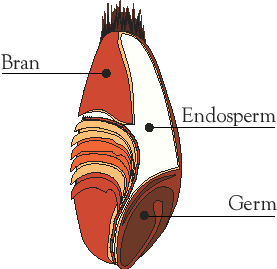
Now most of us have heard that white flour is “bad” for us. But, why is it so bad and is there anything wrong with “unbleached enriched wheat flour” as listed above? Well, I must break out the anatomy of a wheat kernel to properly explain this one. As you can see the wheat kernel has a few key parts: bran, germ and endosperm. Over a hundred years ago wheat was ground between big stone wheels, which removed the bran, but could not remove the germ (a.k.a. the embryo) of the wheat kernel. According to Michael Pollan the germ contributes “some of the most valuable nutrients to the flour, including much of its protein, folic acid, and other B vitamins”, although once the germ is crushed during the milling process it releases a nutrient rich oil that gives the flour a very short shelf life. So in the late 1800s rollers were developed for grinding grain, which “made it possible to remove the germ and then grind the remaining endosperm” which is basically a “big packet of starch and protein.” We were then left with a gorgeous white powder that could travel long distances without spoiling and was almost nutritionally worthless – Michael Pollan calls it “the first fast food.” Since then food scientists figured out what happened and began fortifying the refined grain with vitamins to try to add back what they thought was missing. This is why white flour - which is still technically made from the wheat plant - is often listed as “enriched” on your food labels. It also explains why when I recently compared the labels of my husband’s Arnold “whole grain” bread to my Nature’s Own “Whitewheat” bread it appeared – as if it was an illusion – that the Whitewheat had more vitamins and nutrients. But, studies have proven that there are “additional health benefits to eating whole grains that none of the nutrients (they added back in) could explain.” So you are better off eating real whole grain flour rather than white flour that tries to imitate what may or may not be important in the real thing. This summary also explains why whole grain flour should be kept in your fridge or freezer – did I really want to eat something like white flour that would stay “fresh” sitting on my pantry shelf forever anyway?
Back to the topic of what kind of bread we should eat! Now that we know it should only have whole-wheat flour and no enriched white flour what about all the other stuff they put in the grocery store bread that I can’t even pronounce? Well, I hate to be the bearer of bad news, but my husband and I both picked through the majority of the sandwich breads (including the ones from the bakery) at our local Harris Teeter, Trader Joes and Earthfare and we could not find much of anything with suitable ingredients. So you could be adventurous and try to make your own bread or take a shortcut like I did and find a local bakery to make bread for you! I recently discovered and absolutely love Great Harvest Bread Company (which is a franchise with locations all over) because not only do they bake their bread daily, but they also grind their own wheat every morning – that is much better than I can do at home! You still have to pay attention though and make sure you don’t regularly buy their white breads that contain sugar, but instead stick to their whole-wheat options. Our new staple sandwich bread (which is also their most popular product) is their Honey Whole Wheat Bread that is made with the following FIVE ingredients:
OUR OWN FRESHLY STONE-MILLED WHOLE WHEAT FLOUR, WATER, HONEY, YEAST, SALT
At the Charlotte location this bread does cost $5 a loaf, but halfway through our first sandwiches with our new bread we quickly realized we were filling up fast – because it is REAL food! I used to fix my 2-year-old a whole peanut butter and jelly sandwich (she loves some PB&J), but now she usually fills up on a half. I only eat about a half sandwich of it myself. So the loaf does go a long way…and in my opinion it is very tasty for whole wheat bread (and that is coming from a previous white bread eater)!
PS - There are a few other things I have learned about buying bread from a bakery. You are not supposed to keep it in the fridge (for better consistency) and the shelf life is about 7 – 8 days. The bread can easily be frozen. We splurged one week on their Cinnamon Raisin Bread (INGREDIENTS: OUR OWN FRESHLY STONE-MILLED WHOLE WHEAT FLOUR, WATER, RAISINS, MOLASSES, YEAST, SALT, CINNAMON) and I froze half the loaf because we wouldn’t be able to get through the whole thing in a week. Also, they offer some items that can be special ordered like hamburger buns (minimum order is a dozen – freeze some for later!)


[email protected] says
So here is something crazy. My parents are from Bulgaria. There people eat only white bread for decades, same in Italy and in France. White bread for all three main meals.. Folks live into their 90's consuming white bread for breakfast dunked in milk or yogurt. They consume a loaf of bread for lunch, dunked in soups and stews. So when I come around and talk about white bread not being good and all the nutrients are gone, I hear an earful. Granted their white break tastes truly so delicious and yummy, I do my best to refrain, but what is the best thing to say to folks who live into their 90's with that type of bread? I personally have stopped eating bread, hybridized whole wheat simply scares me. What is your answer? Thank you.
[email protected] says
What about Dave’s killer organic bread?
Erin Nutter says
Hi,
I found a bread that we love that has unbleached and unbromated WHITE FLOUR. Is this ok? Can I do better?
Thank you!
Erin
Amy Taylor (comment moderator) says
Hi. You should look for 100% whole grain.
Lakeesha T Stewart says
HI my name is Lakeesha and I would like to know more about what food we eating are real and the one that are fake.
Amy Taylor (comment moderator) says
Hi there. This link will get you started and pointed in the right direction: https://www.100daysofrealfood.com/start-here/. From there, make your way through the other provided links. Here is our definition of real food: https://www.100daysofrealfood.com/real-food-defined-a-k-a-the-rules/.
Lindsay says
Hi, I just wanted to make sure that the bread I've been currently using is okay even though it has a long list of ingredients! I've been buying Trader Joe's daily bread, and here is the ingredient label: Organic sprouted wheat berries, water, organic sprouted barley, organic sprouted millet, organic malted barley flour, organic sprouted lentils, organic sprouted spelt, yeast, organic wheat gluten, sea salt, organic cultured wheat starch and organic whole wheat flour (for freshness). Anything suspicious there?
Amy Taylor (comment moderator) says
Hi. That's a pretty good ingredient list. Could do without the added gluten and starch.
Andrea says
Thanks for such great information! This is a topic that I have been really interested in, but have struggled to find advice for those of us that are new to real food. I have been doing some research and haven't been able to locate a local bakery that makes bread. However, we do have a Panera Bread that makes a whole grain wheat bread. Do you have any insight into their processes and the quality of their breads?
Thanks for sharing your journey and insight!
Amy Taylor (comment moderator) says
Hi. No, not sure. They have made strides toward cleaning up their menu and ingredients. This is stated on their site: "We’re committed to sourcing and serving high-quality ingredients without artificial additives including added MSG, artificial trans fats, and ingredients we don’t believe need to be in your food." But, I see no specifics regarding their bread.
Roxanne says
found a great harvest bread co. near me can you please recommend other breads to try from there...my family loves a sweet bread.
Amy Taylor (comment moderator) says
Hi Roxanne. Lisa sticks with 100% whole grains.
Ann says
So I spent about 30 minutes in the bread aisle reading labels. I am still not sure I made the right choice. The whole grain stamp is at 100% but there are more than 5 ingredients...some I cannot pronounce: The one I chose is Healthy Life Soft Style All Whole Grain 100% Whole Wheat. Is there a grocery store bread that is better for us than the rest? I am in a smaller town and do not have a Great Harvest Bread Company around. Advice needed!!
Amy Taylor (comment moderator) says
Hi there. Not familiar with that brand. Ezekial sprouted wheat is usually available in the frozen section and it is always a good choice.
Ann says
Thank you! I am going to look for it this weekend!
Jessica Mungal says
Once you buy the Ezekial Bread do you leave it on the counter or do I have to re-freeze?
Amy Taylor (comment moderator) says
I keep it frozen and just take out what I am going to use. It thaws very quickly.
Brian says
They seemed to have changed their recipe. Maybe they are reading your blog:)
Lots of ingredients still, but they dropped the enriched flour. I actually think lots of ingredients is good if they are good ingredients. Having lots of grains and nuts makes for a more interesting bread. There are still plenty of other ingredients I wish were not in there, such as preservatives and sugars.
My current list reads:
WHOLE WHEAT FLOUR, WATER, WHEAT GLUTEN, SUGAR, CRACKED WHEAT, RYE, SUNFLOWER SEEDS, GROUND CORN, YEAST, NUTS (ALMONDS, WALNUTS), WHOLE WHEAT, MOLASSES, SOYBEAN OIL, SALT, BROWN RICE, OATS, TRITICALE, PRESERVATIVES (CALCIUM PROPIONATE, SORBIC ACID), MONOGLYCERIDES, BARLEY, FLAXSEED, MILLET, CALCIUM SULFATE, DATEM, GRAIN VINEGAR, SOY LECITHIN, HAZELNUTS (FILBERTS).
Sandi says
I know what white flour is. I know what whole-grain flour is. my question is - what the heck is wheat flour? I know it's refined but what IS it?
Amy Taylor (comment moderator) says
Hi Sandi. These posts go into more detail and provide helpful links: https://www.100daysofrealfood.com/2011/07/22/understanding-grains/ and https://www.100daysofrealfood.com/2011/10/17/nutrients-in-refined-vs-whole-grains/.
Shay says
Are there breads that you suggest that we could order online? We don't have one of those close by and my kids go through bread like water, so I'd like to find a healthier option and I'm not quite ready to create my own just yet (looking at ordering a breadmaker soon though). Thank you :)
Amy Taylor (comment moderator) says
Hi. You can order Ezekiel bread online: http://www.foodforlife.com/about_us/ezekiel-49.
Kay says
For those times when homemade bread isn't available or if you don't have access to a bakery that makes whole wheat, I found a good store-bought bread yesterday at Trader Joe's. It's called "Harvest Whole Wheat" and lists the following ingredients: Stone ground whole wheat flour, filtered water, honey, cracked wheat, sea salt, yeast. It isn't the most amazing sandwich bread I've ever eaten but at least it isn't filled with soy, dough conditioners and who knows what else. My 5-year-old ate w ate his sandwich without a problem. Definitely is helping supplement my 1 weekly loaf of homemade. I wish it was organic though.
Stephanie Steinbeck says
I'm curious to hear what you think about Ezekiel bread sold in the frozen section?
Amy Taylor (comment moderator) says
Hi. Ezekiel is a great choice for a store-bought bread!
Kelsey says
So grateful for all the work you have put into this site. Question on buying bread from a bakery like you mention above-- it's usually not organic-- do you feel like that's ok? We have a couple of local bakeries in town but I've been afraid of GMO and chemical covered wheat...would appreciate your thoughts. Thanks!
shawn says
The bakery we buy our bread from isn't exactly organic, but they grind their own wheat and use less than 5 ingredients. I would do your research on that company and ask them questions. It will help you make a decision you are comfortable with.
Jennifer says
I just learned that Arnold bread has soybean oil in it. I looked at my thighs after eating this disgusting bread and saw them larger from the estrogen spike from the soy! I looked at the label and sure enough there it was the hormone disrupting weight gain causing soy! I am very allergic to soybean oil as most people are and don't know.. they will have heartburn and GERD from eating soy. why is Arnold putting soybean oils in bread?? They are disgusting for this! I am also getting GERD which I haven't had in years by cutting out soy. GERD is the body telling you to stop eating soy the photo estrogen the hexaned and the GMO'd soy!! Arnold should be sued for not putting this allergen up front on the front of the package so people see it contains soy right away. This company is disgusting with their processed garbage breads.. It must come out that there putting soybean in their breads. Soy causes breast cancer!!!
Big Al says
.01% have an actual gluten allergy. Gluten has no bad or good reaction to the rest of us.