
The subject of picky eaters is certainly not a new one around here. But after hearing feedback from readers it occurred to me that not everyone is dealing with the same level of pickiness. Some readers have said their child will eat no more than 5 different foods or literally vomit at the table when attempting to try something new.
Want to Save this Recipe?
Enter your email below & we'll send it straight to your inbox. Plus you'll get great new recipes from us every week!
Other kids are picky, but maybe their lack of adventure at the dinner table is because they aren’t being exposed to different foods often enough. After consulting with a couple of occupational therapists I’ve learned that parents are likely dealing with two different issues: picky eaters vs. problem feeders. And for some who have a "problem feeder" on their hands, intervention might be the only answer.
A big thank you to Occupational Therapist Susan L. Roberts (referred to me by a friend) for providing the following information, which will hopefully help clear things up for some of you!
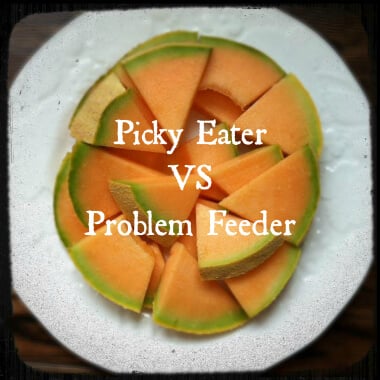
Picky Eater vs. Problem Feeder
Information courtesy of Susan L. Roberts, MDiv, OTR/L
- Is the number of foods your child eats getting longer or shorter? All children go on eating jags where they ask for one food all the time and then don’t want it at all. Picky eaters will go back to that food again after a while so over time their food repertoire expands. Problem feeders never eat the food again so they slowly whittle away at acceptable foods until the list includes less than 10 or 20 foods. It’s important for a child to eat a balanced diet consisting of at least 30 – 40 different foods.
- Can your child tolerate watching others eat a food he or she doesn’t like? Picky eaters don’t mind as long as they don’t have to eat that food. Problem eaters will gag or even vomit just watching others eat a food they don’t like. (Caution: sometimes this behavior grows out of forcing a child to “try” a food they don’t want.)
- What’s coming out after meals? Children with food sensitivities or gastrointestinal problems don’t retain food long enough to digest it. This means frequent messy diapers and trips to the toilet. Chronic diarrhea warrants medical investigation. So does chronic constipation. Both these conditions usually get better with a more varied and healthy diet.
Possible Culprits for Meal Time Blues
Information courtesy of Susan L. Roberts, MDiv, OTR/L
- Force feeding or asking a child to eat, taste or try a food they don’t want can create super-cautious or resistant behaviors that often get worse over time. It’s your child’s body, give them control over it. Letting children explore food on their own terms leads to better eating (and happier mealtimes).
- Food sensitivities or allergies may go undetected in young children. If you’ve ever experienced the symptoms of an allergic reaction (intense itching, shortness of breath) or sensitivity (stomach distress) you can imagine how these experiences would make a child cautious about food exploration. It’s often hard to identify the food culprit(s) so as a result many children respond with global food refusals. It’s worthwhile to have food sensitivities checked out medically and/or work with a nutritionist or dietician who understands food sensitivities and how to resolve them.
- Problems with coordination of breathing and swallowing can also lead to cautious food exploration. Most new eaters take a while to get these rhythms down so babies and toddlers often gag, choke and even vomit in their beginning explorations of solid foods. It’s OK for these experiences to happen but if they persist or a child begins more global food refusals get your pediatrician to recommend a “swallow study.”
- Sensory processing disorders make it hard for children to explore foods because they have extreme reactions to texture, smells, tastes and the sound of foods being chewed (by themselves or others). Often these children will also seek out or avoid sensory experiences in play. They may want to swing, spin or crash around all day or stay glued to a video device or other type of quiet play. Occupational therapists can help you figure out if your child has problems with sensory processing.
- Gastrointestinal inflammation such as irritable bowel syndrome or reflux can also make eating unpleasant for a child. Signs of GI inflammation can be seen as ulcers in the mouth or diaper rash around the anus. Diarrhea and constipation can signal GI inflammation. Children who exhibit frequent head banging, tantrums for no discernible reason, hanging upside down, and putting pressure on the abdomen all the time may have GI inflammation. Have your pediatrician or a pediatric gastroenterologist examine your child and give you an opinion about whether more testing is needed.
- Mouth breathing and nutritional deficiencies can affect a child’s ability to taste food. If food doesn’t taste good we usually don’t want to eat it. Talk about these possibilities with your pediatrician.
Picky Eater Advice from the Occupational Therapist
Information courtesy of Susan L. Roberts, MDiv, OTR/L
- STOP asking your child to eat, taste or try foods. In fact, STOP talking about food at all. Let your child explore foods on his or her own terms and at his or her own pace. This means looking, touching, smelling, tasting, and refusing. This may seem counter-intuitive, but research shows that healthy eating habits come when children have control over what they put in their mouth.
- Always sit with your child any time they eat. Food and eating have been about sharing comfort throughout history. Don’t mess with a winning strategy. Children who eat with their parents get better grades as well as have less teen pregnancy, drug use, and eating disorders.
- Take control of the menu. That’s your job as an adult. DON’T ask a child what they want – serve them what you know they need. At every meal or snack they need a protein, fat, and carbohydrate (in the form of fruits, vegetables and whole grains).
- Always provide at least ONE food you know your child likes and serve enough for them to fill up if they choose to eat only that one food. I know this means they may only eat crackers or bread for a while, but eventually they will try other foods IF you let them explore at their own pace, and provide plenty of other choices.
- NEVER cater to a picky eater, it just prolongs picky eating. If a child says they don’t like a food – keep serving it on a regular basis. Serve what the family enjoys and let the picky eater adjust to the family’s tastes.
Be sure to check out our 100 Days of Real Food Picky Eater Tips as well and share any additional advice in the comments.

Heidi says
My question is about the “serve enough of what they like for them to fill up” part. So I serve a carb, protein and fruit/veg for a meal. But I should have a larger portion of whatever I know my child will eat so he can fill up on it? Like rather than a slice of bread, which is what I serve everyone, i have the bread available for him to eat the whole loaf? Same with snacks? I give cheese, crackers, and an apple for a snack, should I be leaving the entire sleeve of crackers for him to fill up on? And have multiple apples for him? Are snacks different than meals in that they aren’t meant to fill up? I feel like there is a lot of nuance in this when it plays out in real life and it’s harder to foresee and speak to everything the parent “should be” doing/not doing.
Laura says
I’m not sure if some will ever get there. I have been relaxed and followed this advice and my son is 13 and still just eats the bread. It’s frustrating because he eats very few things even though we eat together as a family, make different foods often, and don’t force him but encourage him to try new things.
Eva says
Hello,
I think when children are picky eaters, sometimes it is a response to controlling or pushy parents, or to bribery. The battle over food can then lead to resistance and defiance from the child.
Ultimately, it is the child's decision as to what to eat and whether or not to eat the foods you have provided. Sometimes, the child may eat very little or nothing at all, but he or she will make up the nutrition later that day or later in the week.
Cheers !
Juanita Stephens says
My grandson will only eat about 5 foods , Waffles in the morning , pizza with everything scrapped off so just pizza crust , crackers chips so carbs, some fruit, when really hungry he will eat chicken nuggets about 2 of them. Today he has red jello, chips and crackers and vanilla wafers in his lunch with small bottle of water . He is 6 years old and weighs 35 lbs. He co mes to my house to catch the school bus, I offer other things to slip in his lunch bag and he refuses. His parents are at their wits end.
Pregnant Eve says
My baby was a bit strange. He stopped drinking milk when he was about 2 years old and didn't drink anything except water. He doesn't also eat fruit. Gradually, he got alright.
Catherine says
So if the child isn't completely rediculous with their eating habbits and refuses to eat any of their dinner then asks for a treat afterwards do I still give them it? We have a 6 1/2 year old that constantly negotiates throughout the entire meal just so she can get a treat afterwards. We've tried not caring not getting upset when she doesn't eat anything we give her then throws a fit when she can't have ice cream. It seems she only understands why she can't have ice cream when we do tell her we are upset with her for not eating. This has been going on now for 4 years and hasn't yet to get any better. If anything she's gotten worse and has gotten better at her negotiating and manipulating skills. We are at our wits end
Tricia Little says
Ellyn Satter recommends just dishing up dessert with the meal. Kiddo gets a scoop of ice cream (or whatever the adult is serving), regardless of what else they eat or don't eat. Then there's nothing to negotiate: she can eat or not eat. She can have her treat regardless. No manipulation. And the pressure's off her, so she can work on developing good eating skills.
Or if there's no dessert, and that's communicated up front, then no amount of whining and pleading makes dessert happen.
Stephanie says
I have a 15 month old who will only eat a handful of things. He does have a sensory disorder. He will only eat dry crunchy foods. He Will not touch or eat anything wet or sticky in texture. No fruit, veggies, or meats. We'll occasionally chicken nuggets, but not everyday. Thank goodness for freeze dried fruit. He likes those and veggie straws. No one seems to be to concerned because he is still growing and hitting his marks. Some do say "if he's hungry he will eat." Yeah not my baby. He will go without and not even get upset about it. We've seen the specialist and are now doing OT. I wish he could tell me what's wrong with the foods. I wish I knew if all these doctors appt are worth it or if he will just come around when he's ready. . I suppose time will tell. It's good to know we're not alone and help is out there.
Tammy says
He'll get there. My 12 yr old son was diagnosed with Sensory Processing Disorder when he was 2 1/2. There was a time when he would only eat slices of bologna and cheese. I just gave him time and always asked if he'd like to try something but I wouldn't ask again the same day if he said no. He doesn't like mushy stuff so he won't eat mashed potatoes but he'll eat cooked carrots. He'll tend to at least take a bite if he's helped make it. He doesn't like lettuce or spinach but he likes smoothies so I put spinach in his smoothies and he'll drink them. He knows the spinach is in there. As he's getting older, he can explain to me why he doesn't want to try something.
sarah says
Hello! I came across this post because of the occupational specialist sensory food topic. I am wondering if you have suggestions for healthy options for kids who use food as a sensory aid. The occupational specialist at his school recommended the following foods to help him focus during class:
Sugar free life savers
Jolly Ranchers
small suckers *
Zots
lemon drops
beef jerky *
spicy chips *
think crunchy fruits veggies too - baby carrots...*
chewy - airheads, cherry tootsie rolls, starburst, dots gummibears, fruit snacks
For intensity of flavor he likes sour items and does not like mint or cinnamon
I'm OK with the beef jerky and crunchy fruits and veggies - but he can't really eat those while he is in a quiet classroom (maybe the beef jerky). I don't like artificial sweeteners for my kids, either.
Any suggestions for healthy foods for those kids who can have better focus when something is in their mouth?
Thank you!
Amy Taylor (comment moderator) says
Have you thought about making your own fruit leathers: https://www.100daysofrealfood.com/homemade-fruit-roll-ups-recipe-alana-chernila/.
Teri says
I was, and to some extent still am, a problem eater. Physically unable to chew and swallow without gagging something that tastes bad or feels bad in my mouth--this is not being "picky". My mother was told by the family doctor, "don't worry, she'll eat if she's hungry." Therefore, I went to bed hungry most nights because trying to eat just one bite of the only food available would cause me to gag and become nauseated. I chose hunger over that awful feeling. My mom refused to provide other options for me except a bowl of cold cereal. If only I was old enough to explain what was going on with me, or the family doc wasn't completely ignorant and uncaring. I was scolded instead of helped, which made me feel even worse. Thankfully my two children do not have this issue. If they did, I certainly would have been a better parent in this aspect. To this day I can't eat an orange section or take too big a bite of mashed potato without gagging, but the number of foods that I disliked the taste of (not texture) has decreased over the years and I eat healthily with less trouble. I see photos of myself as a child and I look so gaunt and tired looking, it makes me angry. I am glad to see articles about this now. There's a huge difference between "picky" and this true problem that can lead to major health issues! Look for help, parents of PROBLEM eaters, it is out there. Your child will thank you!
Goldfish says
My Dad & stepdad collectively have 11 children together. 6 biological and 5 adopted. Neither were catered to as kids and my stepdad and his siblings were first american born of their entire ginourmous Italian family. When they were babies and started eating solid foods they weren't given baby food, they were given easier to eat versions of whatever they were cooking. As a result they all were excellent eaters with a huge variety of foods. Also when I was little and my Dad was still with my biological mother she was a terrible cook, it wasn't for lack of trying, she followed recipes to the letter but her food was so bad that when we would find out she was cooking dinner my 2 older siblings would start to cry LOL. As a result of that my Dad started learning to cook just for survival (and im 18 now and he's an excellent cook and so is my stepdad) by 3 I was showing interest in cooking and once that started and my dad noticed I ate anything I helped to make with gusto he started my 2 older siblings to help prepare, as we got older we were taught how to use knives properly and were fully encouraged to cook entire meals. Once he and my stepdad got together we were introduced to gardening, all us kids really enjoyed the process of growing veggies and fruits from seeds, or harvesting our fruit trees and then to take those foods from the garden to the dinner table we were always excited and happy to eat those foods. They now have 3 year old twins and one of them was VERY picky about solid foods and my stepdad decided to take his parents approach. She wouldn't eat traditional jarred/packaged baby food but she'd gobble up pasta and other foods. We always eat together as a family and that really does make a difference. My 3 year old picky eater sister now helps make salads, or she sprinkles the cheese over something like enchiladas, plus this last summer she had her own cherry tomato and cucumber plants ;nurture and she gobbled those up and found those so yummy she started eating more veggies and has a list going of what she wants grow this summer. Another tact they took was letting all my younger siblings (3,3, 7, and 9) help plan a weekly dinner menu and when they went to the store each kid got to pick out 1 new veggie and 1 new fruit each time for everyone to eat and now they have pretty varied and healthy eating habits. Getting kids directly involved with planning menus, growing food, and letting them choose healthy items at the store works wonders with picky eaters and also helps grow an interest in cooking and eating real foods for all kids regardless of being picky or open to trying new things.
Colleen says
I have a picky eater and we have already been trying a few if these things mentioned in this article. It's slow going but it is working we do planned meal nights, and even though it's tough and hard to stay on track 100% if the time I'm not giving up. My child is experiencing some stomach issues and are currently working with her pediatrician to fix this issue. Hopefully it will get better with time and patience. I'm not being a short order cook anymore and am incorporating more choices slowly.
Robin V says
P.S. Dr. Kay Toomey also has a "Steps to Eating" chart that breaks down eating into various steps. At first glance this may appear pointless but it is actually the key to getting your child to eat a new food if they are a problem eater. Basically you use the chart to figure out what the next step or attainable goal is. For example, the parent with the child who wouldn't eat ice cream. Maybe the child would tolerate the ice cream on a plate in front of him. That determines the step that the child is currently on. By looking at the chart or just understanding the breakdown of the steps to eating you can encourage a higher level of interaction with the food by saying something like, "You can touch the ice cream with your spoon." Eating the ice cream may be threatening but touching it with a spoon might not be. Interaction has increased as soon as they touch it with the spoon. Now they can consider the next step: smelling the food. In this way step by step over several introductions of the food a child's interaction with a food can develop to the point that they will actually eat a food once rejected. Using "You can" statements and following the steps has done wonders with our problem eater. Here is the link: http://www.manchesterps.vic.edu.au/wp-content/uploads/2014/02/StepsToEating.pdf
Robin V says
Problem Feeding is a real issue and varies greatly from typical picky eating. Dr. Kay Toomey, PhD is an expert in the area and has changed many lives. The article above touches on the tip of the iceberg. There is a vast amount of information on the topic. Feeding difficulties is often sensory based and/or has medical basis. It is so important to seek professional medical advice if your child shows signs of a problem feeder. This is a real problem for many families with real solutions out there. Here is the Kay Toomey link that differentiates between typical picky eaters and problem feeders: http://www.sosapproach-conferences.com/articles/picky-eaters-vs-problem-feeders.
Dr. Juke says
Some of those tips at the bottom seem a little contradictory. How are we supposed to not force our children to eat food they don't want to, while also taking control of the menu. How do I make my kid "discover foods" by not catering to him, but also serving enough crackers, bread, or whatever to fill him up?
Amy Taylor (comment moderator) says
Hi there. She is saying to be sure to provide at least one thing that is a sure thing at meals so the child is not hungry (but not changing the menu), don't force foods on them, and they will eventually come around to trying things when they are ready.
Kat says
I agree- my parents and day-cares dealt with my picky eating by ignoring it, and as a result I went many meals without eating, and it did nothing to help me. The foods I would not eat then I still won't eat now- they have always smelled and looked disgusting, and smell nothing like what I think of as food. The one's I've tried- mostly various types of hamburger helper- don't even taste very much like food, and if I have kids I hope very much to never serve them anything that horrible. I'm not saying to always cater to picky kids- I have a friend who is so picky that I view it as rude to her hosts, and she should never have been allowed to get that bad. But I am a super taster and have issues with certain spices, compounds, and preservatives- it's actually getting worse, because I now get sick from eating hot dogs or bratwurst, and have to avoid those as well as entire categories of food.
Marie says
As the mother of 4 children with sensory processing issues, I am so thankful for you bringing light to this difficult issue I face every day. We eat strictly whole foods and it is often very difficult, but I choose to never give up trying to expand the food list of my children. They want to try new foods, but it is very scary for them. One child would not even try ice cream until he was 5. It looked good, but it was cold and creamy and that literally scared him.
Melanie says
Helene- obviously by your severely inarticulate response you are uneducated and silly. My children do not fit into this category, but your nonsense responses make me sorry for you. You are truly an unfortunate soul and should be blocked from your lack of heart (and perhaps intelligence).
Christine says
Helene, I have to somewhat agree with 1911mom. Until you have a son or daughter who REFUSES to eat real food for 24 hours, you know the real stress and pain a parent feels. Yes, they can really starve themselves - it is not a fallacy. So if they want to eat chips, and that's all they will eat, then they eat chips. Because, yes, they will starve themselves so that they are so weak and starving. It's seems unreal, but it's reality for us.
Sara says
Completely agree! If you don't have a child with these problems it's hard to understand. My son is literally twice the size of his same age friend because the child just doesn't eat. He tried a new brand of French fry and it was a HUGE ACCOMPLISHMENT for him. Time, Love, patience, and a good OT will help but there's no magical cure.
helene says
i do not understand how parents can say well of course little johnny or susie will eat sweets n junkfood. how do these parents know this?? well of course becuz these kids are getting fed this nonfood!! wen u have a kid refusing food, junkfood should NEVER cross their lips!!! never ever ever. cmon parents, grow a backbone. little kids have little tummies. just a few chips can satiate them enuf to go without dinner! control the menu. end of story.
1911mom says
So are you saying that my 6 year old should never have had a birthday cake then?
Why don't you swung your judgmental pendulum back the other way? You cannot even spell the word "enough" correctly, your grammar is heinous and yet you feel the need to be condescending? Why are you even here to comment on this article? Clearly, your authoritative superiority narcissistic complex shows that your children are not suffering from food elimination, so go troll somewhere else. People that read this article are looking for ways to help their children, not to deal with your disillusion that you are Super Mom.
Though, I personally believe you are likely out of shape and overweight, yet feel the burning desire to attack and berate others seeking advice to compensate for your own inadequacies. I pity your offspring because you likely are overly critical of them as well. If you cannot be an empathetic person, then you should not be in contact with other human beings, even online. Had you offered true support and advice, rather than attack the parents reading this, then I would not have been compelled to say anything. However, I will not tolerate your abuse and disrespect for the parents that read this article seeking support and advice to help their children.
Perhaps, you should reflect on this and work on yourself before lashing out at strangers that are seeking to help their children. I also hope when your children are old enough to be online that they never see the horrible things that you say to people. Your words here certainly would impact their perspective of their mother. Lead by example, and right now your example for your children is probably not ideally how you would like for them to be as adults.
Tina says
I'm always trying to avoid bad things to say and find a better way. But maybe it would be better to not say anything at all. I feel like more food might go to waste this way, but in the long run it may be more beneficial for my children to not offer praise or bribes/consequences for the most natural instinct. Another great read:
http://parentarizona.com/how-to-get-your-kids-to-eat/
annie says
I feel like this advise is great for young children, but not for pre-teens. I have a 10 year old who is starting to become more and more picky, and quite frankly I think it's a control issue-control over what I have no idea, but it drives me insane. She was great as a baby I made homemade food for her with a huge variety, but she continues to have a shrinking list of what she'll eat. Anyone else dealing with that scenario?
Sheena says
I have a 10 year old picky eater as well. We used to fight constantly and the more I dug my heels in she did the same. Now I just say if you do not want it you do not have to eat it, however you do not get anything else. She used to scream that I was starving however I explained that there is food and she is the one starving herself. Because of this there are no more fights in my house and she is starting to try a few new things, I also let her help with the meal planning so that helps as well.
[email protected] says
There are several good books at Amazon on picky eating that have really help our family and my kids to be more adventurous eaters. The key is be consistent with your families food rules & routines. Find some dinner time and food rules for your home and stick with them. With consistent exposure to new foods in a loving environment, eventually most kids will improve their eating habits. It just takes time and patience. I would say definitely don't be afraid to get help with a problem feeder though. Some kids really do need the help of a specialist.
Sarah Cotgrove says
We have a problem feeder rather than picky eater & I didn't realise until I read a book called 'Getting the little blighters to eat". The list of foods she would consisted of a couple of pasta dishes, tuna sandwiches, yoghurt & of course sweets & ice cream. She would scream if anyone who had eaten fruit came near her. I followed the suggestions in the book, same as in your post and she has actually started trying new foods. The hardest thing for us was to stop trying to get her to try food. Now we just calmly repeat over & over "Eat what you want & leave what u don't want" and sometimes she won't eat anything & misses a meal completely but sometimes she tries something I never thought she'd eat & clears her plate. She eats more now than she used to & meal times are a lot calmer. She also isn't negatively influencing her little brother. She's by no means a good eater now but things are much better & I would urge anyone to try these strategies. My husband didn't believe they would work at all but has been convinced.
Dawn Hudson says
There are several struggles that come with a child who doesn't like the smell of certain foods or,textures. It can be very frustrating and difficult to feed this type of child. Many pediatric therapy places do not work on eating issues at least around here. Any suggestion to on. Line resources for textural/ smell issues with food. I've tried it all and the acceptable food list gets smaller and smaller. We are also followed by a GI doctor for constipation and reflux which he takes medicine for.
James Rickard says
I'm going to try all of these suggestions....although my son will not sit at the table if we remotely serve something that he does not eat. My son is super finicky. Half my battle is to try and get him to taste something. Even just to taste it with his tongue he starts to gag. He won't eat if there is food that he doesn't like on the table. His list of food that he does eat can be counted on both hands. It nears a phobia when asking to try any type of food. He becomes almost hysterical like the boogey man is going to get him. He eats some fruits....grapes, blue berries, strawberries(sometimes). We supplement him with the best vitamin on the market along with pediasure. His younger brother is outgrowing him and weighs more than he does. I'm at the end of my cord......so to speak. I shall try all of these and shall let you know how the battle goes ;).
Assistant to 100 Days (Amy) says
Hi there, Laura. I know it can be frustrating. We've got several other picky eater posts which might help: https://www.100daysofrealfood.com/2013/07/08/top-10-feeding-mistakes-parents-make/, https://www.100daysofrealfood.com/2010/08/19/winning-over-your-picky-eater/, https://www.100daysofrealfood.com/2012/06/04/why-are-kids-so-picky/, and https://www.100daysofrealfood.com/2013/11/01/doctors-tv-show-5-tips-for-a-picky-eater/. Also, read comments that follow the posts because some readers have great suggestions, too. ~Amy
Lara says
I have two picky eaters, and I'm guilty of catering at the evening meal. When I don't make them the foods that I know they will eat, they refuse to eat and then cry at bed time because they are hungry. When I offer their dinner plates, they still refuse to eat. It's a horrible stress for them and me. Any advice?
Kathryn Gabbert says
I just wanted to say thank you to Lisa and her support staff for this amazing resource! I love how supportive and kind your responses are to people, and there is just so much great user-friendly info. I have learned soooo much, and this is coming from someone who was already pretty health-conscious. THANK YOU!!!
Tracy says
UGGGH! I don't know where to begin...For 11 years I raised my ex-husbands children from his previous marriage...they were 2 and 3 1/2 when we married...I raised them to young teenagers...they never refused a meal I ever made. We divorced 2 years ago...I have subsequently met a man over the last year and a half and recently moved in with him and his two children. They are 6 and 8. Tristan is a boy and is 6 and Isabelle is 8 and a girl. I have never in my life met two children who are more picky than these 2. It literally destroys our dinner time together. A little back ground is in order here. Their biological mother has catered to what they would eat their entire lives. They have never been made to try anything new. EVER. Until now. Their father will eat whatever I fix and usually loves it. Even if he doesn't like it, he eats it. The food they eat consists of about 5 things....chicken nuggets, hamburgers, steak and the boy will eat fries...that's about it. No veggies, a few fruits...nothing else. It's impossible to plan a mean around 5 foods. We spend hours asking them to try new things. Isabelle will try a small amount, say she hates it and continue eating her chicken. If Tristan doesn't like the food, he will vomit. I'm not sure if this is a food texture issue or not. When Chris (my boyfriend) and his ex wife were married, they fought every single day over what the kids would eat. We don't argue about it because for the most part whatever I make, I make for Chris and I and make chicken nuggets for them. I HATE doing this because like your blog says, it just prolongs the picky eating...but the arguments that ensue over getting them to try something new are apocalyptic. It's now to the point where I don't even like eating with them. I'm just at a loss and ready to throw in the towel..I'm absolutely going to try the tips you recommend here like the making at least one thing they like and then when they get hungry enough on down the line, maybe they will try new things. I just didn't know what to do, I've never experienced anything like this. It's the MOST frustrating thing I've ever been through...
Tracy
Sarah says
Thanks for this post! It's nice for people to know that a "problem feeder" is actually a legitimate problem and that the child is not simply "spoiled" or "picky".
Crysti L. says
This is a great article and I enjoyed reading and felt I learned something. In our situation not only do we have a picky eater but she is also "failure to thrive" and seeing a specialist. It's frustrating to try and give her real foods and be told those aren't enough to help her gain the weight. She is on Pediasure to boost the caloric intake, which we hate because we know it's not Real at all! In all of this she does love only whole wheat products as far as her pastas and breads and she eats most fruits and veggies fresh (not big on cooked) and nuts. No meats, no sauces, no mixtures. AHHH! Anyway just wanted to say there is a 3rd cat to this, picky eaters who need food. Any advice we will happily take it to get her to eat more and better (heavy calorie) foods! I'd love to get rid of the Pediasure!
Assistant to 100 Days (Jill) says
Hi Crysti. I had one of mine who wasn't gaining weight. Our pediatrician also suggested Pediasure. We opted to do smoothies instead packed with healthy, yet, higher calorie items. This one proved to be my sons favorite...https://www.100daysofrealfood.com/2010/06/11/recipe-pbj-smoothie/. I made them for him all of the time and they really did help him to put on some weight. I would say to try and get creative and see if there are things like this that he'll eat. Best of luck to you. Jill
angela says
Crysti,
I am a pediatric OT who works with young children with feeding issues and this is a common theme for the families I work with...it is super hard to figure out the balance between what the doctor is telling you your child needs to grow and striving to use only whole foods. I second what Jill said about smoothies as an option over pediasure. I have found pediasure use to be a catch 22 where kids get stuck on it and are far less motivated to eat food. I don't mean that I want to make you or other parents feel guilty for using it - failure to thrive is such a challenging and emotional journey - and pretty much all of the doctors around me really push pediasure and it is hard to go against what your doctor is telling you to do. Have you tried adding some of these things to add nutrition and calories?: coconut oil, avocado, chia seeds for protein source - they are pretty undetected in a smoothie, nut butters, cream/ butter/cheese added to things (if not avoiding dairy). Ellyn Satter has good information in her books and on her site about creating a positive eating environment and when (and when not) to be concerned about weight. I also encourage families to be sure that they are seeing a doctor who is really exploring why a child is FTT and ruling out specific GI issues (reflux, gut motility, gut inflammation, food sensitivities, etc) and not just looking at the weight percentile and recommending pediasure (that can be hard to find though unfortunately!). Another resource you might find helpful is Kelly Dorfman's book and website. hang in there!
Sally says
Up above I wrote that children in other parts of the world eat what their parents do and pretty much without being fussy or picky. I stumbled across this post the other day: http://thecommonroomblog.com/2010/04/the-growing-family-beats-the-incredible-shrinking-dollar.html
Even though food prices are going up, we spend a smaller percentage of our income on food than people in other parts of the world -- and less even than our parents and grandparents did. Most people can't afford to accommodate pickiness. Perhaps the more you can afford to accommodate pickiness, the more it's accommodated.
Zulaika H. says
Thanks for sharing. I have learned by trial and error that continuing to serve something (whether they leave it the first few times or not) is a good strategy.
New = scary so the more familiar it looks, the more appealing the idea of trying it is.
Judi says
Having at least one problem feeder and a picky eater and one we haven't determined the extent of yet, we have a complicated house for dinner. I have simplified it. When I have the main meal ready, I will give my two younger ones a very small portion of everything that we are having; like a teaspoon or less. Then I give them something I know they will eat; usually a fruit. I do not give them enough to fill them up because I want them to feel hungry so they know that if they choose not to eat what everyone else is eating, that they will feel hungry. I have a very good reason for this. Eli Weisel wrote a book called "Night." Some people may have heard about it. It is about his experiences in Auschwitz. What I took away from this book was a description of his eating. When he first gets there, he refuses to eat the food, then after a few days, he chokes down a little bit of it. By the end of the week, he is eating it with gusto. What this tells me is that we give our children too much access to too many foods, particularly unhealthy ones. If our children never learn what it feels like to be hungry, it is detrimental to them. I think that children need to learn that feeling, just like they need to learn what being full feels like so they can recognize when their body is done eating. Some children do have trouble with this as they do not have a shut off valve.
I'm not saying this from just a mother's standpoint. My background is education and psychology. I have seen and tested a lot of methods of trying to get kids to eat. I also had a father who as an adult would not eat rice because of it's texture. He also would not eat butter, preferring margarine. My problem feeder is my oldest who is nearly 18. A couple of years ago, she took charge of her eating. She is slowly trying new foods at times that she has a low enough stress level as she also has Aspergers and sensory issues in her mouth that even make going to the dentist very difficult. She started her eating problems at time when there was no literature on eating under the age of 2 (she was 15 months) And yes, I have tried everything. So she is in charge now and makes her own choices. She tries to eat healthy, but she has not eaten a vegetable since the last time she tried peas and was eating them as though they were pills to be swallowed. Hiding veggies in foods only worked some as she somehow discovered them. Any hint of green is a bad thing for her.
Yes, sometimes it takes a therapist and some real serious patience to handle eating issues.
Nicole says
I was just wondering if anybody else is dealing with a divided family. Tonight, our little guy said he would rather be at his mom's because she had cool snacks. It breaks my heart but I'm not backing down on teaching them the healthy habits that I did not learn as a child. Any suggestions on how to handle these kinds of situations would be greatly appreciated. Thanks!!
Maleah says
My daughter was diagnosed with Eosinophilic Esophagitis at age 3. EE is a delayed allergic reaction to food that causes inflammation of the esophagus. Her only symptom was being a 'picky eater'. Slowly she reduced the number of foods she would eat. At first we attributed this to age but it turned out to be that eating made her belly hurt. Now at age 5 she eats a much broader diet and is more willing to try new foods.