Why Some Milk Is Not Refrigerated (and an explanation of UHT)
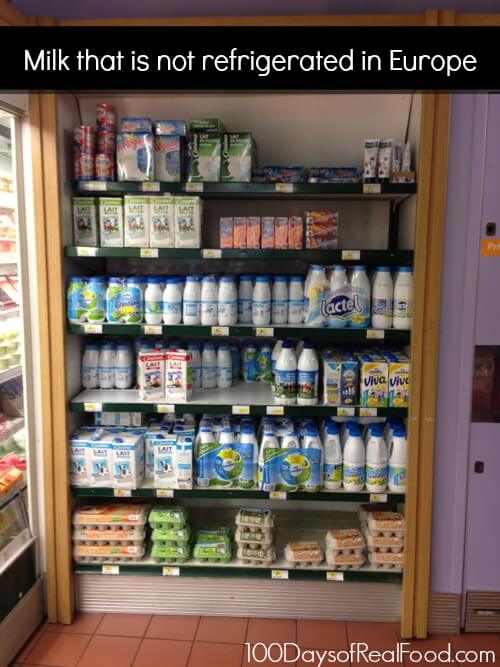
When we were in Europe last month I shared how almost all of the milk options we saw in the supermarket are not refrigerated and are considered "shelf stable." It stirred up quite a bit of discussion on Facebook...
Want to Save this Recipe?
Enter your email below & we'll send it straight to your inbox. Plus you'll get great new recipes from us every week!
Have you ever noticed how some milk here in the US is not refrigerated either?
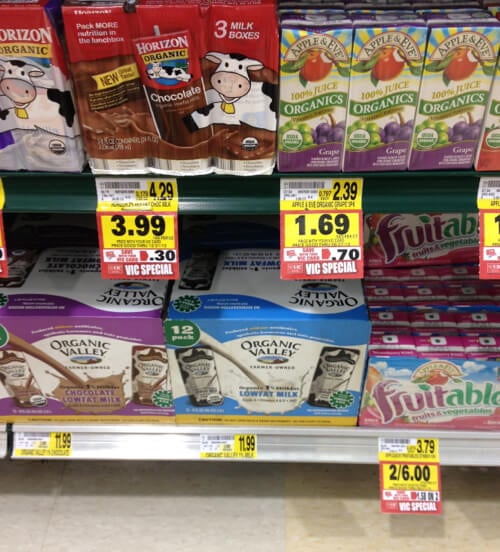
Why is it that these small individual sized organic milk containers in the US aren't sold cold? If you haven't already noticed almost all the commercialized organic milk options here in the US are Ultra High-Temperature Pasteurized (UHT) - which is actually the same process widely used in Europe - but that still doesn't answer why some versions are refrigerated and some aren't. The only difference is the packaging.
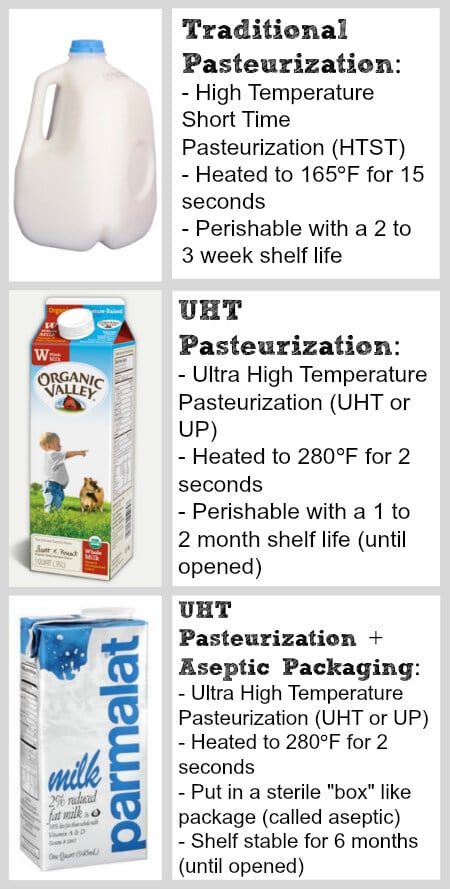
Just like the pictured Organic Valley "Single Serve" milk boxes, almost all European milk is UHT and put into what is called aseptic (i.e. sterilized) packaging. UHT milk can last for several months in this type of packaging without spoiling...at least until you open it at which point the shelf life does shorten and it does need to be stored in the fridge.
What is UHT (and is it good or bad)?
UHT stands for Ultra High-Temperature Pasteurization (also referred to as Ultra Pasteurization or UP) and means that milk is heated to about 280 degrees F for 2 seconds, which kills more bacteria (both good and bad) than traditional pasteurization therefore giving the milk a much longer shelf life before it spoils. Compare this to other milk here in the US, which is typically High Temperature Short Time Pasteurized (minus the "ultra" and shortened to HTST) indicating it has been heated to 165°F for 15 seconds.
So which type of pasteurization is the better choice? Well, it depends on who you ask and what your criteria is...
Producers and retailers - and even some consumers - think UHT milk is the greatest thing since sliced bread. Just think of the cost savings if refrigeration is not required after production, during delivery, or once it arrives to the store - not to mention the extended shelf life. Also, in Europe, many people don't have the mega-sized refrigerators that are so common here in the US so having one less thing to refrigerate is pretty convenient.
Apparently Europeans are fine with the idea of warm, shelf-stable milk, and since it is a rather practical choice that is the majority of what consumers purchase there.
Now here in the US, I haven't exactly heard people singing the praises for UHT. Yes, it may be more convenient, but from a health standpoint while the higher temperature kills even more potentially bad bacteria - the good bacteria, unfortunately, goes with it. One article even calls UHT milk "dead milk" - wow, that's pretty harsh.
I have to agree that I am a little leery of UHT even here in the state of North Carolina where raw milk is not legal for human consumption. I do have to say though that if organic UHT milk was the only organic option in my area - that is definitely what I would choose over conventional. What is your take on UHT milk (please share in the comments)?
So why isn't shelf stable milk sold here like it is in Europe?
A large Italian food company called Parmalat actually tried to take the US dairy industry by storm with their little boxes of shelf-stable UHT milk in the early 90's, but Americans were just not fond of the idea. The reason - we apparently still value the idea of fresh milk, although ironically enough if you are buying your milk from a big box organic dairy company it is likely not much "fresher" than the luke-warm milk sitting on the shelves in Europe (again the only difference is the packaging).
I am the first to admit I am guilty as charged. I was one of those "crazy Americans" searching high and low for refrigerated milk when we were food shopping in France. I just could not buy into the idea of the warm, boxed milk that lined the shelves.
I looked at the labels and saw that they were UHT (something I am familiar with, but do try to avoid at home) so I kept looking and somehow managed to find one lonely brand that offered a few cold bottles of milk in the cheese aisle. I didn't even look to see if that version was also UHT and just went with it because I was so pleased to be able to find what I was "used to" at home.
Check out my Milk 101 post to learn all about the different types of milk that are available here in the US (including low-fat vs. whole) and what kind our family chooses to drink on a regular basis (hint: it is not any of the choices listed in the chart above.) What kind of milk do you buy (and why)?
Sponsor Shoutout: Lunchbox Love
Before I let you go, I have to make sure you know about our sponsor Lunchbox Love. Just in time for back-to-school, they are offering 16 new volumes of cards - including all new facts, jokes, trivia, and positive messages - that you can put in your child's lunchbox each day.
We started sending these cards in our girls' lunches last year, and they honestly adore them. Our oldest daughter shares the cards with her entire lunch table and both girls routinely give us a hard time if we ever forget to add one to their lunch box before sending them off to school!
I feel like these are a great way to make the "real food" lunches I lovingly pack just as fun as all the cartoon-laden packaged foods their friends might be eating. Sure, I could write my own little cards, but I could never be as creative as the Lunchbox Love crew. So I think it is totally worth the cost - plus since the cards come on fairly thick paper they could easily be reused a few times.
Lisa is a wife, mother, foodie, blogger, and #1 New York Times Best-selling author who is on a mission to cut out processed food.
Comments
Carisays
We live in Germany and buy UHT to have on hand in case we run out of regular milk, but prefer to buy the local non-UHT milk for everyday use. Most larger grocery stores have refrigerated and non refrigerated options. I think it has a funny flavor compared to the regular milk so I only use it for cereal and definitely refrig before drinking. I've been wondering about the safety of it, but figured since everything else seems to be safer this should be ok...
I've read your article through a Facebook post and I want to make some additions about how we drink our milk in the Netherlands.
Mostly because I don't recognize the picture you added. I think It was taken in a smaller French shop but it only shows a small portion of all the milk we can buy in Europe. I'll try to make some pictures of both the fresh milk compartment and the non-fresh milk compartment of my supermarket so you can see the difference!
most of the milk we consume is fresh milk (pasteurized at 72 degrees Celsius), has to be storaged in the fridge and has to be consumed within 5 to 10 days (depends on what brand you buy). It can be organic as well as regular.
besides that there's another compartment of non-refridgerated milk that we call sterilised milk (sterilised or pasteurized at 100 degrees Celsius or more)
also there are farms where one can buy raw milk both organic or not.
our fridges are indeed much smaller, so most of us each week week do our groceries and buy the amount of fresh milk we need for the coming week.
I live in Denmark, do a lot of shopping in germany, come from Ireland and have visited England and Norway and France. I have never ever bought UHT and would never. Actually it is hard to find to find in Denmark and Ireland.
We have huge refridgerated aisles of fresh dairy, usually 4 options of milk-fat level, from many brands and different cow races as well as organic and non organic. We also have lots of yoghurts, greek yoghurts, creme fraiche, sour cream, fresh cream, fresh butter milk, skyr (islandic), and I could go on. Dairy that is fresh is a Huge part of the diet in Ireland and Scandinavia and it is not UHT treated.
I really dont see the picture being painted either. Europe is not a homogonous continent, what you find in Spain is vastly different from what you may find in Poland or Norway or Romania. So instead of saying what I experienced in Europe perhaps it would be more accurate to state the countries you experienced things in as it is not possible to paint an accurate picture of europe from 2-4 countries.
Rant over ;)
I am always slightly amused when North Americans try to portray Europe as one homogenous mass... I get it that they don't understand how they all separate countries with their separate cultures. but it does amuse me.
Saying that all of European food is the same is like saying that all fruit tastes the same... when it does not...
Selmasays
I am Dutch and I live in the US. I agree with DK that the most of the milk we drink in the Netherlands is fresh milk and that there is a (small) section of pasteurized non-refrigerated milk in the Dutch supermarkets.
I don't agree with your comparison of 'Europe' vs the US. It would be more accurate to compare France or even better the region of France you have visited. Europe has many different countries that are totally different, what you have seen on your trip. It is definitely not a homogenous continent.
After living in France, Holland and now Germany I am all too familiar with the UHT milk. And to be honest, the idea of warm milk is still a weird concept for me to get over. Though, as organic starts gaining more popularity (it is not as popular here as most people seem to think..) there are places where you can get fresh, cold organic milk. For example, we have an organic farm that you can take old fashioned glass milk bottles to and buy refills. It is the epitome of charming (and recycling!). That said, it is, of course, the most expensive of the options (though not much more than buying organic soy or almond milk).
Thanks for explaining the differences in milk. We are an American family that has lived overseas for 20+ years. We currently live in Hong Kong and our "long life" milk comes from New Zealand. Oddly enough both my son and I get sick when we return to the states and drink traditional pasteurized milk. We have tried lactose-free milk and that doesn't completely help, so we switched to almond milk this summer. (We are very happy with almond milk!) I wonder if the bacteria-free UHT milk is what our digestive systems have gotten accustomed to, and that makes it hard to return to the stateside pasteurized milk.
I lived in Poland for three years and we had both uht and fresh milk options, I bought UHT in a flat so that I wasn't going to the store all the time before I used up the milk carton. (they came in 1 liter packages) I judged dairy products in the states before going and I could taste the difference, it had a severe cooked flavor and when I tried making whipped cream from the whipping cream, it tasted weird. I preferred the fresh milk that was not heated as hot but sometimes I wish I could get the milk for camping and such. The taste grew on me as it was pretty much the only milk I got.
We live in Beijing, China. Although fresh milk is available in some markets here, there are definite concerns about its safety. The UHT milk (we typically buy an organic variety from New Zealand) is an absolute godsend here. My kids don't like warm milk either so we typically keep several boxes in the refrigerator. Anyways, I think it is very handy and convenient to always have some UHT milk in the cupboard, but we would drink fresh if it we could:)
I have to say that while I may not drink it warm, I will put it in the fridge. I always try to keep a couple boxes on hand for those times I run out of milk. We live about 30 minutes from town and try to only shop twice a month. Since raw milk is also not an option where I live, I would still rather have it from a box and organic than not at all. I also keep the little boxes on hand for travel.
I buy Parmalat at the dollar store. They 1% there. It's great for when I run out. 4 of them make a gallon, and at $4 it's more expensive than my Costco milk, but it stays fresh until I need it. I have no issue drinking it, nor does my family.
Shelf stable milk by Parmalat has been around for years. I owned a day care center for 18 years and took it on field trips versus a gallon of milk! I like the Horizon Organic milk and throw it in my bag now when I travel so I have milk for my coffee in a hotel room. After the shelf stable milk is refrigerated I can't tell a difference. I don't drink it except in cereal, coffee and for cooking but I do like the convenience. Before I started using it in my day care center I had to have it approved for use on the food program. I was amazed that no one had heard of shelf stable milk at that time.
I'm also an American working and living in Europe. I thought it was weird at first, but only because I was raised that milk should always be COLD. I got over it though and now feel just fine. :)
I'm an American working and living in Europe. I drink the UHT Organic Milk. Sometimes we buy organic milk at the commissary (which carries American brands) on the US military base, but I prefer the taste of the UHT version. It has such a creamier taste that I use it as creamer in my coffee.
I try to avoid the UHT milk for our everyday consumption,but I do buy it on occasion for my son to take to school for breakfast b/c all the other kids get the school chocolate or strawberry milk so I figure at least the horizons organic UHT milk is better than that junk. And I keep a package or 2 in our hurricane supplies but for everyday we either get raw milk from a local dairy (legal here in Texas) or I get organic from the store but try to get HT not UHT. Wish I could find low temp...by the way I am lactose intolerant and so is my son and we can both drink raw milk with no problems!!
I wonder if raw milk is cheaper? I would think so, because it goes through less processing (which costs money) but I really don't know. I'm going to do some investigating here in California!
Unfortunately, like most other healthy foods, raw milk is *not* cheaper. Here in CO it runs around $7/gallon. :( Definitely the best choice in my opinion. I've read that many who can't drink milk otherwise (lactose-intolerant I believe?) *can* drink raw milk. When we were drinking raw milk (for about a year) I don't think we were really sick at all (someone would start to come down with something, but it never really every came to fruition).
Raw milk is much, much more expensive because it goes bad so much faster than pasteurized milk. In my part of Southern California it runs $8-$10/gallon.
Yes, raw milk is more expensive since the shelf life is very small. Plus, the demand is much higher than the supply. In India, it's usually 1.5-2x of treated milk.
Claudiasays
The only person who drinks refrigerated milk is my husband, and I'm pretty sure he wouldn't switch :D My boys and I drink Rice Milk, which is sold in both refrigerated and aseptic packaging. I usually purchase the shelf stable kind because of convenience and to save fridge space.
I try not to buy any milk at all in Istanbul, Turkey. If my boys want to drink it from time to time I prefer organic UHT or pastorised cold milk which does spoil within 4-5 days. I buy raw milk from a farm to make yoghurt at home which is the healthiest but the children do not like the taste of it.
Personally I think all milk is disgusting. I do buy the Horizon Strawberry Milk sinles for a recovery drink from running, but I refrigerate it before drinkingbit. The thought of warm milk turns my stomach. But I know it s common in Europe but we had to search for rice milk while in Switzerland and I was a little surprised at how much milk was on the shelf.
I buy organic whole milk that is UHT, it is the only milk I can digest (haven't tried raw). I can drink lactaid milk (ugh RBGH) but prefer to steer clear of it for organic. I'm not sure if my dairy digestion issue is solved by being organic or if its the UHT. I recommended trying organic milk to another friend that was lactose intolerant and they have had the same experience that they did just fine on UHT organic milk when they couldn't handle any other dairy. Would love to know if its because its organic or if its the pasteurization process.
I'm so bummed raw milk isn't available for 'human consumption' where you are! I used to never be able to have a glass of milk without having bad stomach cramps afterwards. Now I can have as much raw milk as I want because it's a living milk and has the lactase to balance the lactose. Maybe you could get some for your non-existent horses and give it a try? :) It tastes to me like melted vanilla ice cream! I think my stomach would protest all the more if I had the UHT since it is heated at even a higher temp, causing more destruction of the beneficial bacteria.
I drink UHT organic milk (Organic Valley). I prefer the long shelf life and the more humane treatment of the cows compared to traditional dairy farms. The only organic milk available here that is not UHT also is non-homogenized and I just don't like it. I'm not too worried about the loss of good bacteria. I also like the taste - though I tried the individual packages and milk just tastes odd warm.
This is so fascinating — I totally wondered about this when I was in France but never really investigated. I work for a French organization here in the U.S. and we have shelf-stable Parmalat and soy milk in the office lunchroom cabinets.
I would say organic UHT is better than conventional milk of any kind, as who wants to drink a big dose of bovine growth hormone in their "fresh" milk? I'm not sure how much benefit is lost without the good bacteria though.
But I don't speak from any personal experience—we don't drink real milk of any kind in my house. I'm lactose intolerant so can only do aged cheeses and my three-year-old is severely dairy allergic so we do oat "milk" — which is basically just ground up oats and doesn't have added sugars like rice milk or other faux milks. Here's a good recipe: http://chocolateandzucchini.com/archives/2011/05/homemade_oat_milk.php
Though we actually usually buy organic oat milk in shelf-stable boxes (Pacific Organic Oat Milk). Once opened, it keeps for 7-10 days.
We buy fresh (raw) milk from a family down the road. They keep the cost low at $4/gallon, which is a blessing. If, for any reason, we buy milk from the store, we buy any brand of whole milk that promises no rBGH.
In France I bought micro-filtered organic milk. It's a non-heat way to keep out problems, while still keeping it alive. It was of course sold in the refrigerated foods section.
The people who really want fresh milk in France generally do not shop at the large, generic supermarkets, it's quite divided.
We've been buying and drinking local raw milk from a dairy for several months. I love raw milk and find it much tastier than what can be bought in the store. It is definitely worth the effort it takes to go to the dairy every two weeks.
We drink low-pasturized whole milk straight from our dairy farm. It's really amazing how the homogenization process changes the taste. We can't even drink it any more!
In Denmark a brand of milk is sold that promises that the milk you purchase was milked max 24 hours prior. The shelf life of all milk is no more than 4-5 days and all milk is sold cold. Just to share that not all of Europe is the same. There are vast differences from country to country in Europe.
i've had mine stay good up to 14-21 days, depending on time of year and how often the frig gets opened.
C.O.says
I did a LOT of research on this topic when my daughter was weaned from breast milk to cows milk. No milk is really necessary, but I wanted something to offer other than water. Luckily, where we live, there are many options. We choose whole, low heat pasteurized, non homogenized milk, which is the closest to raw milk without the risks of raw. It does go bad rather quickly, but we have gotten good at keeping it fresh longer. It MUST be refrigerated very cold to keep it good. And it's yummy!!
Ya, we've cut way back too. Still want milk for our cereal and the girls still seem to enjoy a half cup at dinner time. But I'm trying to have yogurt (mostly homemade) more often for all the goodness it provides (and admittedly because the milk industry has done so well with it's advertising, that even tho now I know better, I *still* subconsciously think the girls need to be "getting enough dairy" in order to be getting enough calcium).
When I vacationed in Mexico a few years back we were freaked out too, to not find cold milk only boxed. My husband is a huge milk drinker and very picky but that was our only option. He did not care for it but he said it worked in his cereal, lol. I buy organic 1% for him and almond or homemade coconut milk for the kids and I. That's the one thing I cant get him to stray from.
Very interesting. When we started eating cleaner a year ago I had a hard time deciding on what milk to buy for my large family. Where I live in NC raw milk is hard to get since it is "technically" illegal and labeled not for human consumption. I knew I couldn't make the jump to raw milk, but I wanted grass fed milk. I found a local farm that isn't organic, but has always used organic practices. Their milk is HTST which many of the store brands aren't in my area. It is more than a dollar more per gallon, but it has been one of the things I try not to compromise on. Only a few stores sell it so I have to plan my trips accordingly.
Regina, the "not for human consumption" is just a way around the laws. The raw milk I buy is labeled "For Pet Consumption Only" so that it can cross state lines, and I, along with several hundred other people in the area, happily drink it every day. It is perfectly safe for people to drink, and is handled just as safely as any milk that is sold "for human consumption".
In Australia both types are available but cold non-UHT milk is the popular one, UHT milk in boxes is just for emergencies.
I tried raw milk once from a neighbour's farm when I was holidaying in the country. I thought it was delicious, scooped from a big vat with lots of cream on top. I put the rest in the fridge and saw it a couple of days later and had a swig straight from the bottle. Then spat out a mouthful of disgusting lumpy curds into the sink. It really doesn't keep very long!!
I've been buying a brand here in Indianapolis that sells low heat pasteurized milk. It still gets the job done in order to be legal to sell here (raw milk is also illegal in Indiana), but doesn't kill off quite so much of the good stuff. I've also read because of this method, some people who are normally lactose intolerant may be able to handle their milk. hartzlerfamilydairy.com
Love Hartzler milk and butter! We just moved from Columbus, Ohio where we had access to great Hartlzer products as well as Snowville Creamery. Amazing local sustainable milk products that aren't UHT and taste amazing! Just moved to Texas and am trying to find something similar here...no luck so far. We got so spoiled in Ohio!
Candice - I was so surprised to see your comment! I live in Ohio, near Wooster where hartzler family dairy is located. I had no idea the range of their milk delivery. We have cut back on our milk consumption (as a family of 6) just to be able to drink the Hartzler milk. We love it! i also get their butter and we love their ice cream.
We are currently living in Argentina, although originally from MN, and we have both UHT shelf-stable and refrigerated milk sold in bags here.
I really don't taste the difference, although I have heard that the milk stored in bags is pasteurized within the plastic bag, which is not appealing to me at all. We generally buy more UHT for convenience sake, but always refrigerate it before opening. I am not a fan of warm milk! I'd much prefer raw milk, but I have yet to find it here.
I'll have to further research the milk options here in AR.
The problem with the juice boxes isn't the packaging process as it is a problem with a hole happening to the packaging. Any packaging is susceptible to that. If there was to be a small hole in the box of milk, it will spoil.
I prefer non UHT milk and have noticed that Clover Organic has regular pasteurized in gallon and half gallon and most of the other organic brands are regular pasteurized in the gallon sizes, but not the 1/2 gallon sizes or smaller sizes.
I also find working with cream that is UHT is harder for recipes, but again, Clover or Strauss has just pasteurized creamer too.
I've also tried raw organic milk and liked the taste of that the best, but that is a whole different topic :)
So funny that you just wrote this article! I just wrote to food babe last week to ask about UHT and whether it was good or not. My son loves milk and I wanted to put it in his lunchbox for camp and school. I wanted to make sure it wasn't a harmful process. I'm going to keep using it because it is better than the chocolate and strawberry milk they serve at school.....which should be banned!!!!
I completely agree, how the federal government deems chocolate milk a "healthy" choice for school lunch, but yet our school was forced to give up it's salad bar. Probably not enough corn and soy in the salad bar, ha, ha. My daughter takes a water bottle for lunch to avoid the non-organic milk & chocolate milk issue.
Sadly, raw milk is illegal here in the Dairy State(sigh!) and alas most of the dairy (milk/whipping cream)from dairy's with GOOD organic practices(Not Organic Horizon!) sold at conventional grocery stores in my area are ultra-pasteurized. We usually buy 3 gallons of Organic Valley milk a week from the grocery store closest to our house. It costs around $6 a gallon. Not sure if whole foods or the Coop sells something less pasteurized from an organic farm with good practices. Though honestly, the idea of running to yet another store once a week sound's crazy. Also. I don't think I could afford to spend any more then $6 a gallon on milk. Sad to hear I switched from conventional milk to organic to get BGH free milk from humanely raised cows and wound up with nutritionally dead milk. I always knew low temp pasteurization was better then high temp, but nutritionally dead is just scary.
Kristen, technically it is not illegal in ANY state to buy, own or use raw milk. It is only illegal to sell it... in many places. but, by Dairy state, if you mean WI, reply to me and I can help you find some places. I'm near Milwaukee.
Crystalsays
I think all pasteurized milk is dead anyway. I live in North Carolina and drink raw milk. :)
I'm with you Crystal. We have our own milk cow and our 4 children are so much healthier since we started drinking raw milk and eating raw milk yogurt. We did not go to the Dr. one time last winter. That, in itself, is a miracle if you ask me.
Well, I'm in North Carolina, too, and this made me curious enough to cross the border into South Carolina to get some raw milk! Just got it tonight, but it tastes the same. I met a woman in the store who told me of another place closer to home to get it as well and she also said her toddler son's runny nose and a couple other things are gone now and that's all she's changed. Looking forward to drinking this! My son loves milk, so I'm happy to be able to get this.
Sharon Lsays
When we lived in Germany, UHT milk was a necessity! Fresh milk from the commissary went sour pretty quickly. With two children and snowstorms galore, I kept UHT milk in one of my closets for use. We put it in the refrigerator to get it cold as did most of my European friends. Of course we are now back in the states, kids are now grown and we are lucky to use a half of a gallon of 1 or 2 percent milk a week. I have been buying organic local dairy in the bottle as of late. If I moved back to Europe, I would probably buy UHT milk again. I only really used it for cooking in the first place. Hubby drinks the occasional glass.
I didn't do any food shopping in France when we were there, but cold milk was never a problem to find on the economy in Germany. The UHT milk was very popular though.
I am from Chile, where we only have UHT milk. I recently spent 6 months in the US, drinking the milk they sell there and I have to say it tastes more like "real food". I've been back to Chile for a week now and I can't get myself to drink UHT milk again. It tastes too artificial.



Cari says
We live in Germany and buy UHT to have on hand in case we run out of regular milk, but prefer to buy the local non-UHT milk for everyday use. Most larger grocery stores have refrigerated and non refrigerated options. I think it has a funny flavor compared to the regular milk so I only use it for cereal and definitely refrig before drinking. I've been wondering about the safety of it, but figured since everything else seems to be safer this should be ok...
DK says
I've read your article through a Facebook post and I want to make some additions about how we drink our milk in the Netherlands.
Mostly because I don't recognize the picture you added. I think It was taken in a smaller French shop but it only shows a small portion of all the milk we can buy in Europe. I'll try to make some pictures of both the fresh milk compartment and the non-fresh milk compartment of my supermarket so you can see the difference!
most of the milk we consume is fresh milk (pasteurized at 72 degrees Celsius), has to be storaged in the fridge and has to be consumed within 5 to 10 days (depends on what brand you buy). It can be organic as well as regular.
besides that there's another compartment of non-refridgerated milk that we call sterilised milk (sterilised or pasteurized at 100 degrees Celsius or more)
also there are farms where one can buy raw milk both organic or not.
our fridges are indeed much smaller, so most of us each week week do our groceries and buy the amount of fresh milk we need for the coming week.
Dc says
I live in Denmark, do a lot of shopping in germany, come from Ireland and have visited England and Norway and France. I have never ever bought UHT and would never. Actually it is hard to find to find in Denmark and Ireland.
We have huge refridgerated aisles of fresh dairy, usually 4 options of milk-fat level, from many brands and different cow races as well as organic and non organic. We also have lots of yoghurts, greek yoghurts, creme fraiche, sour cream, fresh cream, fresh butter milk, skyr (islandic), and I could go on. Dairy that is fresh is a Huge part of the diet in Ireland and Scandinavia and it is not UHT treated.
I really dont see the picture being painted either. Europe is not a homogonous continent, what you find in Spain is vastly different from what you may find in Poland or Norway or Romania. So instead of saying what I experienced in Europe perhaps it would be more accurate to state the countries you experienced things in as it is not possible to paint an accurate picture of europe from 2-4 countries.
Rant over ;)
Salixisme says
I am always slightly amused when North Americans try to portray Europe as one homogenous mass... I get it that they don't understand how they all separate countries with their separate cultures. but it does amuse me.
Saying that all of European food is the same is like saying that all fruit tastes the same... when it does not...
Selma says
I am Dutch and I live in the US. I agree with DK that the most of the milk we drink in the Netherlands is fresh milk and that there is a (small) section of pasteurized non-refrigerated milk in the Dutch supermarkets.
I don't agree with your comparison of 'Europe' vs the US. It would be more accurate to compare France or even better the region of France you have visited. Europe has many different countries that are totally different, what you have seen on your trip. It is definitely not a homogenous continent.
Laura says
After living in France, Holland and now Germany I am all too familiar with the UHT milk. And to be honest, the idea of warm milk is still a weird concept for me to get over. Though, as organic starts gaining more popularity (it is not as popular here as most people seem to think..) there are places where you can get fresh, cold organic milk. For example, we have an organic farm that you can take old fashioned glass milk bottles to and buy refills. It is the epitome of charming (and recycling!). That said, it is, of course, the most expensive of the options (though not much more than buying organic soy or almond milk).
Rachel says
Thanks for explaining the differences in milk. We are an American family that has lived overseas for 20+ years. We currently live in Hong Kong and our "long life" milk comes from New Zealand. Oddly enough both my son and I get sick when we return to the states and drink traditional pasteurized milk. We have tried lactose-free milk and that doesn't completely help, so we switched to almond milk this summer. (We are very happy with almond milk!) I wonder if the bacteria-free UHT milk is what our digestive systems have gotten accustomed to, and that makes it hard to return to the stateside pasteurized milk.
Katie says
I lived in Poland for three years and we had both uht and fresh milk options, I bought UHT in a flat so that I wasn't going to the store all the time before I used up the milk carton. (they came in 1 liter packages) I judged dairy products in the states before going and I could taste the difference, it had a severe cooked flavor and when I tried making whipped cream from the whipping cream, it tasted weird. I preferred the fresh milk that was not heated as hot but sometimes I wish I could get the milk for camping and such. The taste grew on me as it was pretty much the only milk I got.
Tammi says
Yesterday we returned from a month long trip in Europe and no one in my family liked the milk. It tastes different much thicker.
Erin says
We live in Beijing, China. Although fresh milk is available in some markets here, there are definite concerns about its safety. The UHT milk (we typically buy an organic variety from New Zealand) is an absolute godsend here. My kids don't like warm milk either so we typically keep several boxes in the refrigerator. Anyways, I think it is very handy and convenient to always have some UHT milk in the cupboard, but we would drink fresh if it we could:)
Deanna says
*They have 1% there. Geez... I sounded dumb. Lol
Angie says
I have to say that while I may not drink it warm, I will put it in the fridge. I always try to keep a couple boxes on hand for those times I run out of milk. We live about 30 minutes from town and try to only shop twice a month. Since raw milk is also not an option where I live, I would still rather have it from a box and organic than not at all. I also keep the little boxes on hand for travel.
Deanna says
I buy Parmalat at the dollar store. They 1% there. It's great for when I run out. 4 of them make a gallon, and at $4 it's more expensive than my Costco milk, but it stays fresh until I need it. I have no issue drinking it, nor does my family.
Vickey. Allen says
Shelf stable milk by Parmalat has been around for years. I owned a day care center for 18 years and took it on field trips versus a gallon of milk! I like the Horizon Organic milk and throw it in my bag now when I travel so I have milk for my coffee in a hotel room. After the shelf stable milk is refrigerated I can't tell a difference. I don't drink it except in cereal, coffee and for cooking but I do like the convenience. Before I started using it in my day care center I had to have it approved for use on the food program. I was amazed that no one had heard of shelf stable milk at that time.
Kirsten says
I'm also an American working and living in Europe. I thought it was weird at first, but only because I was raised that milk should always be COLD. I got over it though and now feel just fine. :)
Jess says
I'm an American working and living in Europe. I drink the UHT Organic Milk. Sometimes we buy organic milk at the commissary (which carries American brands) on the US military base, but I prefer the taste of the UHT version. It has such a creamier taste that I use it as creamer in my coffee.
I highly doubt you'll find raw milk over here
Jaci says
I try to avoid the UHT milk for our everyday consumption,but I do buy it on occasion for my son to take to school for breakfast b/c all the other kids get the school chocolate or strawberry milk so I figure at least the horizons organic UHT milk is better than that junk. And I keep a package or 2 in our hurricane supplies but for everyday we either get raw milk from a local dairy (legal here in Texas) or I get organic from the store but try to get HT not UHT. Wish I could find low temp...by the way I am lactose intolerant and so is my son and we can both drink raw milk with no problems!!
Mary says
I wonder if raw milk is cheaper? I would think so, because it goes through less processing (which costs money) but I really don't know. I'm going to do some investigating here in California!
Julie says
Unfortunately, like most other healthy foods, raw milk is *not* cheaper. Here in CO it runs around $7/gallon. :( Definitely the best choice in my opinion. I've read that many who can't drink milk otherwise (lactose-intolerant I believe?) *can* drink raw milk. When we were drinking raw milk (for about a year) I don't think we were really sick at all (someone would start to come down with something, but it never really every came to fruition).
Lee says
Raw milk is much, much more expensive because it goes bad so much faster than pasteurized milk. In my part of Southern California it runs $8-$10/gallon.
Pallavi says
Yes, raw milk is more expensive since the shelf life is very small. Plus, the demand is much higher than the supply. In India, it's usually 1.5-2x of treated milk.
Claudia says
The only person who drinks refrigerated milk is my husband, and I'm pretty sure he wouldn't switch :D My boys and I drink Rice Milk, which is sold in both refrigerated and aseptic packaging. I usually purchase the shelf stable kind because of convenience and to save fridge space.
Figen says
I try not to buy any milk at all in Istanbul, Turkey. If my boys want to drink it from time to time I prefer organic UHT or pastorised cold milk which does spoil within 4-5 days. I buy raw milk from a farm to make yoghurt at home which is the healthiest but the children do not like the taste of it.
Jennifer Miller says
Personally I think all milk is disgusting. I do buy the Horizon Strawberry Milk sinles for a recovery drink from running, but I refrigerate it before drinkingbit. The thought of warm milk turns my stomach. But I know it s common in Europe but we had to search for rice milk while in Switzerland and I was a little surprised at how much milk was on the shelf.
Allison says
I buy organic whole milk that is UHT, it is the only milk I can digest (haven't tried raw). I can drink lactaid milk (ugh RBGH) but prefer to steer clear of it for organic. I'm not sure if my dairy digestion issue is solved by being organic or if its the UHT. I recommended trying organic milk to another friend that was lactose intolerant and they have had the same experience that they did just fine on UHT organic milk when they couldn't handle any other dairy. Would love to know if its because its organic or if its the pasteurization process.
Courtney says
I'm so bummed raw milk isn't available for 'human consumption' where you are! I used to never be able to have a glass of milk without having bad stomach cramps afterwards. Now I can have as much raw milk as I want because it's a living milk and has the lactase to balance the lactose. Maybe you could get some for your non-existent horses and give it a try? :) It tastes to me like melted vanilla ice cream! I think my stomach would protest all the more if I had the UHT since it is heated at even a higher temp, causing more destruction of the beneficial bacteria.
Trina says
I drink UHT organic milk (Organic Valley). I prefer the long shelf life and the more humane treatment of the cows compared to traditional dairy farms. The only organic milk available here that is not UHT also is non-homogenized and I just don't like it. I'm not too worried about the loss of good bacteria. I also like the taste - though I tried the individual packages and milk just tastes odd warm.
Mikhaela Reid says
This is so fascinating — I totally wondered about this when I was in France but never really investigated. I work for a French organization here in the U.S. and we have shelf-stable Parmalat and soy milk in the office lunchroom cabinets.
I would say organic UHT is better than conventional milk of any kind, as who wants to drink a big dose of bovine growth hormone in their "fresh" milk? I'm not sure how much benefit is lost without the good bacteria though.
But I don't speak from any personal experience—we don't drink real milk of any kind in my house. I'm lactose intolerant so can only do aged cheeses and my three-year-old is severely dairy allergic so we do oat "milk" — which is basically just ground up oats and doesn't have added sugars like rice milk or other faux milks. Here's a good recipe: http://chocolateandzucchini.com/archives/2011/05/homemade_oat_milk.php
Though we actually usually buy organic oat milk in shelf-stable boxes (Pacific Organic Oat Milk). Once opened, it keeps for 7-10 days.
Aurora says
We buy fresh (raw) milk from a family down the road. They keep the cost low at $4/gallon, which is a blessing. If, for any reason, we buy milk from the store, we buy any brand of whole milk that promises no rBGH.
noelle says
In France I bought micro-filtered organic milk. It's a non-heat way to keep out problems, while still keeping it alive. It was of course sold in the refrigerated foods section.
The people who really want fresh milk in France generally do not shop at the large, generic supermarkets, it's quite divided.
Sharon says
We've been buying and drinking local raw milk from a dairy for several months. I love raw milk and find it much tastier than what can be bought in the store. It is definitely worth the effort it takes to go to the dairy every two weeks.
Amy says
We drink low-pasturized whole milk straight from our dairy farm. It's really amazing how the homogenization process changes the taste. We can't even drink it any more!
Stephanie says
In Denmark a brand of milk is sold that promises that the milk you purchase was milked max 24 hours prior. The shelf life of all milk is no more than 4-5 days and all milk is sold cold. Just to share that not all of Europe is the same. There are vast differences from country to country in Europe.
CSue says
We milk our own cow and fresh cows milk lasts 7-10 days when kept at around 35 degrees.
Christa says
i've had mine stay good up to 14-21 days, depending on time of year and how often the frig gets opened.
C.O. says
I did a LOT of research on this topic when my daughter was weaned from breast milk to cows milk. No milk is really necessary, but I wanted something to offer other than water. Luckily, where we live, there are many options. We choose whole, low heat pasteurized, non homogenized milk, which is the closest to raw milk without the risks of raw. It does go bad rather quickly, but we have gotten good at keeping it fresh longer. It MUST be refrigerated very cold to keep it good. And it's yummy!!
Julie says
Ya, we've cut way back too. Still want milk for our cereal and the girls still seem to enjoy a half cup at dinner time. But I'm trying to have yogurt (mostly homemade) more often for all the goodness it provides (and admittedly because the milk industry has done so well with it's advertising, that even tho now I know better, I *still* subconsciously think the girls need to be "getting enough dairy" in order to be getting enough calcium).
Amanda says
When I vacationed in Mexico a few years back we were freaked out too, to not find cold milk only boxed. My husband is a huge milk drinker and very picky but that was our only option. He did not care for it but he said it worked in his cereal, lol. I buy organic 1% for him and almond or homemade coconut milk for the kids and I. That's the one thing I cant get him to stray from.
Regina says
Very interesting. When we started eating cleaner a year ago I had a hard time deciding on what milk to buy for my large family. Where I live in NC raw milk is hard to get since it is "technically" illegal and labeled not for human consumption. I knew I couldn't make the jump to raw milk, but I wanted grass fed milk. I found a local farm that isn't organic, but has always used organic practices. Their milk is HTST which many of the store brands aren't in my area. It is more than a dollar more per gallon, but it has been one of the things I try not to compromise on. Only a few stores sell it so I have to plan my trips accordingly.
Laura says
Regina, the "not for human consumption" is just a way around the laws. The raw milk I buy is labeled "For Pet Consumption Only" so that it can cross state lines, and I, along with several hundred other people in the area, happily drink it every day. It is perfectly safe for people to drink, and is handled just as safely as any milk that is sold "for human consumption".
Natalie says
In Australia both types are available but cold non-UHT milk is the popular one, UHT milk in boxes is just for emergencies.
I tried raw milk once from a neighbour's farm when I was holidaying in the country. I thought it was delicious, scooped from a big vat with lots of cream on top. I put the rest in the fridge and saw it a couple of days later and had a swig straight from the bottle. Then spat out a mouthful of disgusting lumpy curds into the sink. It really doesn't keep very long!!
candice says
I've been buying a brand here in Indianapolis that sells low heat pasteurized milk. It still gets the job done in order to be legal to sell here (raw milk is also illegal in Indiana), but doesn't kill off quite so much of the good stuff. I've also read because of this method, some people who are normally lactose intolerant may be able to handle their milk. hartzlerfamilydairy.com
Lisa says
Candice - That sounds almost exactly like what we drink as well :) https://www.100daysofrealfood.com/2012/06/07/milk-101-whole-raw-organic-low-fat-etc/
Jocelyn says
Love Hartzler milk and butter! We just moved from Columbus, Ohio where we had access to great Hartlzer products as well as Snowville Creamery. Amazing local sustainable milk products that aren't UHT and taste amazing! Just moved to Texas and am trying to find something similar here...no luck so far. We got so spoiled in Ohio!
CSue says
There is a raw milk dairy in Allen, TX.
cara says
Candice - I was so surprised to see your comment! I live in Ohio, near Wooster where hartzler family dairy is located. I had no idea the range of their milk delivery. We have cut back on our milk consumption (as a family of 6) just to be able to drink the Hartzler milk. We love it! i also get their butter and we love their ice cream.
Lisa says
We are currently living in Argentina, although originally from MN, and we have both UHT shelf-stable and refrigerated milk sold in bags here.
I really don't taste the difference, although I have heard that the milk stored in bags is pasteurized within the plastic bag, which is not appealing to me at all. We generally buy more UHT for convenience sake, but always refrigerate it before opening. I am not a fan of warm milk! I'd much prefer raw milk, but I have yet to find it here.
I'll have to further research the milk options here in AR.
Krista c says
Question: Does the shelf stable individual size packages of milk have the same issues with molding that juice boxes and pouches have?
Monica says
Great question! I'd love to know that too.
H says
The problem with the juice boxes isn't the packaging process as it is a problem with a hole happening to the packaging. Any packaging is susceptible to that. If there was to be a small hole in the box of milk, it will spoil.
Marisa says
I wonder about this too! I can't imagine why milk would be any different.
Susan says
I prefer non UHT milk and have noticed that Clover Organic has regular pasteurized in gallon and half gallon and most of the other organic brands are regular pasteurized in the gallon sizes, but not the 1/2 gallon sizes or smaller sizes.
I also find working with cream that is UHT is harder for recipes, but again, Clover or Strauss has just pasteurized creamer too.
I've also tried raw organic milk and liked the taste of that the best, but that is a whole different topic :)
Krista c says
Question: Does the shelf stable individual size
Angela says
So funny that you just wrote this article! I just wrote to food babe last week to ask about UHT and whether it was good or not. My son loves milk and I wanted to put it in his lunchbox for camp and school. I wanted to make sure it wasn't a harmful process. I'm going to keep using it because it is better than the chocolate and strawberry milk they serve at school.....which should be banned!!!!
Kristin says
I completely agree, how the federal government deems chocolate milk a "healthy" choice for school lunch, but yet our school was forced to give up it's salad bar. Probably not enough corn and soy in the salad bar, ha, ha. My daughter takes a water bottle for lunch to avoid the non-organic milk & chocolate milk issue.
Sadly, raw milk is illegal here in the Dairy State(sigh!) and alas most of the dairy (milk/whipping cream)from dairy's with GOOD organic practices(Not Organic Horizon!) sold at conventional grocery stores in my area are ultra-pasteurized. We usually buy 3 gallons of Organic Valley milk a week from the grocery store closest to our house. It costs around $6 a gallon. Not sure if whole foods or the Coop sells something less pasteurized from an organic farm with good practices. Though honestly, the idea of running to yet another store once a week sound's crazy. Also. I don't think I could afford to spend any more then $6 a gallon on milk. Sad to hear I switched from conventional milk to organic to get BGH free milk from humanely raised cows and wound up with nutritionally dead milk. I always knew low temp pasteurization was better then high temp, but nutritionally dead is just scary.
Christa says
Kristen, technically it is not illegal in ANY state to buy, own or use raw milk. It is only illegal to sell it... in many places. but, by Dairy state, if you mean WI, reply to me and I can help you find some places. I'm near Milwaukee.
Crystal says
I think all pasteurized milk is dead anyway. I live in North Carolina and drink raw milk. :)
CSue says
I'm with you Crystal. We have our own milk cow and our 4 children are so much healthier since we started drinking raw milk and eating raw milk yogurt. We did not go to the Dr. one time last winter. That, in itself, is a miracle if you ask me.
Tracy Stone says
Well, I'm in North Carolina, too, and this made me curious enough to cross the border into South Carolina to get some raw milk! Just got it tonight, but it tastes the same. I met a woman in the store who told me of another place closer to home to get it as well and she also said her toddler son's runny nose and a couple other things are gone now and that's all she's changed. Looking forward to drinking this! My son loves milk, so I'm happy to be able to get this.
Sharon L says
When we lived in Germany, UHT milk was a necessity! Fresh milk from the commissary went sour pretty quickly. With two children and snowstorms galore, I kept UHT milk in one of my closets for use. We put it in the refrigerator to get it cold as did most of my European friends. Of course we are now back in the states, kids are now grown and we are lucky to use a half of a gallon of 1 or 2 percent milk a week. I have been buying organic local dairy in the bottle as of late. If I moved back to Europe, I would probably buy UHT milk again. I only really used it for cooking in the first place. Hubby drinks the occasional glass.
I didn't do any food shopping in France when we were there, but cold milk was never a problem to find on the economy in Germany. The UHT milk was very popular though.
Camila says
I am from Chile, where we only have UHT milk. I recently spent 6 months in the US, drinking the milk they sell there and I have to say it tastes more like "real food". I've been back to Chile for a week now and I can't get myself to drink UHT milk again. It tastes too artificial.