
Obviously not everyone lives in a town with a Whole Foods or Earth Fare down the street. Readers actually write in quite 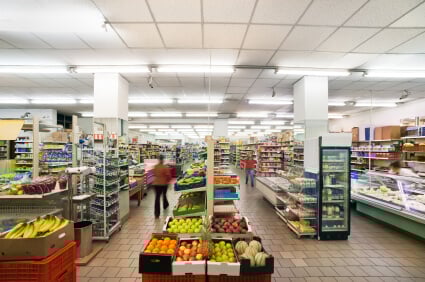
Want to Save this Recipe?
Enter your email below & we'll send it straight to your inbox. Plus you'll get great new recipes from us every week!
- You’ve heard it before and it’s true…shop around the perimeter of the store. There are a few exceptions like whole-wheat flour, brown rice, and 3-ingredient crackers, but other than that most fresh “whole foods” like produce and dairy are located around the perimeter of the store.
- When shopping for produce buy organic whenever possible, especially if the item is on the dirty dozen list. If your store does not offer any organic fruits or veggies then check to see if a local farmers’ market or C.S.A. (Community Supported Agriculture) program might offer produce that hasn’t been sprayed with chemicals. Remember that not all local farms can afford to be “certified organic” so just ask how they grow/treat their crops.
- If you can’t find much in the way of fresh organic produce then check out the frozen section for produce instead. As Michael Pollan says, “There is nothing wrong and actually a lot right about frozen produce” because it is picked and frozen at the peak of freshness.
- When selecting seafood choose wild-caught over farmed. You never know what farm-raised fish are being fed, and animals that eat the most natural diet possible are not only the healthiest animals, but also the healthiest for you. This is why wild animals are a great source of nutrition!
- If it is available, buy grass-fed humanely raised beef. Organic beef is certainly a good choice, but that could just mean the cows were fed organic corn. Cows are designed by evolution to eat grass and just like in the case of fish, the healthiest cows are going to provide you with the most nutrition. Your local farmers would be another great resource for finding good meat products.
- Avoid items that list “wheat” or “enriched wheat” as a top ingredient and instead go for 100% whole-grain or whole-wheat products. Good-tasting sandwich bread that’s made with 100% whole-wheat (and not a lot of unnecessary additives) is one of the hardest “real food” products to find in a mainstream supermarket, so this might be an area where you want to consider making your own bread or trying to find it through a local bakery instead.
- Avoid products “that have some form of sugar (or sweetener) listed among the top three ingredients” according to Michael Pollan. And don’t be fooled if you don’t see the word “sugar” on the list. Sweeteners come in many different forms from brown rice syrup to molasses to cane juice to honey.
- According to Pollan, “Avoid food products that make health claims” because chances are if they are trying to shout out to you that the product is “high in fiber” or “contains whole grains” there might be some sort of catch. Only trust what you find in the ingredient list because there is no other way to truly know what’s in your food. And don’t overlook the apples in produce that aren’t working as hard to get your attention.
- Speaking of the ingredient list buy products that either don’t have a list (because they are a 1-ingredient whole food) or that display a short list of ingredients that you can easily pronounce and understand.
- If your local store simply doesn’t carry ingredients like organic brown rice, raw nuts, whole-grain flours, coconut oil, or organic dried fruit then consider ordering those in bulk online. It could actually be cheaper than buying them from a health food store anyway.
- Whether it is from your supermarket or a local farmers’ market, when you find something good do not be afraid to stock up so you can preserve it for later.
- When all else fails consider growing your own produce. You don’t need an elaborate garden to get started…a pot, some soil, a bag of organic fertilizer and a few seeds will do.
For some specific brands of “real food” products that you might be able to find at mainstream supermarkets check out these posts…


Judee Albert says
I'd appreciate a list of your go-to mainstream grocery items that fit the bill. I learned about ak-mak crackers from you and have been grateful ever since!
100 Days Admin says
Hi Judee, Lisa has a handful of posts that include grocery items that you can get at stores like Target and Walmart, along with the two posts that are listed at the bottom of this posts. - Nicole
Bobby Saint says
I like that you provided some tips on how to buy "real food" from the supermarket such as selecting seafood that was wild-caught over farmed seafood. It's always good to choose seafood being sold directly from the ocean as compared to seafood that was raised in a pen or pond. You never know what is being fed on this seafood, so it's best to go for those that go with their natural diet. If I were to ever buy seafood at our local supermarket, I would make sure to keep this in mind. Thanks.
Emily says
Any tips on purchasing canned goods? For example, canned tomatoes, tomato paste, beans, etc.? Are there any brands you trust in particular?
Amy Taylor (comment moderator) says
Hi there. I personally look for both organic and bpa free. Tetra packs are a good option. I buy a lot of tomatoes packaged that way. They are the cardboard boxes that look like large juice boxes. :)
Rene says
Aldi, Food Lion and Walmart all carry organic products now. I buy most of mine from these stores. I don't have an Earthfare/Whole Foods near me. Even if I did I doubt they could match the prices of these stores.
Kayt says
Hey! I love these tips!!! I'm about to post to my own blog a recipe for a baby chicken cheesesteak with red bell peppers and spinach, and would love to link my readers to your article! Would you mind if I add a link to this on the end of the recipe to help moms trying to affordably feed babies?
Amy Taylor (comment moderator) says
Not at all. We love when folks share our stuff. :) Just be sure the link is there in full.
Dana says
What kind of flour do you suggest for soy, corn, barley and rice free homes (allergies)?
Amy Taylor (comment moderator) says
Hello. This might help: http://www.glutenfreegigi.com/gigis-rice-free-flour-blend-gum-free/ and http://breadsfromanna.com/collections/all.
Lesley says
Many healthy recipes these days call for almond flour or coconut oil. My husband is allergic to any tree nuts. What is the best healthy alternative for these types of ingredients?
Amy Taylor (comment moderator) says
Hi. You can use butter and coconut oil interchangeably in baking. If you are looking for an alternative flour, there are several bean based flours out there. Lisa uses 100% whole wheat flour in most of her recipes.
Alex says
Thanks for the good tips! Also check out Vitacost which is online service that can mail healthy food of all kinds ( non perishable ) . I love them! They have very good prices and ship for free over 50 dollar spend. :)
Veronica says
what should I look for when buying poultry? We use a lot of chicken and lean ground turkey in my house. thank you.
Amy Taylor (comment moderator) says
Hi Veronica. Look for organic poultry. You might even be able to find pastured organic. More and more groceries are catching on to the demand.
kerri says
I tried the Ak-Mak crackers and Stonyfield whole fat yogurt this week and oh my, yum yum! I put frozen organic fruit mix in some yogurt and the grandson gobbled it up. Thank you or all your great ideas and recipes.
Debbie says
I have been able to get things at vitacost.com when I can't get it in a store.
Amy Taylor (comment moderator) says
Hi there Alyse. This resource will help answer your questions: http://www.seafoodwatch.org/. ~Amy
Alyse says
When it comes to fish specifically wild caught fish is there a way to know where it came from? Also can we assume the area is pollution free? I am curious to know. What happens with the fish/seafood in waters known to pollution or accidental contamination (for example the B.P. oil spill a few years back). Do the fish have to undergo any quality testing before its delivered to the markets?
Charlee says
Wouldn't frozen vegetables also have pesticides used on them?
Assistant to 100 Days (Amy) says
Hello Charlee. Look for organic.
Assistant to 100 Days (Amy) says
Nope, that's new one.
Jess Johnson says
Hi Lisa (and crew!)
I love the site and all the information and recipes you provide. Looking forward to the cookbook!
I was wondering if you guys have heard of http://www.greenpolkadotbox.com/ for ordering whole foods. I had just never heard of them before today...
Adam says
It's dangerous to offer the blanket message to avoid farmed fish, because some fisheries are now environmentally sustainable, and in fact some is actually preferred over wild caught. Download the Monterey Bay Aquarium's seafood watch list app for further details.
The bottom line is that some farmed fish is fine, and some is not. Just as some wild fish is fine, and some is not.
It all depends on type of fish, where you live, the region of the world where the fish was caught, and by what means the fish was caught.
http://www.seafoodwatch.org/cr/cr_seafoodwatch/sfw_recommendations.aspx
Adam
Ali says
Such a good point. There is a very sustainable, ecological trout farm here is Wisconsin. I agree, do your research before buying fish, farmed or wild!