
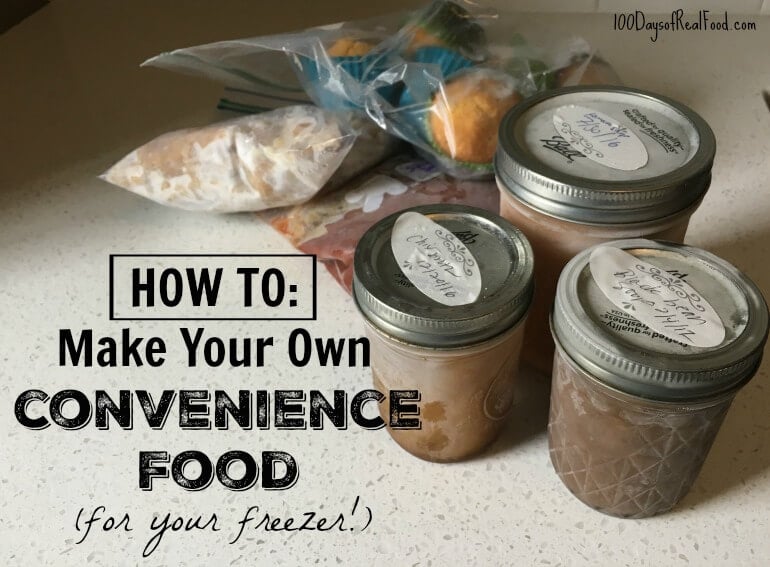
Some people call it freezer cooking, some call it batch cooking. I call it making your own convenience food! Let's face it, it IS convenient to pull out a pre-made frozen pizza and pop it into the oven for dinner. Now is it healthy for you? Not so much. But with a little upfront work you can have the best of both worlds!
According to the interwebs this is how convenience food is defined...
con·ven·ience food
noun
a food, typically a complete meal, that has been pre-prepared commercially and so requires little cooking by the consumer.
If we allow food companies to do the preparing for us they're going to use unwanted additives and other highly processed ingredients we would not cook with at home. Not to mention they'll likely add way too much salt, sugar and fat as well. So today I want to share some ideas on how to easily eliminate the commercial aspect of all this so you can still have the convenience!
Want to Save this Recipe?
Enter your email below & we'll send it straight to your inbox. Plus you'll get great new recipes from us every week!
How to Make & Freeze Your Own Homemade Convenience Food
Step 1: Prepare It.
Either double a recipe you're making for breakfast or dinner (soups, waffles, chicken, etc.) or multi-task by cooking an extra recipe when you're already in the kitchen preparing a meal. For example, start a batch (or better yet, a double batch) of muffins for the freezer while you're making or cleaning up after dinner.
Step 2: Freeze It.
- Soups: Chili, Stews and a Variety of Soups
Freeze the finished dish in individual portions using small jelly jars*, small Tupperware containers, or even freezer-safe bags (once the food has cooled). Larger portions could also be frozen in larger containers, but it will take longer to defrost, and you'll need to eat it all within a few days. *Note: If using glass jars leave room at the top for the soup to expand!
- - Breads: Waffles, Pancakes, Sandwich Bread and Muffins
Either freeze in one layer on a baking sheet and then transfer to a freezer-safe bag/container or freeze right in a bag/container by separating the layers of food with pieces of wax paper to prevent sticking. With certain foods (like muffins and scones) I find that I don’t even need the wax paper, but it is helpful when it comes to waffles and pancakes.
- - Sauces: Spaghetti, Applesauce, Pesto and More
Freeze in small jars or bags (similar to the soups above) or in ice cube trays, then transfer frozen cubes to a bigger bag. This helps if you want to defrost small portions at a time, and usually with sauces like pesto a little bit goes a long way!
- - Cooked Meats: Whole Chicken, Pulled Pork and Ground Beef
Freeze either plain cooked meat that you can season when defrosted or freeze it already seasoned in a large freezer-safe bag/container. Freezing something like plain cooked ground beef would give you a lot of options when it comes time to defrost.
- - Other Meals: Casseroles, Refried Beans, Etc.
For large casseroles (such as lasagna or enchiladas, before baking) I prepare and freeze them in disposable baking pans with a lid so I don't tie up my regular baking dishes. I freeze refried beans the same way I freeze soups (in small jelly jars with room at the top to expand).
Some General Freezing Tips:
- Air is the enemy! Especially when using bags try to squeeze out as much of the air as possible.
- When freezing soups and other "liquidy" things in freezer bags it's helpful to lay them flat on a baking tray during freezing so they don't take up as much room and are easier to store once frozen.
- *Since it's important I want to repeat that when freezing in jars, they must be labeled as freezer-safe (i.e. no shoulders) and you MUST leave room at the top for the liquid to expand (otherwise it could crack)! We fill to the line at the top in these jelly jars.
Step 3: Label it!
I cannot stress enough the importance of clearly labeling (with a description AND date) every single item in your freezer. You can write directly on disposable bags with a sharpie, or for jars I love to use the labels that dissolve in the dishwasher so I'm not stuck scrubbing them off.
Food Storage Guide
The government's food safety website is a good resource when it comes to understanding safe food storage. Here are some general guidelines when considering the items above:
Storage Times for Freezer
- Cooked Meats: Up to 6 months
- Prepared Soups, Sauces and Casseroles: 3 to 4 months
- Bread Items: 3 to 4 months
These are the ideal timeframes - I've definitely had soups and breads in my freezer for even longer. When it comes time to defrost it's best to pull the item out the night before and let it defrost overnight in the fridge. Otherwise you could always put it in the microwave on half power to help things along.
Please share your freezer tips in the comments below!


Leave a Reply