
This is a guest post from my husband, Jason Leake, and is part of his interview series for the blog. To learn more about Jason check out our team page.
Want to Save this Recipe?
Enter your email below & we'll send it straight to your inbox. Plus you'll get great new recipes from us every week!
This is Part II of my interview with Robyn O'Brien. Be sure to read Part I where we discuss food allergies, diet and our food supply.
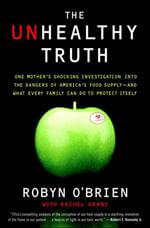
Robyn's book The Unhealthy Truth shares the story of "One Mother's Shocking Investigation into the Dangers of America's Food Supply - and What Every Family Can Do to Protect Itself." It's straight up non-fiction, but as Robyn reveals what she learns through her research it begins reading like a thriller (at least for someone like me who's interested in food and my family's health!).
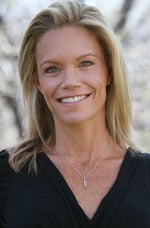
If you've not done so already, I recommend you first set the stage by watching Robyn's TEDx video and by reading her about page. Speaking of setting the stage, I have to get on my soapbox for just a moment. Collectively, we Americans are not “just fine” in terms of our health. We are responsible for our own well-being and the change we seek in the world. I urge you to educate yourself through a variety of sources and to think for yourself. Take action, even baby steps, toward your goals. Remember that if a company, organization, or government is spending a lot of money to withhold information from you, there is a motive behind that. Truth stands on its own.
“In the absence of the truth, all of us stand helpless to defend ourselves, our families and our health, which is the greatest gift we have. Robyn O’Brien’s courageous pursuit is an example of how we can all do our parts to protect the health of our families." - Erin Brockovich
All right, now on to the interview...
Robyn O'Brien Interview, Part II
10) What are genetically modified organisms (GMOs) and why should we care?
If you have never heard of them, you are not alone. They are man-made ingredients that are inserted into our foods by chemical companies. These new ingredients (GMOs, or genetically modified organisms) were first introduced into the US food supply in 1994. They are found in our dairy, soy, corn, canola and a handful of other foods. These ingredients have been genetically engineered to either withstand increasing doses of weed killers or to produce their own insecticides. In most developed countries around the world, they are labeled because no long term, independent safety studies have been conducted.
Our food is now hardwired with these new man-made ingredients (GMOs) to be used with certain chemicals and other products. Just as Microsoft bundles products together as an operating system, the same thing has now happened with our food. It’s as if these chemical companies stepped in during the early 1990s and said, “Thanks Mother Nature, we’ll take it from here.” You can learn more at AllergyKids and Just Label It.
11) What foods are GMOs in, and how do you know as a consumer if you are purchasing them at the grocery store or eating them at restaurants?
GMOs are currently not required to be labeled in the US food supply, despite being labeled in all the countries in the European Union, Australia, Japan, the UK, Russia, China, India and dozens of other countries around the world. They are most commonly found in our processed foods because, quite simply, corn and soy are so common in processed foods, and corn and soy are two of the foods that commonly contain these genetically engineered ingredients (GMOs) that enable them to be saturated with weed killer or to produce their own insecticides. As a consumer in most developed countries, you would know you were eating them because these ingredients are labeled (the way we label allergens, fat, sodium or sugar content), but in the United States, these ingredients were introduced into our foods beginning in the 1990s without labels. Until labeling is required here in the US, the best way to avoid them is to buy organic. There are some other good tips on how to avoid genetically modified foods through this link and below.
12) Why do you believe GMOs may be causing allergies?
More importantly than what I believe is the concern expressed by the National Academy of Sciences and dozens of countries around the world. But to answer your question, a food allergy is when your body sees food proteins as foreign and therefore launches an inflammatory response to drive out those foreign invaders. With the introduction of genetically engineered foods, new, foreign proteins entered into our food supply. And while studies were conducted to ensure that the proteins being added to the food would not trigger an allergic reaction, it was the potential for the creation of new allergens that concerns members of the scientific community. The World Health Organization expressed concern over the potential allergencity of these foods and lack of a comprehensive model of testing for allergens, in part leading countries around the world to label these ingredients (download pdf report here). How can we test for an allergen that has never before existed in the food supply?
13) Is there any hard evidence to back up that hypothesis? Correlation does not necessarily indicate causation, after all.
Correlation definitely does not mean causation. Dr. Oz also became incredibly popular during this period of skyrocketing food allergies, and while that correlates, we wouldn’t give his show attribution!
The bottom line is that there are very few if any published, peer reviewed studies on the toxicological impacts of today's commercial genetically engineered ingredients now found in our food supply. Which begs the questions:
- Where is the scientific evidence that shows a comparative study (on children) of these genetically engineered ingredients (GMOs) and their traditional counterparts indicating these foods do not cause allergies?
- - Where are the allergy tests that compare a skin test reaction to soy versus genetically engineered soy? To corn or genetically engineered corn that can produce its own insecticide? Or to milk like that consumed in Europe versus milk in the United States that contains an ingredient not allowed into dairy in any other developed country around the world?
Those studies don’t exist, so the industry is able to claim “no evidence of harm” but that does not mean that they are safe. It simply means those studies have not been conducted.
The industry will also claim that these ingredients are “the most tested food product the world has ever seen.” Those tests are not open to independent and peer-reviewed studies and are conducted by the companies bringing these products to market. Is that always a problem? No. Has it been a problem? Yes, one only needs look to the tobacco industry’s science to see the self-interest that can be served by industry funded science.
As reported in Science magazine, a Spanish researcher named Jose L. Domingo1 found only seven peer reviewed papers on genetically engineered crop safety (as of the year 2000), and most of them dealt with short-term nutritional effects. According to Dr. Charles Benbrook2, what that means is that at the time that two genetically engineered products were approved for the food supply, there were no studies in the open scientific literature.
Let’s stop and think about that for a minute in the context of something that is more familiar. Can you imagine if a medical device or a new pharmaceutical drug were introduced with no studies in the open scientific literature for public review? Or if a car was introduced onto the highway in the same manner?
The concern is shared by the National Academy of Sciences in the paper Safety of Genetically Engineered Foods: Approaches to Assessing Unintended Health Consequences.
"As with all other technologies for genetic modification, they also carry the potential for introducing unintended compositional changes that may have adverse effects on human health."
1 Jose L. Domingoho later went on to write a 2007 paper, “Toxicity Studies of Genetically Modified Plants: A Review of the Published Literature.”
2 Dr. Charles Benbrook worked in Washington, D.C. on agricultural policy, science and regulatory issues from 1979 through 1997, served for 1.5 years as the agricultural staff expert on the Council for Environmental Quality at the end of the Carter Administration, and, following the election of Ronald Reagan, moved to Capitol Hill in early 1981 and was the Executive Director of the Subcommittee of the House Committee on Agriculture with jurisdiction over pesticide regulation, research, trade and foreign agricultural issues.
14) But what about the promise of GMOs increasing crop yields? Couldn't this be an answer to world hunger?
This cannot be generalized. In some cases, yields have been shown to improve while in others, they have not. When the chemical corporations promise that their new products and this new technology can deliver those increased yields, those are forward looking statements made to their shareholders as disclosed in their financial statements and annual reports.
But recently, those claims have been challenged by a United Nation’s special report:
“To feed 9 billion people in 2050, we urgently need to adopt the most efficient farming techniques available… Today’s scientific evidence demonstrates that agroecological methods (without the use of GMOs) outperform the use of chemical fertilizers in boosting food production where the hungry live – especially in unfavourable environments... Conventional farming relies on expensive inputs, fuels climate change and is not resilient to climatic shocks. It simply is not the best choice anymore today.” - Olivier De Schutter
He goes on to say, “The current intellectual property rights regime (meaning the way that these ingredients (GMOs) are patented by the chemical companies) is suboptimal to ensure global food security today."
15) Many people are not aware that there's a revolving door between the FDA (the agency that was founded to protect Americans) and Big Food, Agriculture, and Chemical companies (like Monsanto). How can we fight for change against such money and lobbying power?
This was an incredibly difficult piece for me to learn. In the financial world, it’s called “capture the regulator.” Industry will do what they can, with lobbying efforts, to sway federal agencies and to pass legislation that is favorable to their financial interests. It can result in deregulation. Deregulating the banking industry led to toxic assets with a government-funded bailout. Consumers are waking up to the fact that the same thing has happened in the food industry with deregulation leading to toxic assets, with food now contaminated with everything from e.coli to these new genetically engineered ingredients (GMOs).
As this “Food Awakening” occurs in the US, as it first did in Europe, it's important to remember that consumers drove the change in Europe. When they began to learn about these new ingredients (GMOs), they didn’t want to eat them, in light of the lack of human safety studies and the fact that no long-term toxicological studies had been conducted. Legislation followed. Government should not legislate what we eat, and labels would give Americans the liberty to choose whether or not they want to eat these new ingredients, just as labels let us choose if we want to eat gluten-free, low-fat, dairy free, kosher or low-sugar. It’s a freedom of choice.
So what we can do is communicate directly with the food companies - their fates do not have to be tied to the chemical companies genetically engineering our food to withstand their chemicals. The food companies are full of people who have families just like ours, with real concerns over the health of their loved ones, and our voices give them the political cover within the corporation to go to their boards and make these changes.
The New York Times is just reporting that the industry is coming together to discuss the issue. Let them know that you care and appreciate the dialogue, that you want the same value placed on your life and the life of your children that these food companies have placed on the lives of families in other countries (where they are labeling these ingredients!). Join the over one million Americans who have reached out to the FDA by signing a petition to urge them to introduce a federal labeling law.
16) Are you more concerned about GMOs, processed foods, or both? Why?
My concern is that in light of the growing number of epidemics we are seeing in this country, from obesity to diabetes to allergies and autism, it is critical that Americans are told what is in their food. The food industry informs us of the added sugar, fat and sodium content, as well as of allergens. Increasing scientific evidence points to the role that chemicals, artificial additives and other ingredients now found in our food supply are having on our health, and that information can go a long way toward protecting the health of our country.
17) Food corporations claim reformulating their products to remove harmful ingredients (like artificial colors) or changing labeling would be “too expensive.” But they did just that in Europe (even US based corporations) after public outcry in 1999 from the British Southampton Study. What actions can we take in the US to get the same results?
It is quite revealing to look at what our own American companies are doing with their products overseas, in countries that take more precautions when it comes to introducing new, never-before-used synthetic and chemical ingredients into food. A great example comes from Kraft which stated:
“Kraft Foods UK has no products aimed at children that contain the ingredients highlighted in the FSA [Southampton] study. . . . [W]ith our recent Lunchables reformulation in the UK, we reduced fat and salt, as well as removed artificial colours and flavours. Without compromising quality, taste and food safety, we will continue to see where we can make changes and still meet consumer expectations.”—Kraft Foods UK
These companies don’t use genetically engineered ingredients (GMOs), artificial growth hormones, and artificial dyes in the products that they make and sell in other countries. So they can do it, they just haven’t done it here….yet!
Ingredient lists are changed all the time. As companies continue to hear from consumers that we want less high fructose corn syrup, less sugar, less artificial dyes, or no genetically engineered ingredients, they are responding and building out a food supply that responds to consumer demands. Trans fats and pink slime are two great examples of consumers insisting on change from the food industry and them responding. We are a nation of over 300 million eaters. Together, the way we navigate the grocery store or the way we connect with one another (and these companies) using social media can determine what the food supply is going to look like down the road.
18) How do we sort through all the conflicting information out there...everyone has “evidence” to support his or her side.
Follow the money. Industry funded science tends to favor industry, according to David Ludwig, MD and researcher out of Harvard.
19) What are some steps our readers can take to avoid GMOs?
If you are concerned about GMOs, you are not alone. A recent poll released by ABC News found that 93 percent of the American public wants the federal government to require mandatory labeling of genetically engineered foods. As ABC News stated, "Such near-unanimity in public opinion is rare." Here are some things you can do to avoid GMOs:
- When you can, choose organic eggs, as they are not from chickens fed corn or soy that has been genetically engineered.
- Cook with olive oil instead of conventional butter, margarine or vegetable oil which most likely contain genetically engineered ingredients.
- Look for dairy products (milk, cream, butter) labeled “rbGH-free” or “USDA Organic” as they do not contain artificial growth hormones created from a genetically engineered e.coli bacteria.
- Avoid products that contain conventional soy and corn (soy lecithin, high fructose corn syrup) since most are likely to contain genetically engineered ingredients.
- Look for products labeled “non-GMO” or “USDA Organic” because by law they are not allowed to be produced using these genetically engineered ingredients.
- Want to buy organic but need some tips as a real family on a real budget? A few ideas are listed on my blog here and Lisa's blog here.
- Eat like a European. They don’t require the labeling of organic food. They just call it food. They require the labeling of genetically engineered ingredients so that they can make an informed choice, opt out and steer clear of these foods if they choose.
- Reach out to your elected officials, they have kids, too! You can find out who your local Senators and Congressmen (your representatives) are here http://votesmart.org/.
20) You mention a British study where researchers concluded:
“There is a general adverse affect of artificial food colouring and benzoate preservatives on the behaviour of 3 year old children which is detectable by parents but not by a simple clinical assessment.” A later study by the same group concluded, “Clinicians should give weight to the accounts of parents and consider this treatment in selected children with a suggestive medical history.”
Why did you feel it was important to highlight these distinctions in your book, and what practical advice does this translate to for parents?
Parents are the first and last line of defense for a child and can provide evidence that may not necessarily be captured in a doctor’s office visit.
There is so much information that you can learn simply by observing your child. To learn more about immediate food allergic reactions versus delayed reactions (or food sensitivities), see my article here. And work with a doctor that uses the information (and does not dismiss it) in order to help protect the health of your child.
21) Tell me about the non-profit AllergyKids Foundation.
We build community and provide information, basically serving as an “on ramp” for parents of children with allergies, asthma, autism and ADHD who are looking to learn about the food supply and how to make small changes in their meals that can make a big difference in the health of their families. We are launching some amazing projects this year that will bring a light to some of the most incredible stories you can imagine, about families overcoming health adversity, creating changes, starting businesses, and building out platforms. The goal of the organization is to show that we can protect the health of our children - love is such a rocket fuel – because while they may only represent 30% of the population, they are 100% of our future.
22) So what fills your time these days? What’s next?
This year the focus is on the inspiration, the hope and the incredible talent that our generation of parents represents. Our collective skills are extraordinary, and while none of us can do everything, all of us can do something and that is beautiful, fun and exciting to see. All too often, we focus on the negative and this message is delivered with fear and alarm. The information can be terrifying enough. But if you think about it, that this information just might be able to help you protect the people that you love, then you suddenly realize that this information is a gift, to deliver with hope and optimism, teaching that we have enormous power to affect change in the marketplace, in our communities and in our children’s schools. That is so inspiring and does not require that we sit on the sidelines waiting for government to make these changes at the regulatory level. We can begin to create those changes today in our own kitchens, our own families, and our communities and schools. The food industry is listening, farmers are listening, and members of Congress are listening. Food companies will opt out when they hear from enough us. Do not underestimate the power of your own voice and how together, we are so powerful.
23) If you could go back in time and provide one piece of information to your old self – before all of this began – what would it be?
Eat real food.
Thank you, Robyn, for your work and for taking the time to share your thoughts with us. If you've enjoyed Part I and Part II of this interview, I encourage you to pick up a copy of Robyn's book The Unhealthy Truth and to subscribe to her blog and Facebook page.


Lisa says
I am really interested in reading her research and how she followed the money! It is so sad that our health is being compromised because companies are only worried about their profit! Its a scary direction we are headed in!
Lisa says
I would like a copy of Robyn book for our library. Information is powerful and her research would be very helpful. It amazes me when I see people filling their grocery carts full of frozen and boxed foods and wonder how they don't just fall over with sickness. How can you not read those ingredient labels and not be terrified. Go to any public place and look at people...what happened? Everyone is overweight. Are we as Americans not wondering why? The food, pharmacuitical, and fittness, industries are making a killing on our ignorance. No pun intended. We can't ignore this we need to be pro active. Thank you for you work, it is helping.
Caroline says
My son has cough-variant asthma and so I've been looking at why this happened to him, as well as natural ways to treat it. It's shocking when you learn how our treatment of our food and the environment has affected children today!
Paige says
What intrigues me most is the fact that we are behind Europe in regulating GMOs and harmful additives in our food.
Paige says
Oops. Didn't mean to post twice. I kept getting a message on my first comment that said it was a duplicate comment and couldn't be posted. When I changed it, it posted both comments. Sorry.
Paige says
What intrigues me most is the fact that we are behind Europe in regulating GMOs and harmful additives in our food. I know a little but would like a more in depth look at this subject.
Katie says
What intrigues me most is how much I still need to learn! I have enjoyed reading the interview!
Kari says
I'm most interested in the family perspective of this book. It's no secret that most of what we eat isn't even food, let alone good for us. We're pretty good about making sure we know what we're eating, but most of our reading & education has generally been just for us. Now that my husband & I are starting to plan having a family we want to dig a little deeper to educate ourselves on the issues that are more child and family specific.
Sara Tirpak says
I am very new to this organic, clean eating world and am learning so much! I didn't realize that GMOs could be in the corn and soy that feeds the animals that we get our eggs/milk/dairy from...and that then we are exposed to it.
Lisa Odum says
This is powerful stuff. The research is solid and sound. This will be an instrumental part of the changes that should take place in our food supply starting with the FDA.
JBE says
I've been reading your blog for awhile and love all that I'm learning. I'd love to read Robyn's book to learn even more.
lisa carter says
What I though was interesting was, how decieved we all are by the government and how we as Americans tend to be so trusting and layed back about it.
Thippi says
Shared this info & proud to do so!:)
Vivian says
Good interview. I can't wait to read the book. It is so basically important for us to make sure our families are getting the BEST and most healthy food. Thank you for your detective work!
Thippi says
My food journey started when I saw Jamie Oliver's Food Revolution show. When he offered people the opportunity to get involved and become a Food Revolution Activist, I jumped on that opportunity!I'm now an Ambassador for Jamie Oliver Food Revolution. Being in a supportive group that educates about real food, motivate others to think about where their food comes from, & inspires them to make a healthy change in our community is an awesome feeling! Robyn O'Brien greatly inspired me to keep advocating about real food & educating myself about it as well. If I get this book, I'll use it as a door prize for my next Food event I host! :) LOVE this website & keep up the AWESOME job Lisa Leake!!!
LacyJane says
Shared!
Lisa says
I watched Robyn's TedX video and it really got me thinking about what is in our food. I'd love to read her book.
LacyJane says
The interview was i depth and very interesting...thank you for everything that you do to help get the information out and get us parents thinking about what real food actually is!
Kim says
My son has a host of food allergies -- after reading this I wonder what role GMOs play. I'm also disheartened to hear that the US allows so many artificial ingredients that other modern nations don't.
Tambria Cummings says
shared :)
Tambria Cummings says
I have a son with ADHD and am very interested in how diet could affect this. I would love to be able to reduce or get rid of the medication he is on if at all possible. My cousin told me about Robyn's book and I would love to read it, just haven't gotten around to spending the money for it - money is tight for us (like a lot of people) and I would rather buy some good food right now. I am so thankful for people like her (and Lisa!) who give those of us just starting out great ways to start, even in little ways, lots of information, and awesome encouragement. We aren't all there yet, but well on our way, and I could go on forever about how we can tell differences between real and fake food. Thank you very much from a mom who desires to give her family the best!
Kate says
What intrigues me most is just how much I do not know about how to avoid this. I am just beginning to delve into healthier and more natural ways to feed my family, including a 10 year old and 4 year old.
Kristen says
just shared
Kristen says
I need to learn more about GMO's and start paying attention to whether they are in the food I am serving my daughter. Scary!
Lauren says
I shared!
Lauren says
I'm just starting to investigate all of this, so I'm very interested to read this book
Jennifer Kruse says
I have 2 kids: one who had milk allergy and the allergy has turned into a milk intolerance. Another one, who is allergic to soy. This subject has been on my heart since my daughter was born with a food allergy to milk. At the time, the only place to shop for non diary food was at the organic section of the grocery store- which was small and expensive. Many of the non-diary foods had ingredients a mile long. So, I started making my own food. I found out how much healthier my husband and I felt and how our body needed less food to fill up. Now we have a baby with soy allergy. I often wondered why there seems to be an outbreak of allergies among kids. I had no idea the food I was ingesting, before I had kids, and during the early stages of pregnancy, could have been the culprit to their allergies. It makes sense. I would love to get this book, because I want to be equipped and informed, so I too, can have a voice!
sara says
While I don't have any formal food allergies that I am aware of, I have a lot of digestive stress and really like to focus on eating whole foods from a responsible source. I would be really interested to learn a lot more background from this book!
Rachel says
Just shared on Facebook!
Rachel says
What intrigues me is how many parents are simply unaware of how everyday food is dangerous to eat, especially for kids! I have so many friends whose kids have all kinds of food allergies. As a kid in the 80's and 90's I hardly knew anyone who had food allergies and now everyone seems to have them.
Christine says
I think what intrigues me the most is that our food was somewhat safe until the 90's. As a parent in this day in age, I have to be even more careful of the foods I purchase and what I feed my kids. I can no longer buy them a treat of boxed twinkies for fear of the garbage they put in them. So sad how our country is slowly destroying itself
Felice @ The Happy Runner says
Tweeted!
Tara Mulvany says
I am always looking for ways to improve my family's health and am very new to understanding and learning about chemicals and garbage that is allowed in our food supply. I am really looking forward to reading this!
Felice @ The Happy Runner says
I have been learning more and more about GMOs and Big Food and I'm making changes to my family's diet. I would love to read more in the book!
Brittany says
My children have been diagnosed with ADHD and I am trying to educate myself about foods that may trigger as well as help reduce the symptoms. I am also very interested in learning more about the dangers of GMO foods.
Gretchen C. says
In my family of 4, we have one sufferer of migraines, one of eczema, and one of GRED. I feel a major overhaul in our diet can help us all. Can't wait to read the book!
Kerri says
I can not believe we do not have more legislation on what we are allowed to put in our foods. We have legislation for everything else! Thank you for the interview and opening my eyes up even more.
Christina says
We have an organic and all natural frozen yogurt shop - no artifical stuff (yogurt or toppings). I am continually looking for ways to educate myself, our family, and help our customers.
Brooke Kinross says
I graduated in 1993 from Oberlin College with a BS in Environmental Studies. We were on the forefront of trying to "solve" future environmental problems. Never did I think I would have to be concerned about GMOs in my food or the foods my children eat. Though I already know some about this subject, I would love to read her book and become even more aware of this ever growing problem.
Scott says
I learned quite a bit just from Robyn's TEDx video; I can only imagine how enlightening her book would be.
Michelle Watkins says
shared